Mandrake
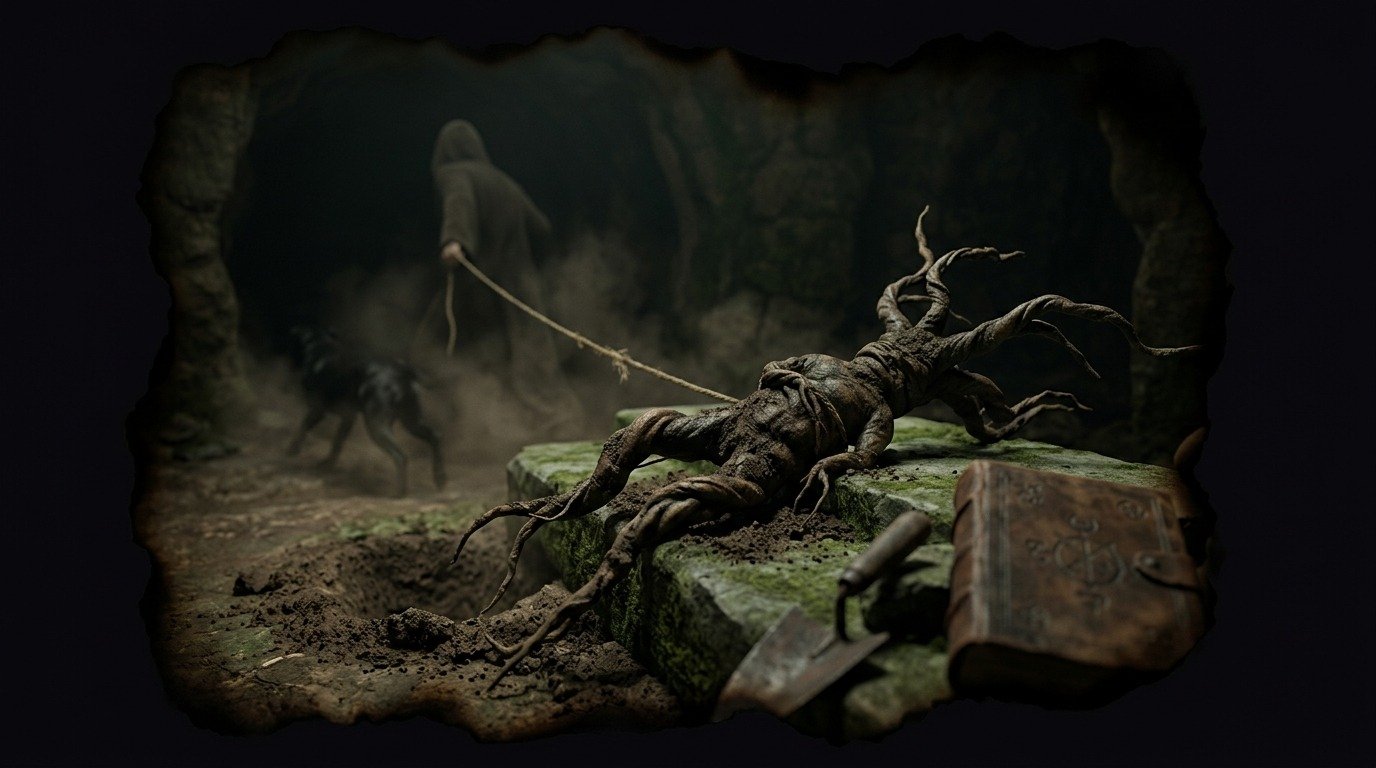
Mandrake: The Anthropomorphic Root and Its Occult Power
What It Is and What It Looks Like
The mandrake (*Mandragora officinarum*) is a perennial plant of the nightshade family. Its leaves are dark green, its flowers are pale violet or whitish, and its fruits are yellow berries with a sweet aroma. The defining characteristic of its value in the occult is its thick, woody, and usually bifurcated root, which presents a morphology reminiscent of the human figure, with limbs resembling legs and arms. It is an extremely toxic plant due to its high concentration of tropane alkaloids, mainly atropine, scopolamine, and hyoscyamine.
Origin and History of the Symbol
The use of the mandrake dates back to classical antiquity. It is mentioned in the Bible in Genesis and in the Song of Solomon as a facilitator of conception and a symbol of fertility. The Greek physician Dioscorides, in his work *De Materia Medica* (1st century), describes its anesthetic properties and depicts the plant with a human figure as its root.
During the Middle Ages, the mandrake became the center of a complex system of superstitions and legends. The most widespread belief held that the plant grew under gallows, nourished by the semen or urine of dying hanged men. According to this folklore, when pulled from the earth, the root emitted a shriek so shrill and terrifying that it caused instant death or madness to anyone who heard it. To extract it safely, a dog was used, tied to the neck of the plant; the harvester would plug their ears with wax and make the animal pull the root, which caused the death of the dog but allowed the specimen to be safely retrieved.
Meanings in Each Tradition
In traditional European witchcraft, the mandrake represents the link between the plant kingdom and the human kingdom due to its anthropomorphic shape. It is considered a plant with a conscious soul, a familiar spirit of the earth capable of granting wealth, protection, and occult knowledge to its owner.
In ancient medicine and folk healing, it was classified as a substance of a cold and damp nature. It was used as a potent analgesic and anesthetic for surgeries, as well as an inducer of deep sleep, although incorrect dosing was immediately lethal.
In Kabbalah and Renaissance magic, the mandrake (often called *alruna* in the Germanic sphere) was understood as a receiver of specific astral influences, linked to the Moon and Saturn, due to its underground growth and hallucinogenic effects.
Magical and Ritual Use
Mandrake root is used in defensive and attraction magic. Once extracted and dried, the root is dressed in tiny clothes and symbolically fed with milk, wine, or blood to keep the spirit residing within it active. Placed under the bed or in the home, it functions as an amulet against the evil eye, curses, and theft, in addition to attracting financial prosperity to the household.
In the preparation of historical potions and ointments, mandrake was a key ingredient of the "flying ointment" used by witches. Its active alkaloids penetrated the skin, inducing a deep trance state, hallucinations of flight, and out-of-body experiences. The preparation of these types of compounds is extremely dangerous and has no safe medical use in modern esotericism due to the risk of cardiorespiratory arrest.
Presence in Popular Culture and Connections
The mandrake appears in classical works such as *The Mandrake* by Niccolò Machiavelli and *Romeo and Juliet* by William Shakespeare, where its lethal shrieks upon being unearthed are alluded to. In contemporary literature, its appearance stands out in J.K. Rowling's *Harry Potter* universe and in Guillermo del Toro's film *Pan's Labyrinth*, where the ritual of feeding it milk under the bed of a sick woman is shown.
It connects directly with the goddess Hecate (lady of poisonous plants), with Circe (who used the root for her metamorphoses), and with other plants of the "poison path" such as belladonna, henbane, and jimsonweed.
Comments
Share information, an experience, or a source to help enrich this entry. They are automatically reviewed before being published.
Loading comments...