Rakshasa
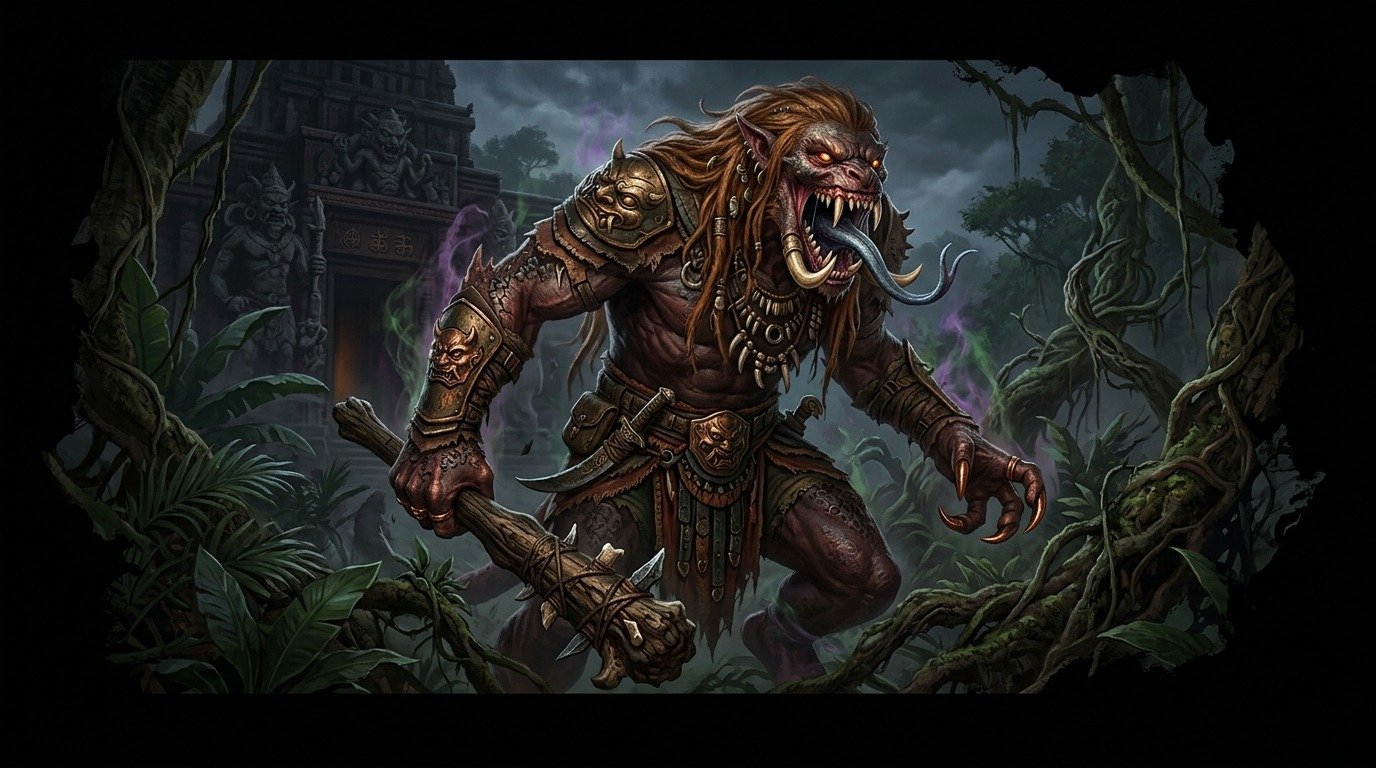
Rakshasa: The Devourers of Men and the Illusion of Mutable Flesh
Cosmogonic Origin and Vedic Lineage
*Rakshasas* (feminine: *Rakshasi*) are not mere specters or local monsters; they are an entire race of semi-divine beings of chaotic and dark polarity that inhabit the subtle and physical dimensions according to Hindu, Buddhist, and Jain cosmology. The term derives from the Sanskrit root *rakṣ*, which paradoxically means "to protect" or "to guard" (originally they were beings created by Brahma to protect the waters of primordial creation, but their insatiable appetite diverted them from their purpose, earning them the epithet of *Asri* or "the non-sacrificers"). According to the *Rigveda* and Puranic texts, the Rakshasas are direct descendants of the sage Pulastya through his son Vishrava, which directly links them to the Vedic sages, granting them a superior intellect and an innate mastery over the forces of nature. Their most famous king, Ravana (the central antagonist of the *Ramayana*), was a devout scholar of Shiva, a master of the Vedas, and an exceptional musician, demonstrating that a Rakshasa can possess high cultural and spiritual sophistication despite their predatory nature.
Typologies, Mutability, and *Maya-vi* (Illusory Sorcery)
The defining characteristic of a Rakshasa is their ability to alter matter through the power of *Maya* (cosmic illusion). They are classified into three main categories based on their density and behavior: * **The Yatu or Yatudhāna:** Low-level astral creatures, described in the *Atharvaveda*. They are pure ghouls that haunt cremation grounds (*shmashana*), defiling Vedic sacrifices and consuming decaying human flesh. * **Terrestrial Rakshasas:** Beings of great stature, with prominent fangs, copper-like claws, burning eyes, and coppery hair. They inhabit dense forests, inaccessible mountains, and distant underground realms. * **The Lords of Illusion (such as Ravana or Maricha):** Beings capable of assuming any form at will (*Kama-rupin*). They can manifest as beautiful women to seduce ascetics, priests, or kings; as heraldic animals; or as warriors in gleaming armor to deceive their enemies on the battlefield.
Esoteric Significance and the Doctrine of the Three Gunas
On the plane of the philosophy of mind and the occult psychology of Hinduism, the Rakshasas represent the hypertrophy of *Tamas* (inertia, ignorance, mental darkness) combined with a wild and violent *Rajas* (passion, activity, desire). They embody the ego that refuses to submit to the cosmic order (*Dharma*). Unlike the *Asuras* (who compete with the *Devas* for sovereign power over the physical and intellectual universe), the Rakshasas are motivated by primordial appetites: the hunger for flesh (especially human, hence their epithet *Nri-chakshas* or "devourers of men"), unbridled lust, and the pleasure of corrupting the ritual purity of religious rites (*Yajna*). They are the subtle embodiment of the biological chaos that stalks the outskirts of organized Vedic civilization.
Interactions, Vulnerabilities, and Purification Methods
A Rakshasa's power is at its peak during twilight (*Sandhya*) and midnight, hours when the barriers between the physical world and the lower subtle realms become permeable. **Protection and Exorcism Protocols:** * **The Consecrated Fire (*Yajna*):** The presence of a Rakshasa dissolves the sanctity of any space. Vedic priests employ the sacred fire of *Agni*, fueled by sandalwood, *tulsi* leaves, and clarified butter (*ghee*), accompanied by the precise recitation of the *Gayatri Mantra* and the *Rakshoghna Sukta* (Rigveda hymns specific to the destruction of demons). The smoke from these rites dissolves the illusory astral structure of the Rakshasas, forcing them to reveal their true form or flee. * **Vedic Steel and Consecrated Weapons (*Astras*):** They cannot be easily wounded by conventional weapons due to their accelerated physical regeneration. Only weapons tempered in divine mantras or metals blessed with sacred ash (*vibhuti*) can sever their limbs and prevent them from reattaching to their torso. * **The Power of the Divine Name:** The constant mental invocation of protective deities such as Hanuman (the destroyer of the Rakshasas of Lanka), Narasimha (the half-man, half-lion avatar of Vishnu), or the goddess Kali collapses the mind of the Rakshasa, depriving them of their control over *Maya* and returning them to their state of dust or subtle ash.
Born from the Breath of Brahma
In another tradition, the *Rakshasas* are described as a race of demonic and semi-divine beings born from the breath of Brahma while he slept, or as descendants of the sage Pulastya through Khasa. Their role as protectors of the primordial waters quickly mutated into that of jealous guardians of their own power and devourers of humankind (*Manushya-rakshasas*). They are not mere fairy-tale monsters; they are metaphysical entities of immense spiritual and physical power, capable of altering the very structure of material reality through their mastery of illusion (*Maya*).
From Lanka to Buddhism
The perception of the Rakshasas has shifted throughout the history of India. In the early Vedic period, they were seen mainly as chaotic forces of nature that disturbed the sacred sacrifices (*Yajnas*) of the sages (*Rishis*) in the forests. In the later epics, however, they acquire a complex social and political structure. The kingdom of Lanka, ruled by the ten-headed Rakshasa emperor Ravana, is described as a civilization of immense wealth and sophistication, showing that the Rakshasas do not lack intellect, religious devotion or codes of honor, but are governed by boundless ambition and a hypertrophied ego. With the spread of Buddhism and Jainism, the Rakshasas were reinterpreted as temple guardians or as beings trapped in the lower realms of rebirth because of their violent karma and their uncontrolled appetites.
The Guardians of the Threshold of the Ego
Within the framework of *Samkhya* philosophy, the Rakshasa represents the human intellect when it is divorced from morality and from cosmic law (*Dharma*). A Rakshasa's power lies in its mastery of *Maya*, cosmic illusion; this symbolizes how our own egoic desires distort our perception of the truth, making us see the illusory as real and the real as illusory. They are the guardians of the threshold of the ego, the inner forces that fiercely resist the dissolution of the individual "I" into universal consciousness (*Atman*).
Their True Form and Other Methods of Banishment
Rakshasas are *Kamarupas* (shapeshifters at will). In their natural, wrathful state, they appear as giants with bluish, green or black skin, sharp fangs, iron claws, bloodshot yellow eyes and bristling hair that looks like flames. They rarely choose to show themselves this way when they hunt, however. They prefer to take the appearance of venerable ascetics, women of celestial beauty or exotic animals to deceive the unwary. Their power grows exponentially at dusk and in the hours around midnight (*Nishachara*, those who walk by night). * **The fire of the Yajna:** Rakshasas loathe the smell of the offerings burned on Vedic altars, especially *ghee* (clarified butter), sandalwood and black sesame leaves. The smoke of these fires purifies the astral space, preventing them from materializing their illusions. * **The Mantra of power:** The use of sacred sound vibrations, specifically the *Gayatri Mantra* or the hymns dedicated to deities who destroy evil such as Durga or the avatar Narasimha (the man-lion), destabilizes the Rakshasa's energy body, forcing it to reveal its true form and weakening its life force. * **The use of consecrated metals:** Weapons of soft iron or bronze, when blessed with consecration mantras (*Abhisheka*), can pierce the dense physical and illusory armor of these creatures, interrupting the flow of their *prana* (life energy).
Comments
Share information, an experience, or a source to help enrich this entry. They are automatically reviewed before being published.
Loading comments...