Exorcism
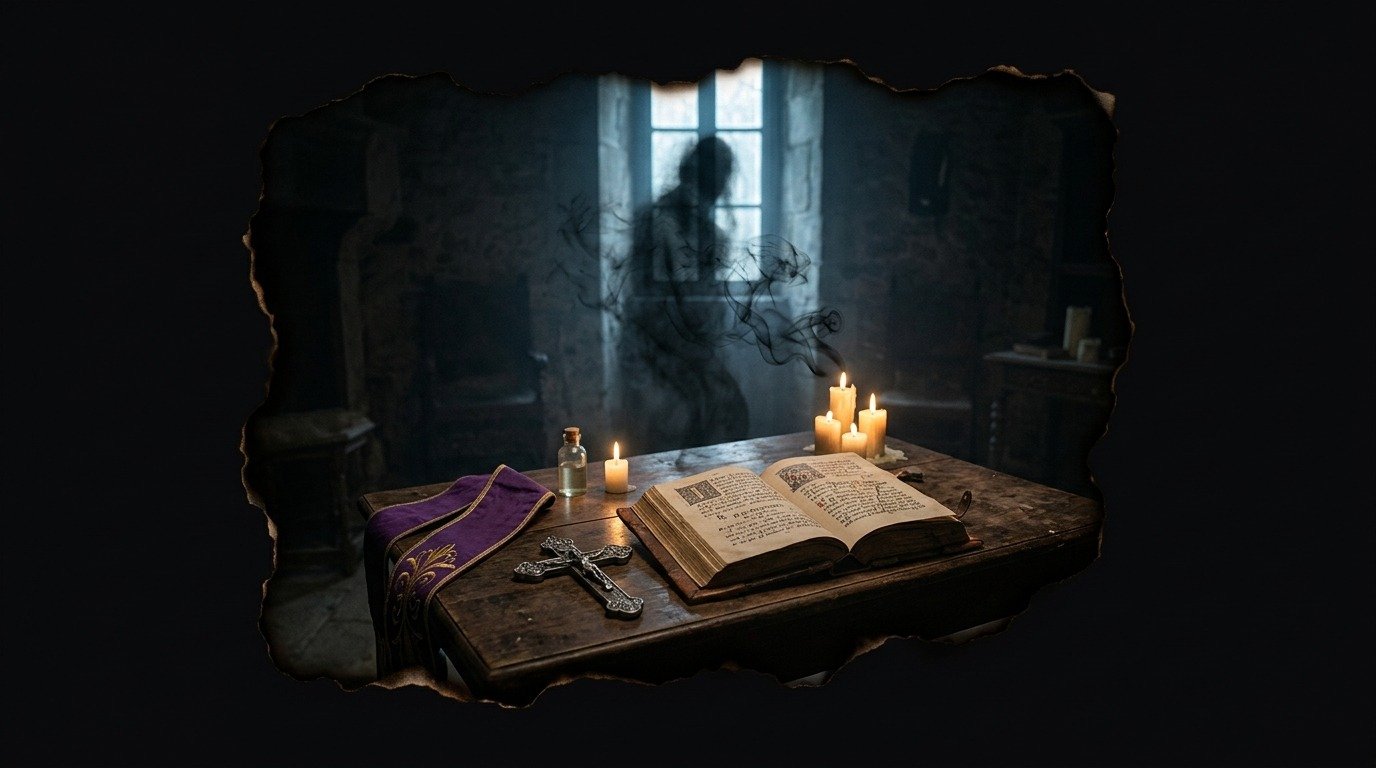
Exorcism: The Rite of Expulsion of Hostile Forces
What It Is
Exorcism is a binding liturgical rite through which a non-human spiritual entity, or the soul of a damned deceased person, is commanded to leave the body of a person, an object, or a place that it holds under its control. Its foundation lies in the authority of the divinity delegated to an ordained minister, who acts as a channel to restore spiritual order and free the affected individual.
How It Manifests
The progression of a formal exorcism follows a rigid and solemn liturgical structure. It is not a negotiation, but a trial of expulsion. During the rite, the entity manifests its resistance through the classic signs of possession: xenoglossy (speaking or understanding dead languages or those unknown to the subject), physical strength disproportionate to the affected person's build, the revelation of hidden secrets of the exorcist or those present, and an extreme aversion to sacred objects and holy water. The rite goes on for hours or repeated sessions over months until the entity declares its name, the day of its departure, and definitively leaves the body.
History and Traditions
The practice of exorcism is universal and pre-dates Christianity. In ancient Mesopotamia, *ashipu* priests performed incantations to expel the demons that caused illnesses. In Judaism, the practice dates back to King David and was formalized during the Second Temple period. Islam contemplates the expulsion of the *genies* (Jinn) through the recitation of the Quran in a rite called *ruqyah*.
In the Catholic Church, the framework of reference is the *Rituale Romanum*, promulgated by Pope Paul V in 1614 and modified in 1999 under the pontificate of John Paul II with the document *De Exorcismis et Quibusdam Precationibus*. This reform emphasizes the need for a prior medical and psychiatric diagnosis to rule out mental pathologies before proceeding with the rite.
Famous Cases
The exorcism of Anneliese Michel (Germany, 1975-1976), directed by priests Arnold Renz and Ernst Alt, is the most documented case of the 20th century. There were 67 exorcism sessions performed under the 1614 rite. The case ended with the young woman's death from malnutrition and dehydration, which led to a criminal trial for the parents and the priests.
The exorcism of Nicola Aubrey (France, 1566), known as the miracle of Laon, was a public exorcism of great political and religious relevance during the French Wars of Religion, used by the Catholic Church to demonstrate the real presence in the Eucharist to the Protestant community.
What Explains It
The theological explanation holds that exorcism works because the exorcist acts *in persona Christi* (in the person of Christ) or as the executor of a divine cosmic law that subdues fallen entities. The power of the rite does not reside in the personal qualities of the priest, but in the validity of the command and the use of sacramentals.
Science and psychiatry explain the efficacy of exorcism through the placebo effect, psychological catharsis, and hypnotic suggestion. For patients with personality disorders, schizophrenia, or dissociative identity disorder who firmly believe they are possessed, the rite acts as a theatricalized psychotherapy that restructures their psyche by externalizing the internal conflict and projecting it onto an entity that is formally "expelled."
Connections
Exorcism is linked to possession, demonology, infestation, obsession, the use of sacramentals (such as holy water, exorcised salt, and the cross of Saint Benedict), and the deliverance ministry. ---
Comments
Share information, an experience, or a source to help enrich this entry. They are automatically reviewed before being published.
Loading comments...