Dybbuk
Dybbuk: The Wandering Soul of Jewish Tradition
What It Is
In the cosmology of Kabbalah and Eastern European Jewish folklore, a *dybbuk* (from the Hebrew *dibbuq*, meaning "adhesion" or "clinging") is the wandering soul of a deceased person that, due to the severity of its sins in life, cannot cross over to Gehenna or reincarnate. To escape the torment of the angels of destruction, this soul seeks refuge in the body of a living person, clinging to their life force and taking control of their physical and mental faculties.
How It Manifests
Possession by a dybbuk occurs when the host exhibits a prior spiritual or moral vulnerability, such as a hidden sin or deep melancholy. The dybbuk is not a pre-created demon, but a disembodied and desperate human being. When it takes control, the possessed person's voice suddenly changes to speak in the tone and accent of the deceased, reveals intimate details of that person's life, and displays self-destructive behavior. The dybbuk uses the host's body to speak of its own past sins, demand justice, or ask for prayers that will allow it to find rest.
History and Traditions
The concept of the dybbuk was consolidated in the 16th century under the influence of the Kabbalistic school of Isaac Luria in Safed. Luria developed the doctrine of *gilgul* (the transmigration of souls). When a soul fails to fulfill its mission on Earth, it returns. If the soul is so damaged that it cannot undergo the normal process of reincarnation, it becomes a wandering soul.
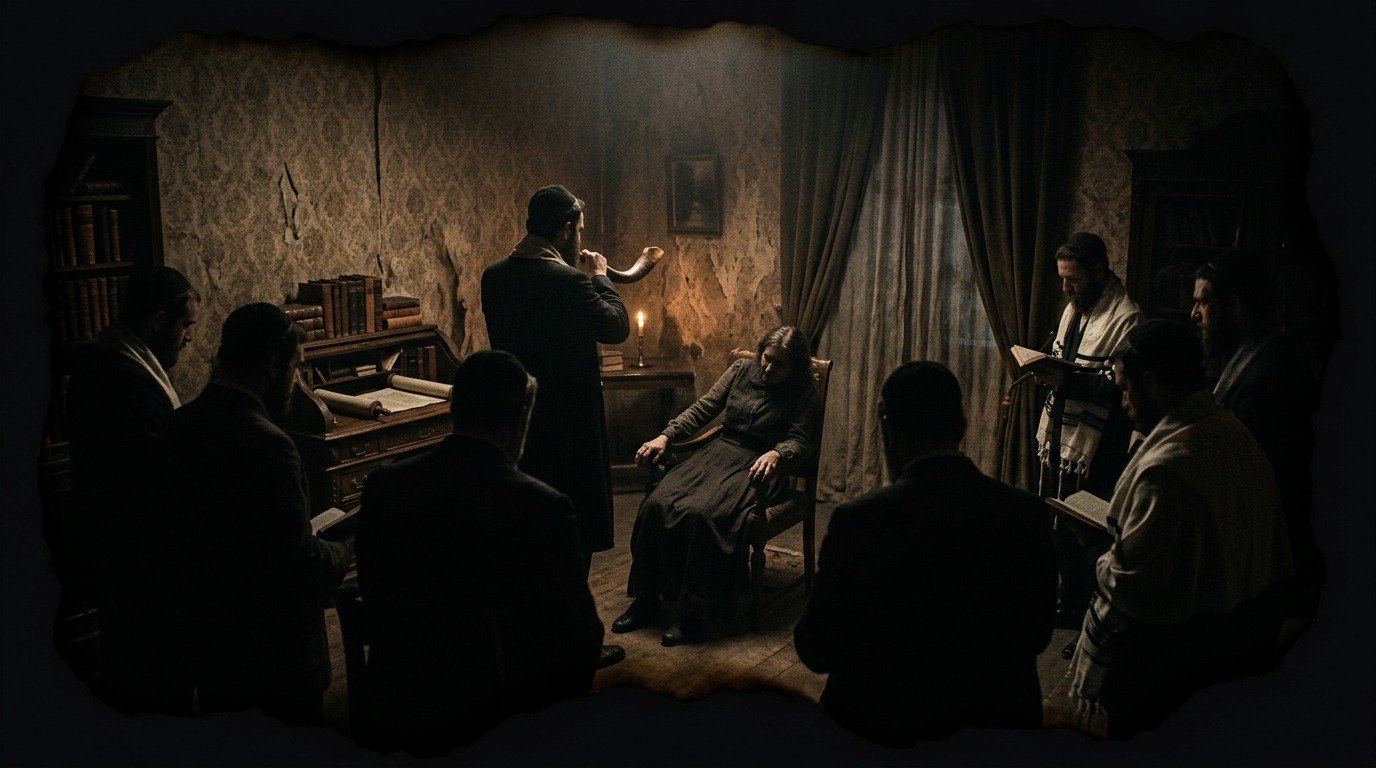
The rite of expelling a dybbuk must be performed by a miracle-working Hasidic rabbi (*Baal Shem* or *Tzadik*). The exorcism is performed in the presence of a *minyan* (a quorum of ten adult Jewish men). The rabbi wears burial garments (the *kittel*), lights black candles, blows the *shofar* (ram's horn) to disorient the entity, and recites specific psalms and formulas of excommunication. The goal of the rite is twofold: to free the possessed person and to rectify the soul of the deceased so that it can continue its path of spiritual purification.
The phenomenon became globally popularized thanks to the play *The Dybbuk*, written by S. Ansky between 1912 and 1917, which portrays the possession of a young woman by the soul of her deceased suitor.
Famous Cases
In the 16th century, the Kabbalist Hayyim Vital documented in detail the exorcism of a woman in Safed possessed by a dybbuk that turned out to be the soul of a man who had committed adultery. The soul left the body through the little toe of the left foot, so as not to cause permanent damage to the woman, leaving a small physical mark as evidence.
In the year 1903, in the city of Jerusalem, Rabbi Ben Zion Yadler performed a documented public exorcism on a woman who manifested a male voice and knowledge of sacred texts she had never studied. The spirit was identified as an apostate Jew from a neighboring village.
What Explains It
The Hebrew esoteric explanation defines the dybbuk as a failure in the ecology of the soul. The lack of a proper burial, suicide, or grave transgressions leave the soul in a state of suspension. By clinging to a living being, the spirit seeks to experience the physical plane once again and avoid divine punishment.
Psychiatry identifies dybbuk possession as a cross-cultural phenomenon of hysteria, dissociative identity disorder, or reactive psychosis, common in closed communities with high religious and social pressure. The exorcism rite functions as a community psychotherapeutic mechanism that allows the patient to manifest repressed conflicts without facing rejection from their group, since the responsibility for the actions is entirely attributed to the invading spirit.
Connections
The dybbuk is directly related to the concept of *ibbur* (positive possession by the soul of a righteous person), *gilgul* (reincarnation), Kabbalah, Yiddish folklore, and necromancy. ---
Comments
Share information, an experience, or a source to help enrich this entry. They are automatically reviewed before being published.
Loading comments...