Necromancy
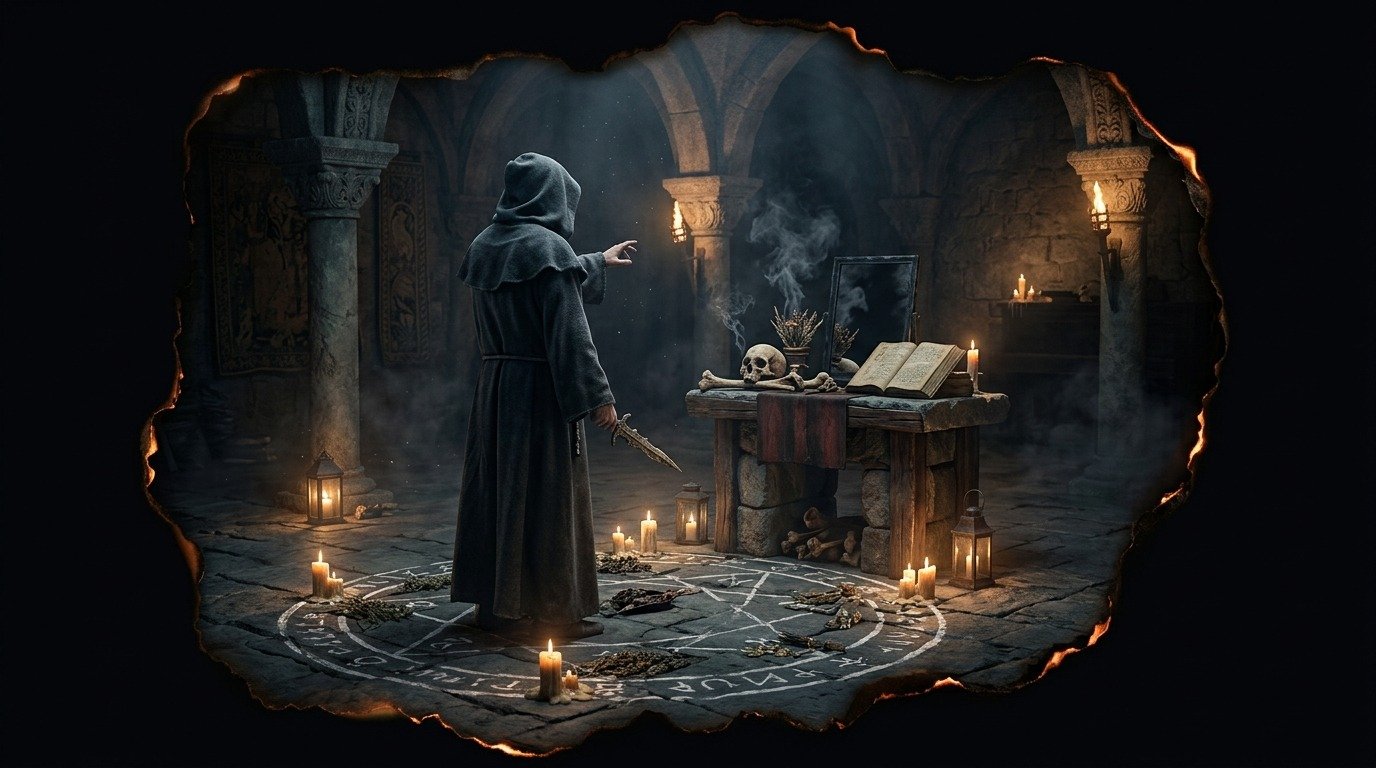
Necromancy: the forbidden dialogue with the shadows of the past
Divination through death
Necromancy (from the Greek *nekros*, corpse, and *manteia*, prophecy) is a magical discipline dedicated to communication with the souls of the dead to obtain information forbidden to the living, predict the future, or use the energy of the deceased for specific magical purposes. Based on the premise that souls freed from the flesh transcend linear time, necromancy seeks to tear the veil of the underworld through strict and solemn rituals.
Methods of operation and symbology
Historically, the discipline is organized into two main operational branches: * **Physical or corpse necromancy:** It employs human remains, such as bones, skulls, or graveyard dirt, to establish a physical anchor that temporarily attracts and holds the shadow of the deceased in the material plane. * **Psychic or trance necromancy:** It uses the mediation of a black mirror, still water, or a deep trance to perceive the voices or images of the afterlife without the need to manipulate skeletal remains. The classic necromantic rite requires an atmosphere of desolation and absolute silence. It is typically performed at night, in cemeteries, ruins, or deep caves. The operator wears black or gray clothing and uses specific offerings to temporarily nourish the ethereal body of the deceased, such as wine, honey, milk, or sharp-smelling incenses like myrrh and wormwood. The practitioner must maintain fierce mental discipline; panic or hesitation in the presence of the shadow breaks the protective circle and exposes the operator to the energy drain of astral larvae.
Origin and history
Necromancy is one of the oldest divinatory arts on the planet. It is recorded in Homer's *Odyssey* (8th century BCE), in the passage of the *Nekyia*, where Odysseus pours blood into a pit to summon the seer Tiresias. It is also documented in the Old Testament, where King Saul requests the services of the Witch of Endor to summon the spirit of the deceased prophet Samuel before the Battle of Gilboa. During the European Middle Ages, necromancy underwent a radical transformation. Persecuted by the Church, the discipline was assimilated and practiced in secret by rogue clerics who combined Christian liturgy with Solomonic ritual magic. During this period, the term "necromancy" became confused with "nigromancy" (black magic) and was associated with the summoning of demons to subjugate the souls of the dead.
Key figures
* **Éliphas Lévi (1810-1875):** Who detailed in a thorough manner his experience of evoking the spirit of the philosopher Apollonius of Tyana in London in 1854, using mirrors and a consecrated altar. * **Heinrich Cornelius Agrippa (1486-1535):** Described the cosmological principles that allow the attraction of specters in his treatises on occult philosophy.
Necromancy today
In the contemporary esoteric landscape, the formal necromancy of medieval grimoires has waned, but its principles survive integrated into modern spiritualism, ancestral shamanism, the ritual necromancy of the Left-Hand Path, and the traditions of ancestor worship of various cultures. Today, anthropology studies necromancy as one of the primordial manifestations of human grief and the universal need for the continuity of consciousness after biological collapse.
Connections
It is directly associated with Spiritualism, Éliphas Lévi, Ceremonial magic, and Ancestor worship.
Comments
Share information, an experience, or a source to help enrich this entry. They are automatically reviewed before being published.
Loading comments...