Shamanism
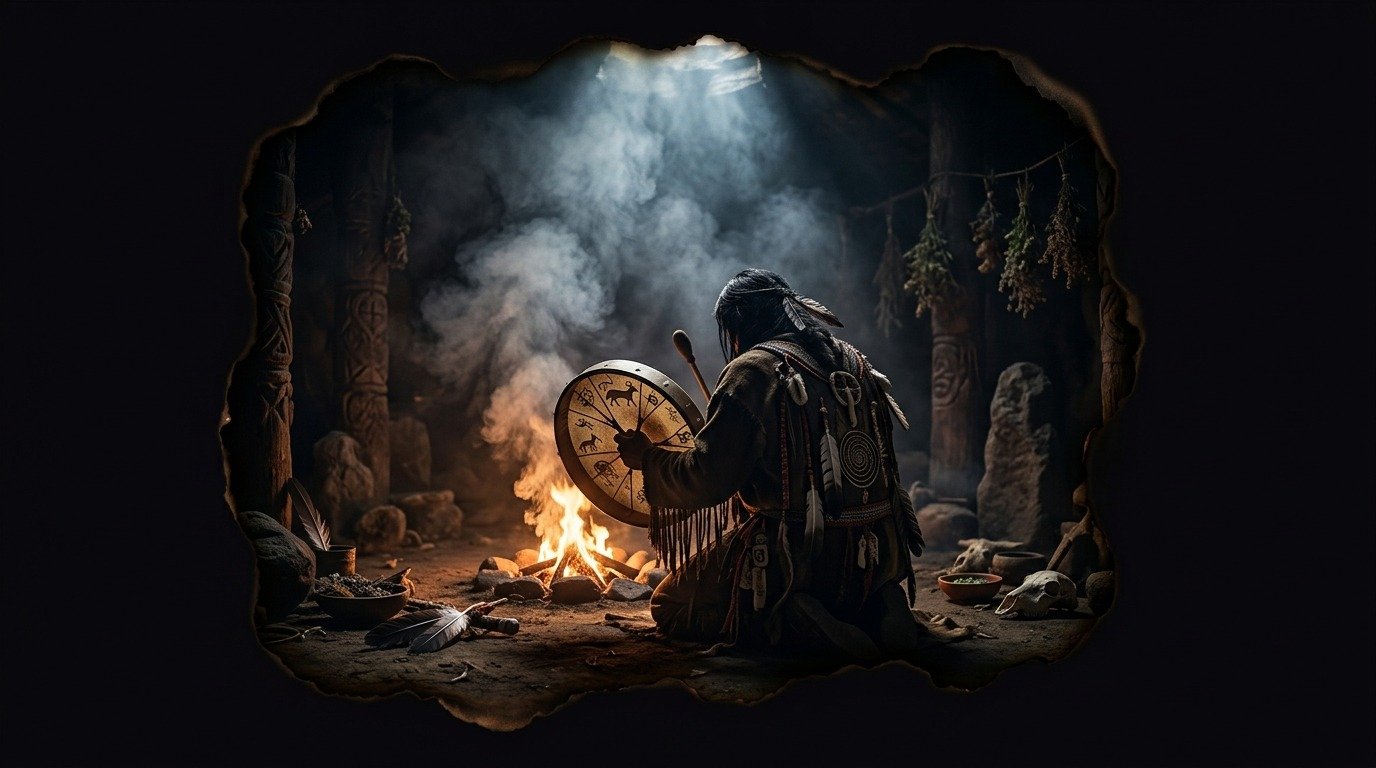
Shamanism: Mediation with the Spirit World
What It Is
Shamanism is a spiritual tradition and a set of ancestral practices centered on the figure of the shaman, an individual who acts as an intermediary between the human world and the spirit world. It is not an organized religion with dogmas or scriptures, but rather a cosmological system based on the direct experience of the unseen, the observation of nature, and the healing of the body and soul. At its core is the belief that everything that exists possesses a spiritual essence and that the balance of the community depends on a harmonious relationship with these non-physical forces.
Origin and History
The word "shaman" comes from the term *šamán*, belonging to the language of the Tungus people of Siberia, and means "the one who knows" or "the one who agitates." Shamanism is humanity's oldest form of spirituality; archaeological evidence of shamanic practices dates back to the Paleolithic era. Although the term originated in Northern Asia, the phenomenon is global and developed independently in various geographically isolated cultures, from the native peoples of North and South America to the aboriginal tribes of Australia, Africa, and Southeast Asia. The persistence of these practices over millennia demonstrates their capacity for adaptation in the face of the expansion of monotheistic religions and colonization processes.
Beliefs and Cosmology
Shamanism is grounded in a multidimensional cosmology. The universe is divided into three interconnected levels: * **The Upper World:** Inhabited by divinities, celestial spirits, and elevated ancestors. It is the plane of abstract wisdom and spiritual guidance. * **The Middle World:** The physical and invisible reality of the Earth, where humans, animals, plants, and nature spirits cohabit. * **The Lower World:** Not a place of punishment, but an underground plane inhabited by earth spirits, power animals, and ancestors who guard life force and regeneration. For the shaman, all illness, misfortune, or drought is the result of a disruption of the balance between these planes or the loss of the individual's life force.
Practice, Trance, and the Role of the Shaman
Shamanic practice is based on the ecstatic journey. The shaman alters their state of consciousness to enter the "shamanic flight" and project their consciousness into the invisible worlds. This trance is induced through specific techniques: the repetitive rhythm of drums and rattles (which emulate the heartbeat), sacred songs (*ícaros*), fasting, and, in some cultures, the ritual use of master plants. During the journey, the shaman performs specific tasks for their community: * **Soul retrieval:** Seeks out and rescues fragments of the sick person's life force that broke away due to trauma or fright. * **Psychopomp:** Guides the souls of the deceased toward the afterlife so they do not become trapped on Earth. * **Negotiating with spirits:** Requests rain, abundant game, or protection for the tribe from nature entities.
Shamanism Today
Today, shamanism is experiencing a global revitalization. Traditional practices of indigenous communities coexist with so-called neoshamanism or transcultural shamanism, adapted to Western urban societies. Scholars such as historian of religions Mircea Eliade and anthropologist Michael Harner analyzed it as a structured system of knowledge. Some health researchers today study the value of traditional shamanism as a cultural practice and psychological support in native communities, without it replacing medicine.
Connections
Shamanism is directly linked to animism, the ritual use of peyote and ayahuasca, the concept of totems or power animals, the work of Mircea Eliade, and the books of Carlos Castaneda about the shaman don Juan, which today are read more as literature than as anthropology.
Comments
Share information, an experience, or a source to help enrich this entry. They are automatically reviewed before being published.
Loading comments...