Quimbanda
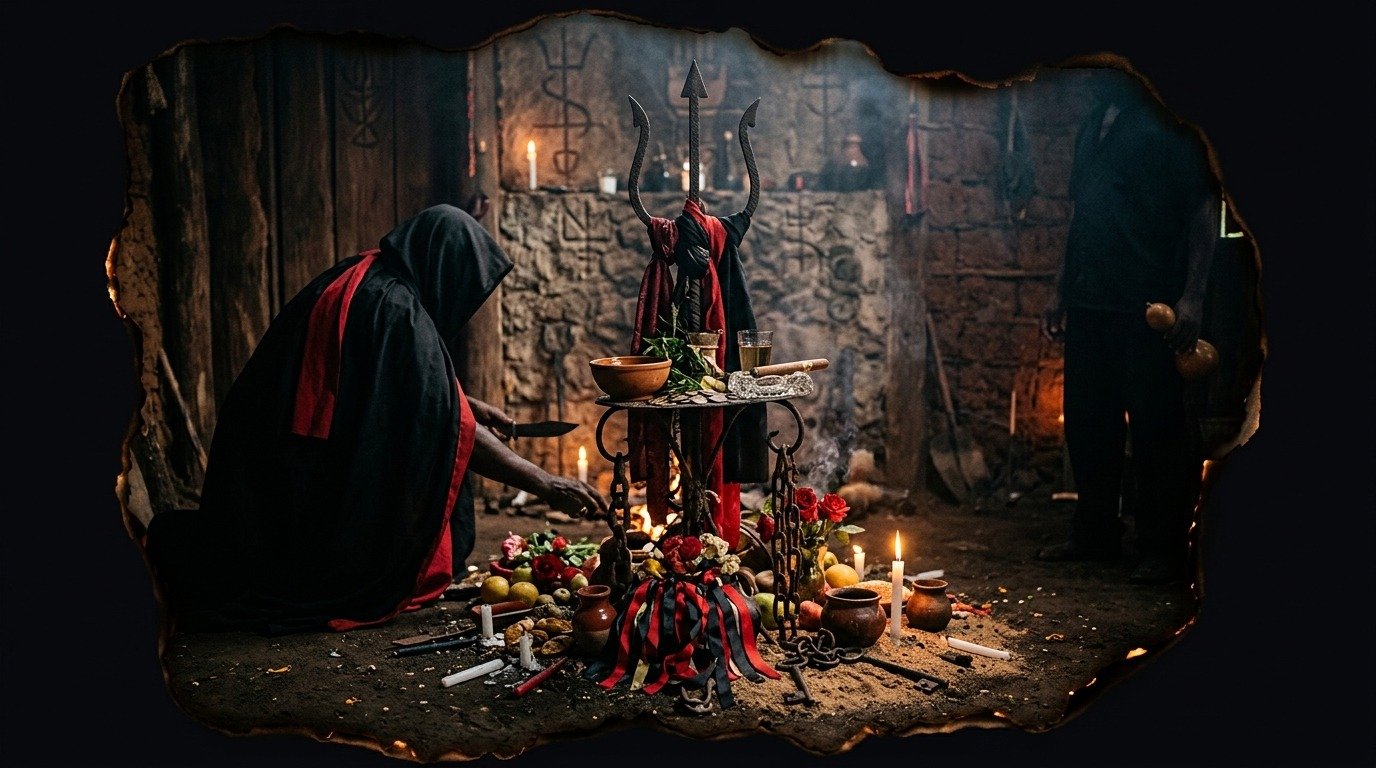
Quimbanda: the path of Exu and Pombagira
Definition and essence
Quimbanda is an Afro-Brazilian spiritual and magical tradition centered on the worship of Exu and Pombagira. It functions as an autonomous and independent system of earth magic and the dense astral plane, dedicated to the balance of material vital forces, transgressive justice, the spiritual protection of its adepts, and the resolution of human conflicts through work with spirits of the so-called "left-hand line."
Origin and history
The origin of Quimbanda dates back to the Bantu sorcery practices of the Congo and Angola, integrated in Brazil with elements of popular Catholicism, traditional European witchcraft (spread through grimoires that arrived during the colonial period), and Tupi-Guarani shamanism. During the first half of the 20th century, Quimbanda coexisted as part of Umbanda, constituting its "left-hand" sector or astral work beneath the earthly plane. Over the decades, Quimbanda structured itself independently, purging its practices of the Christian moral limitations of Umbanda to operate under its own metaphysical and moral laws.
Cosmology and the kingdom of shadows
Unlike the pantheon of the celestial Orixás, Quimbanda focuses its devotion on entities that lived on Earth and went through the process of reincarnation, which gives them a direct understanding of human pain, desires, and passions. The two central figures are: * **Exu:** a masculine spirit who personifies vital force, sexuality, movement, physical protection, wealth, and the chaos necessary for transmutation. He is not to be confused with the Orixá Exu of Candomblé, but rather represents a disembodied astral spirit who works under that name and vibration. * **Pombagira:** a feminine spirit of strong, transgressive, and independent character. She rules over desire, seduction, cunning, freedom, and female power. She is associated with the night, T-shaped crossroads, and material pleasures.
The spirits of Quimbanda are organized into a hierarchical structure of Seven Kingdoms, ruled by specific astral chiefs. Among these, the Kingdom of the Crossroads (where paths are opened), the Kingdom of the Small Calunga (the cemetery, where work is done with death and reincarnation), and the Kingdom of the Souls stand out.
Practice, liturgy, and magic
The liturgy is practiced in specific spaces called temples or *terreiros* of Quimbanda, led by their priests and priestesses. Participants wear black and red clothing, shades representative of fire, blood, earth, and the astral underworld.
Ceremonies are accompanied by fast-paced drumbeats and sacred chants called *pontos cantados*. During possession sessions, mediums incorporate their Exus and Pombagiras, who consume strong drinks (sugar cane spirit, gin, champagne), smoke cigars or cigarettes, and carry iron tridents as symbols of power over the three planes (earthly, celestial, and lower). Complex offerings are made, including oils, spices, metals, and bird sacrifices, delivered to specific locations such as crossroads, cemeteries, or forests, according to the kingdom of the invoked entity.
Current presence and myths
Quimbanda is openly practiced in Brazil, Argentina, Uruguay, and various European countries. It is one of the traditions that faces the most persecution and prejudice. The use of iconography that emulates the Western representation of the devil (horns, tails, tridents) has led outsiders to classify it as "Satanism." However, in Quimbanda theology, there is no figure of pure evil equivalent to the Abrahamic devil. Exu and Pombagira are seen as agents of natural justice and protection for those who are marginalized by conservative social structures.
Esoteric connections
Quimbanda presents ritual parallels with Afro-Cuban Palo Mayombe and with the magic of European grimoires, such as the *Lesser Key of Solomon* or the *Grimorium Verum*, from which some currents adopted invocation seals adapted to the Brazilian system.
Comments
Share information, an experience, or a source to help enrich this entry. They are automatically reviewed before being published.
Loading comments...