Grimorium Verum
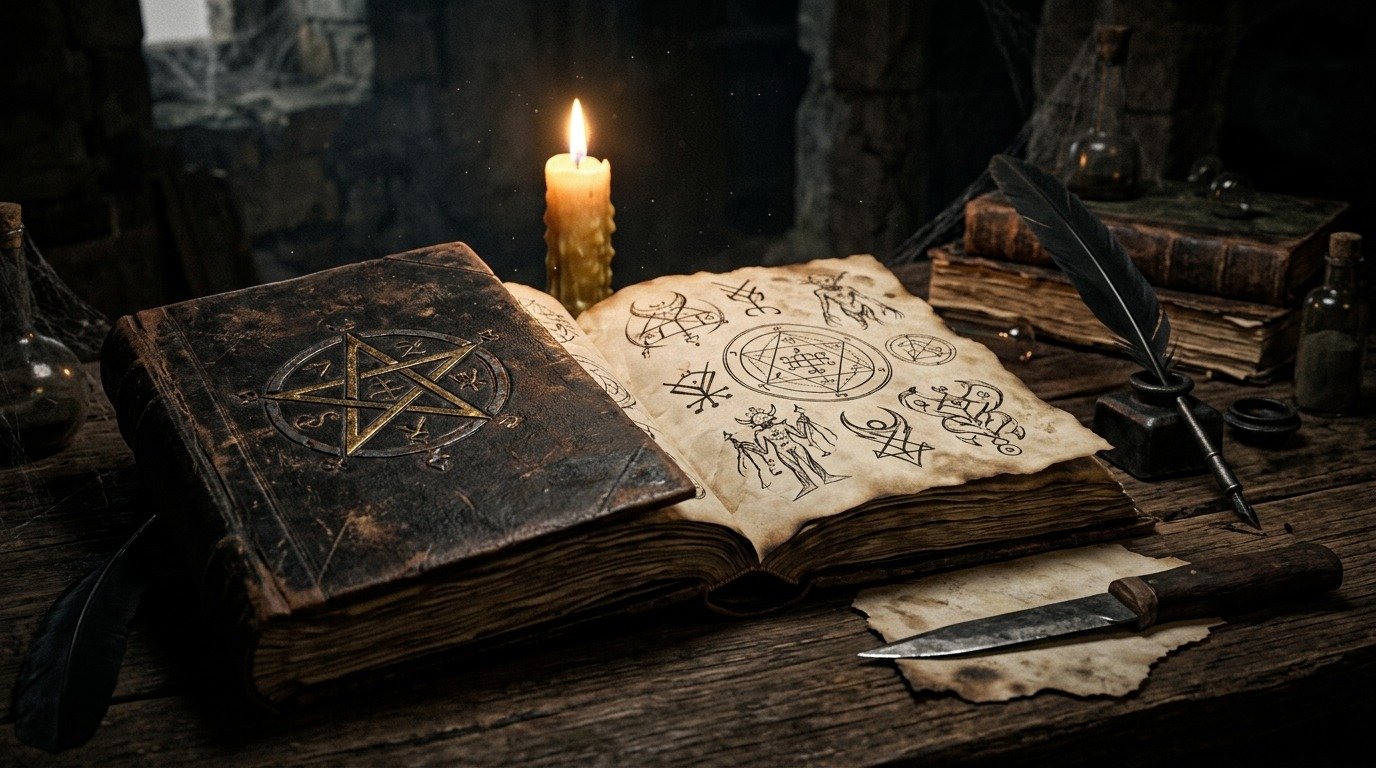
Grimorium Verum: The Keys to the Direct Pact
The Grimorium Verum (The True Grimoire) is one of the most infamous and feared books of black magic in the world due to its direct, practical nature, devoid of moral justifications. Published with the false date of 1517 to evade ecclesiastical censors, this grimoire offers the exact formulas to summon the darkest spirits of the abyss and, unlike other Solomonic texts that seek to subdue them through the power of God, teaches how to make explicit pacts with them. Its fame lies in the fact that it is considered the go-to manual of European necromancy and folk sorcery.
The Hierarchy of the Abyss and the Preparation of the Tools
The content of the Grimorium Verum stands out for its astonishing clarity and lack of philosophical beating around the bush. The text divides the realm of shadows into three great lords: Lucifer, Beelzebub, and Astaroth. Under their direct command are lesser spirits specialized in granting specific earthly favors, such as Clauneck, the demon of wealth and hidden treasures; Sustugriel, who teaches the art of magic; and Frimost, who grants control over the passions of women. The grimoire details in a meticulous manner the physical preparation of the operator and the instruments they will use. To draw the magic circle and force the appearance of the entities, the magician must fashion a knife with a handle of virgin hazelwood, a black goose quill, and consecrated ink. One of the most disturbing parts of the text describes the sacrifice of a young kid to obtain its skin, which must become the virgin parchment where the seals or characters of the demons will be drawn. The Grimorium Verum does not hide the brutality of its system: magic requires living matter, blood, and a will of steel.
The Mystery of Alibeck the Egyptian
The title page of the best-known editions of the Grimorium Verum claims that the book was translated from Hebrew by "Alibeck the Egyptian" and published in Memphis in the year 1517. Both claims are false, a common device in esoteric literature to bestow antiquity, authority, and mystery upon the work for buyers eager for forbidden secrets. Research into these prints reveals that the book was actually written and published in the mid-18th century, around 1750, in clandestine printing presses in France and Italy. Its real authors compiled fragments of the *Key of Solomon* and other folk magic texts, purging them of Christian prayers and adapting them for those seeking quick and spiritually uncomplicated access to the forces of the night.
From the Clandestine Press to Syncretic Cults
The Grimorium Verum circulated rapidly throughout Europe thanks to the clandestine distribution known as the *Bibliothèque Bleue* in France—small, cheap books bound in blue paper that were sold at fairs and markets. The text fell into the hands of peasants, treasure hunters, healers, and renegade clerics. Its influence was not limited to the Old Continent. During the 18th and 19th centuries, French and Spanish colonists brought copies of the grimoire to the Americas. There, its formulas, demonic seals, and sacrifice instructions merged with African and indigenous religious practices, becoming permanently integrated into magic systems and syncretic religions such as Voodoo in Haiti, Quimbanda in Brazil, and Palo Mayombe in Cuba, where the names of the demons of the Grimorium Verum are still invoked in the form of powerful spiritual entities.
The Surviving Copies
Today, the rare 18th-century printed editions of the Grimorium Verum are highly coveted museum pieces for collectors of the occult. The Arsenal Library (Bibliothèque de l'Arsenal) in Paris houses several of the oldest known French and Italian printed versions, as well as related manuscripts showing variations in the evocation seals. Despite its transition to academic archives, the Grimorium Verum retains a fearsome reputation. While other magical texts are studied as mere historical curiosities, this book continues to be avoided by the superstitious, who claim that the mere presence of its characters and sigils in a room is enough to open a rift to the deepest regions of the underworld.
Comments
Share information, an experience, or a source to help enrich this entry. They are automatically reviewed before being published.
Loading comments...