Key of Solomon
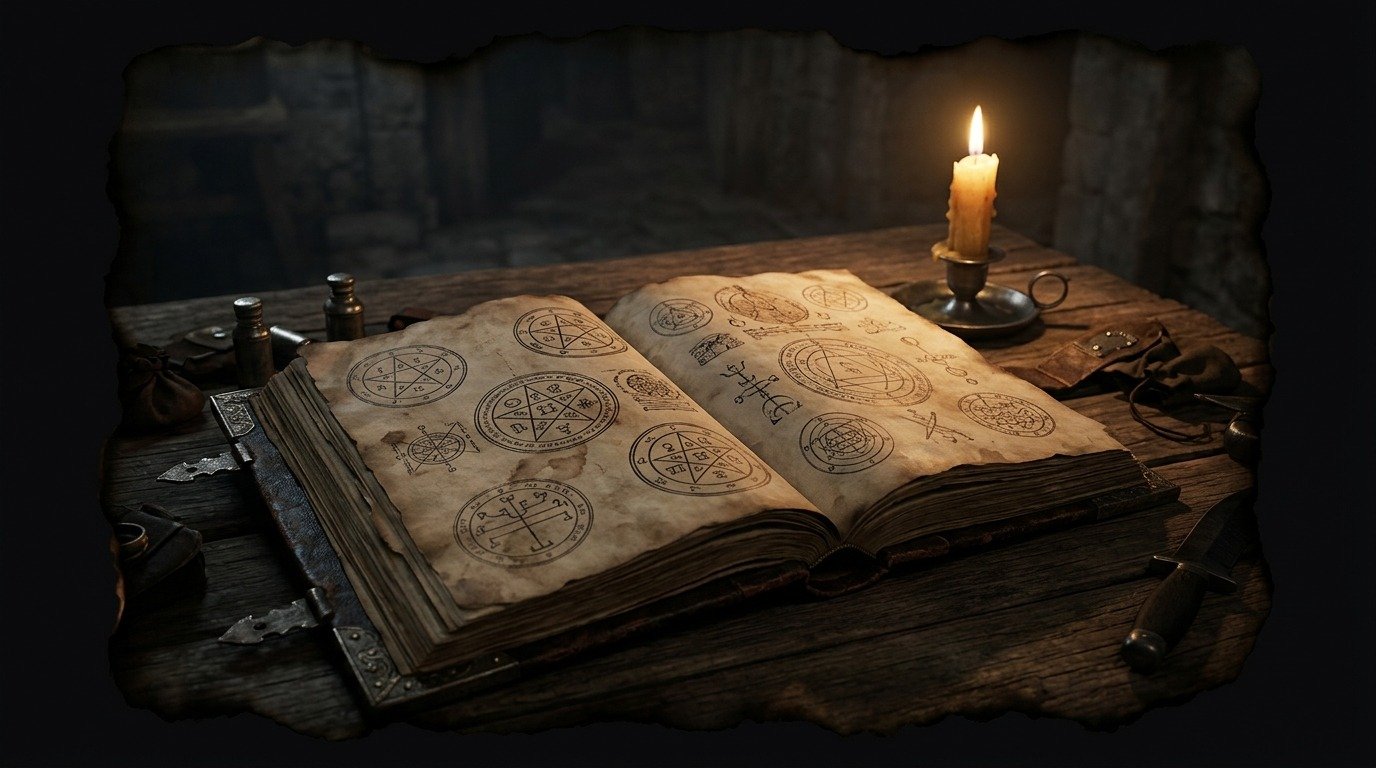
Key of Solomon: The Testament of the King of Spirits
The Key of Solomon (or *Clavicula Salomonis*) is the most influential grimoire of ceremonial magic in Western history. This medieval and Renaissance manuscript contains precise instructions for summoning spirits, angels, and demons through the use of planetary hours, protective circles, and complex geometric seals known as pentacles. Its fame and the fear it inspires lie in the promise of granting the magician the same power that biblical tradition attributed to King Solomon: absolute dominion over the invisible forces of the universe.
The Art of Subjugating the Invisible
The pages of the Key of Solomon do not offer simple magic or spells of popular superstition, but rather a rigorous and almost scientific system of high magic. The text is divided into two main books that detail the preparation of the practitioner and the tools necessary for invocation. The first book describes the conjurations and pentacles corresponding to each of the seven classical planets. These pentacles, drawn with consecrated inks or engraved on specific metals, act as protective shields and keys of command before the summoned entities.
The second book focuses on the purification of the magician and the crafting of their instruments of power. It explains in detail how to make the white-handled knife and the black-handled knife (the *arthame*), the linen robe, the hazelwood staff, and the sacred perfumes. This is not a quick manual: it demands a strict asceticism that includes fasting, sexual abstinence, and continuous prayers for days prior to the ceremony. For the Key, the slightest error in drawing a magic circle or pronouncing a divine name means madness or death for the summoner.
The Hidden Authorship Behind the Myth
The book's tradition claims that it was written by King Solomon himself for his son Rehoboam, whom he instructed in the secrets of creation and the arts of subjugating spirits. However, historical reality places the writing of the oldest surviving manuscripts between the 14th and 15th centuries, at the height of the Italian and French Renaissance.
The actual authors of these texts were anonymous scribes, scholars, and clerics who merged the Jewish mysticism of the Kabbalah, Hellenistic astrology, and Christian demonology to shape a coherent system of Solomonic magic. To legitimize it before a Church that persecuted these practices, they used the figure of the wise biblical king, known for his wisdom and his mythical ability to control demons to build the Temple of Jerusalem.
Persecution and Copies in the Shadows
Throughout the centuries, the Key of Solomon was copied by hand in secret, passing from private library to private library while constantly being targeted by the Inquisition. In the 16th century, the occultist philosopher Heinrich Cornelius Agrippa already mentioned it as an indispensable reference work in his treatise *De occulta philosophia*. During the 17th century, the manuscript became the foundation from which other famous grimoires emerged, such as the *Lemegeton* (or *The Lesser Key of Solomon*), which expanded the list of entities by detailing the names and seals of the seventy-two principal demons of hell.
Possession of a copy of the Key was synonymous with heresy and a demonic pact. The Catholic Church systematically included any work attributed to Solomon in the *Index Librorum Prohibitorum* (the Index of Forbidden Books), ordering the burning of every confiscated copy. Despite the censorship, kings, nobles, popes, and scholars paid fortunes to secret scribes to possess a transcription of the text, convinced that it contained the key to absolute earthly power.
The Fate of the Heretical Manuscripts
Today, the Key of Solomon is no longer hidden in dark basements, but is part of the most important manuscript catalogs in Europe. The British Library in London preserves several of the most valuable and oldest manuscript copies in its *Harleian* collection and the *Sloane* catalog. The Bibliothèque Nationale de France in Paris likewise guards illuminated codices in Latin, French, and Italian dating from the 17th and 18th centuries.
Modern studies of esoteric literature recognize in these manuscripts the foundational pillar of modern Western occultism. The text survives without losing its aura of danger, reminding us of a time when men firmly believed that the physical and spiritual universes could be bent to the will of a single magician armed with a parchment and a sword of consecration.
Comments
Share information, an experience, or a source to help enrich this entry. They are automatically reviewed before being published.
Loading comments...