Curanderismo
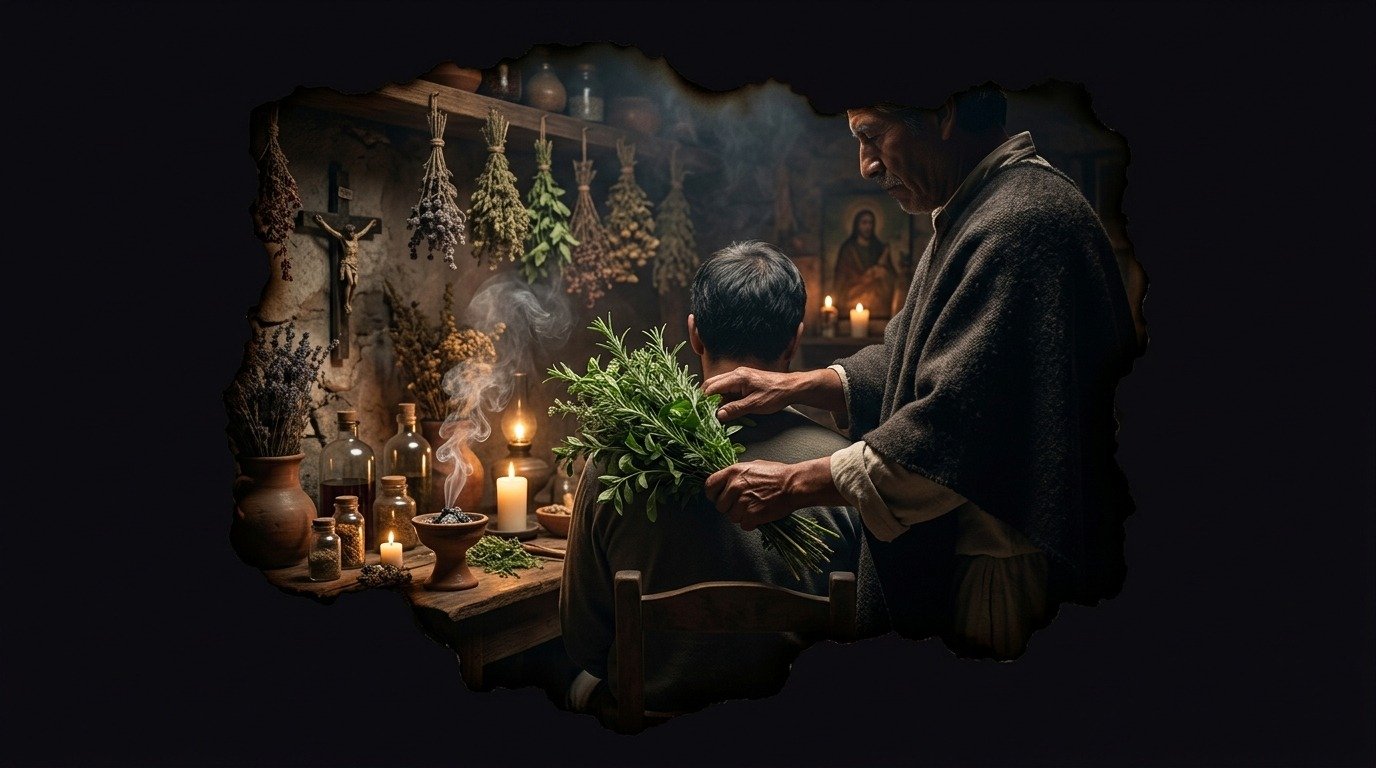
Curanderismo: The Medicine of the Body and the Spirit
What It Is
Curanderismo is a traditional system of holistic healing practiced in Latin America and in Hispanic communities in other regions of the world. It is a living discipline that integrates the use of medicinal plants, massages, energetic purification rituals, and prayers to treat physical, psychological, and spiritual ailments. The curandero conceives health as a state of total balance between the body, mind, social environment, and spiritual world; illness occurs when this balance is disrupted.
Origin and History
Modern curanderismo is the result of a profound syncretism that began during the colonial era in the Americas. It has three fundamental roots: 1. **Pre-Columbian indigenous medicine:** It contributes a deep knowledge of herbalism, sacred geography, physical therapies, and the conception of the Earth as a living organism. 2. **Spanish Catholicism:** It introduces the veneration of saints as intercessors of healing, the use of Christian prayers, and ritual elements such as holy water and the crucifix. 3. **Traditional African medicine:** Brought by enslaved populations, it enriched curanderismo with the use of specific herbs and rituals of spiritual cleansing or deliverance. Despite persecution by the Inquisition, which categorized these practices as witchcraft, curanderismo survived by integrating into the daily life of rural and urban communities where academic medicine was inaccessible.
Beliefs and the Concept of Illness
Curanderismo classifies ailments under a spiritual and energetic logic. Two major categories of illnesses are distinguished: * **Physical or natural illnesses:** Those caused by thermal imbalances (concepts of "cold" and "heat" in the body) or by physical accidents. * **Spiritual or supernatural illnesses:** Ailments that arise from interaction with invisible forces or intense emotions. The main ones are: * **Susto or espanto:** The loss of the shadow or the soul due to a trauma or strong shock. It produces apathy, weakness, and lack of appetite. * **The evil eye:** Energetic imbalance caused by the strong gaze or envy of another person, which mainly affects children. * **Empacho:** Physical and energetic obstruction of the digestive system from eating inappropriate foods or during situations of emotional tension.
Practice and Healing Methods
A consultation with a curandero begins with a spiritual diagnosis, which may include reading the pulse, using an egg to sweep for blockages, or interpreting cards and prayers. Curanderos usually specialize in different areas of care: * **Yerberos:** Experts in the healing properties of plants and in the preparation of infusions, ointments, and ritual baths. * **Sobadores:** Massage therapists who heal dislocations, muscle aches, and empacho through massage and body manipulation. * **Parteras:** Midwives who assist in pregnancy, childbirth, and postpartum using traditional medicine and energetic care. * **Espiritualistas:** Specialists who act as channels for spiritual entities or saints to perform direct healings. La técnica ritual más extendida es la "limpia". Se realiza pasando por el cuerpo del paciente manojos de hierbas frescas (como ruda, romero o albahaca), un huevo o copal encendido, con el fin de absorber las energías densas y restaurar la vitalidad de la persona.
Curanderismo Today
Currently, curanderismo remains highly relevant in both rural areas and large cities in Latin America and the United States. The World Health Organization (WHO) recognizes traditional medicine, including curanderismo, as a valuable healthcare resource and promotes its respectful integration with official healthcare systems. It is not presented as an alternative that should replace scientific medical treatment for serious illnesses or bacterial infections, but rather as a supportive practice that addresses the cultural, emotional, and spiritual needs of the patient.
Connections
Curanderismo connects directly with folk Catholicism, medical herbalism, the evil eye, the use of copal, and historical figures of folk healing such as the Mexican curandera María Sabina or Niño Fidencio.
Comments
Share information, an experience, or a source to help enrich this entry. They are automatically reviewed before being published.
Loading comments...