Candomblé
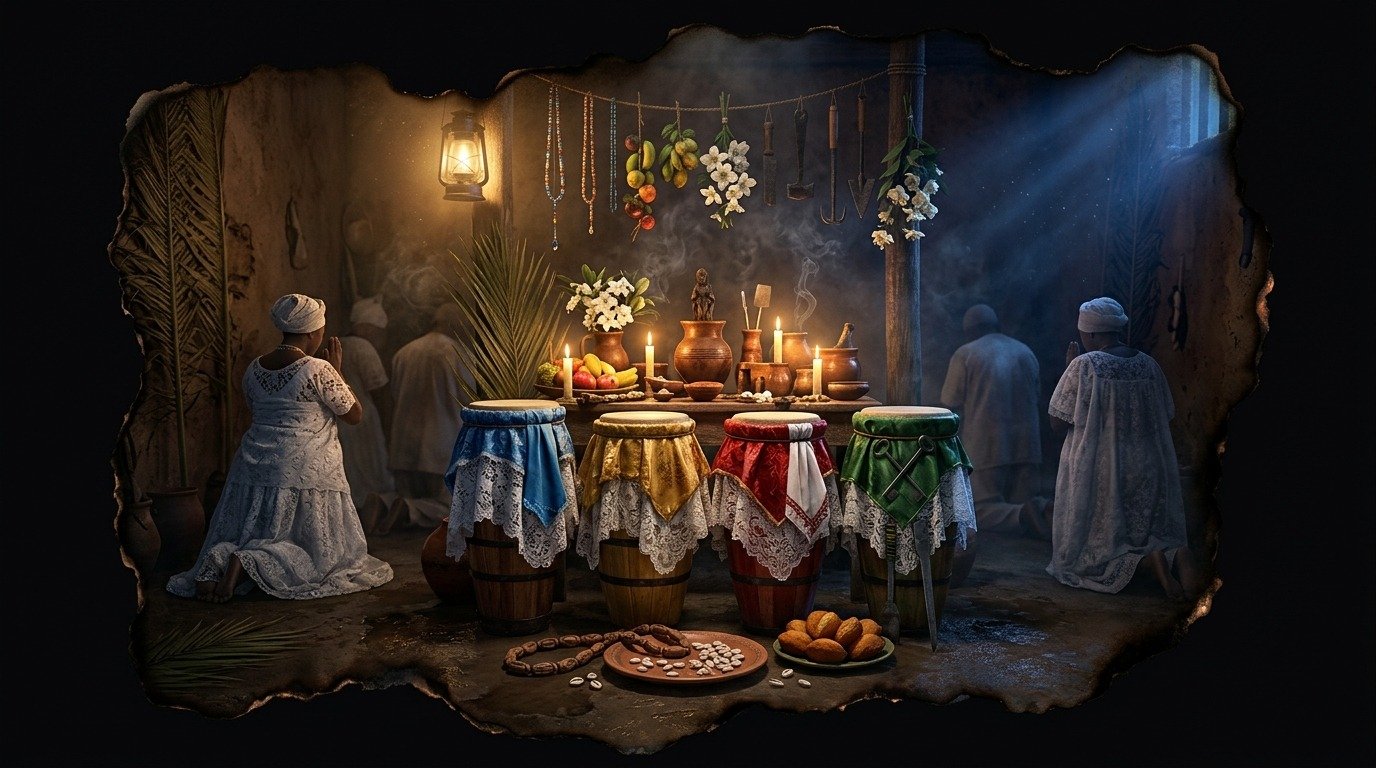
Candomblé: the ancestral worship of the Orixás in Brazilian land
Definition and essence
Candomblé is an initiatory and monotheistic religion of African origin practiced mainly in Brazil. Its theology is based on the veneration of a single creator God and a court of intermediary deities called Orixás, Voduns, or Inkises, depending on the branch or nation of the worship. The practice seeks to restore and maintain the energetic balance between human beings, nature, and the spiritual plane through offerings, dances, and ritual possession.
Origin and historical resistance
The religion was consolidated in the 19th century in the state of Bahia, Brazil. It was structured by enslaved Africans of the Yoruba, Fon, and Bantu peoples. To protect their traditions against the imposition of Portuguese Catholicism and colonial laws that punished heresy, practitioners associated each Orixá with a Catholic saint. The first formal houses of worship, known as *terreiros* or *ilês*, were founded in Salvador de Bahia; the oldest recorded is the Casa Branca do Engenho Velho. Candomblé is divided into traditional nations according to their ethnic origin: * **Ketu:** the branch of Yoruba influence, where the Orixás are worshiped. * **Jeje:** of Fon and Ewe roots, focused on the Voduns. * **Angola:** of Bantu roots (Kimbundu and Kikongo), centered on the Inkises.
Cosmology and deities
The theology of Ketu Candomblé holds that the universe was created by Olorum (or Olodumare). Under their sovereignty rule the Orixás, divinities that personify the physical and elemental forces of the cosmos. Every human being has an Orixá who is the owner of their head, protecting them and shaping their temperament; the *Ori* is the head itself, the seat of personal destiny. Among the main deities are: * **Oxalá:** the Orixá of creation, peace, and purity, syncretized with Jesus Christ. * **Ogum:** the lord of iron, war, and work, protector of the paths. * **Iemanjá:** the queen of the sea, mother of the Orixás and of fertility. * **Oxúm:** queen of fresh waters, gold, love, and beauty. * **Xangô:** the lord of fire, lightning, and justice. * **Exu:** the messenger of the cosmos, guardian of movement and communication between the human and divine worlds.
Practice, liturgy, and community
Liturgical life occurs within the *terreiro*, a hierarchical space led by a priest (*babalorixá*) or priestess (*iyalorixá*). The process of entering the religion requires initiation (*feitura de santo*), where the neophyte is secluded for weeks to receive secret teachings, cleansings, and to consecrate their head to the guardian Orixá.
Public ceremonies are structured around the playing of three sacred drums (*atabaques*), ritually consecrated. Initiates wear traditional outfits embroidered with white lace or in the colors corresponding to their deity. Music and singing in the Yoruba language induce a mystical trance, allowing the divinities to descend and dance among the congregation. The worship includes the preparation of *comidas de santo*, food offerings rigorously prepared according to the liturgical prohibitions of each deity, and sacred animal sacrifices whose energetic remains feed the *axé* (vital energy of the community).
Current presence and myths
Candomblé brings together hundreds of thousands of declared faithful in censuses in Brazil, and many more who frequent it without declaring it; it has expanded to countries such as Uruguay, Argentina, and Portugal. It was persecuted by the police during a large part of the 20th century (in Bahia, the terreiros had to register with the police until 1976); today, the 1988 Constitution protects freedom of worship. The main external prejudice labels Candomblé as "black magic" or a "satanic cult." This notion is theologically erroneous, since Candomblé lacks the figure of the devil or a principle of absolute evil in its doctrine; cosmic balance is governed by natural justice and reciprocity.
Esoteric connections
Candomblé shares direct roots with the Regla de Ocha or Santería of Cuba. It decisively influenced the genesis of Umbanda and Quimbanda in the 20th century, contributing its pantheon and ritual lexicon to these new Brazilian currents.
Comments
Share information, an experience, or a source to help enrich this entry. They are automatically reviewed before being published.
Loading comments...