Umbanda
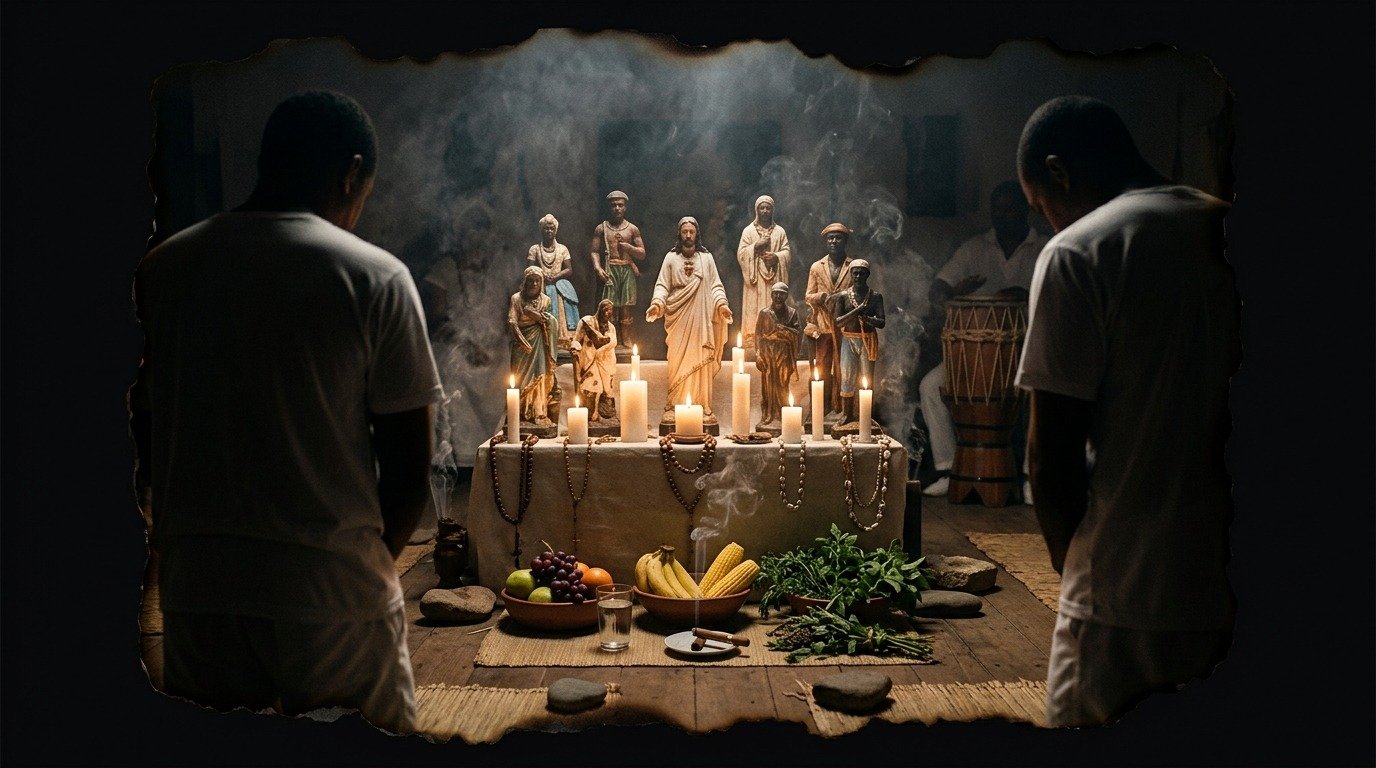
Umbanda: The Spiritual Synthesis of Charity and Evolution
Definition and Essence
Umbanda is a monotheistic, syncretic, and genuinely Brazilian religion. It integrates elements of Candomblé and African religions, Kardecist Spiritism, popular Catholicism, and South American indigenous shamanism. It is governed by the fundamental principle of spiritual charity, free assistance to those in need, and the moral evolution of incarnate and discarnate spirits.
Origin and History
Umbanda was formally founded on November 15, 1908, in Niterói, in the state of Rio de Janeiro. During a traditional European-style Spiritist seance, the medium Zélio Fernandino de Moraes channeled a spiritual entity who introduced himself as the *Caboclo das Sete Encruzilhadas*. This entity declared the birth of a new religion that would welcome the spirits of indigenous peoples (*caboclos*) and enslaved Africans (*pretos velhos*), figures that the orthodox Spiritism of the time dismissed as backward. Umbanda expanded rapidly through Brazilian urban centers, gaining acceptance among the working and middle classes due to its inclusive message and accessible language.
Cosmology and Spiritual Hierarchy
The doctrine asserts the existence of a supreme creator named Olorum (associated with God the Father). Under his command operate the Orixás, understood not as independent gods but as divinities acting as pure "vibrations" or energetic frequencies of nature. The spirits are organized into seven lines of work directed by a ruling Orixá. The main phalanxes of guide spirits that manifest in the temples are: * **Caboclos:** spirits of indigenous Americans. They bring strength, purity, knowledge of medicinal plants, and the energy of righteousness. * **Pretos Velhos:** spirits of elderly enslaved Africans. They are the masters of patience, wisdom, moral comfort, and energetic clearing through tobacco and holy water. * **Crianças (Ibejis):** child spirits who bring joy, purity, and emotional restoration to the seeker. * **Exus and Pombagiras:** guardian spirits of the densest astral plane. They act in cutting black magic spell work and protecting the paths of material life.
Practice, Liturgy, and Community
Activities take place in centers called *terreiros* or Umbanda tents, led by a *Pai de Santo* or *Mãe de Santo*. The spiritual work sessions are called *giras*. The mediums wear completely white uniforms that symbolize spiritual equality and ritual purity.
The gira opens with chants and invocations accompanied by drums (*atabaques*). The mediums channel their respective spiritual guides. After possession, the *consulta* (consultation) process begins, where the attending public receives free energetic healing passes, spiritual advice, and the clearing of negative energies through blowing tobacco smoke, herbs, and essences. Unlike Candomblé, traditional Umbanda does not perform ritual animal sacrifices or charge money for its healing spell work or spiritual assistance.
Current Presence and Myths
Umbanda is one of the fastest-growing religions in South America, with a massive presence in Brazil, Uruguay, Argentina, and Paraguay. As a frontier worship, its practitioners face misunderstanding from orthodox Catholic and Evangelical sectors that mistakenly associate its practices with demonic pacts. In reality, Umbanda explicitly prohibits the use of its knowledge to harm other human beings, maintaining that any negative magical action brings a destructive karmic return to the one who performs it.
Esoteric Connections
Umbanda is strongly connected to Allan Kardec's Spiritism, adopting its theory of reincarnation and the law of cause and effect. It maintains a close frontier relationship with Quimbanda, which functions as its counterpart or "left-hand line" specialized in handling earthly and dense energies.
Comments
Share information, an experience, or a source to help enrich this entry. They are automatically reviewed before being published.
Loading comments...