Wormwood Star
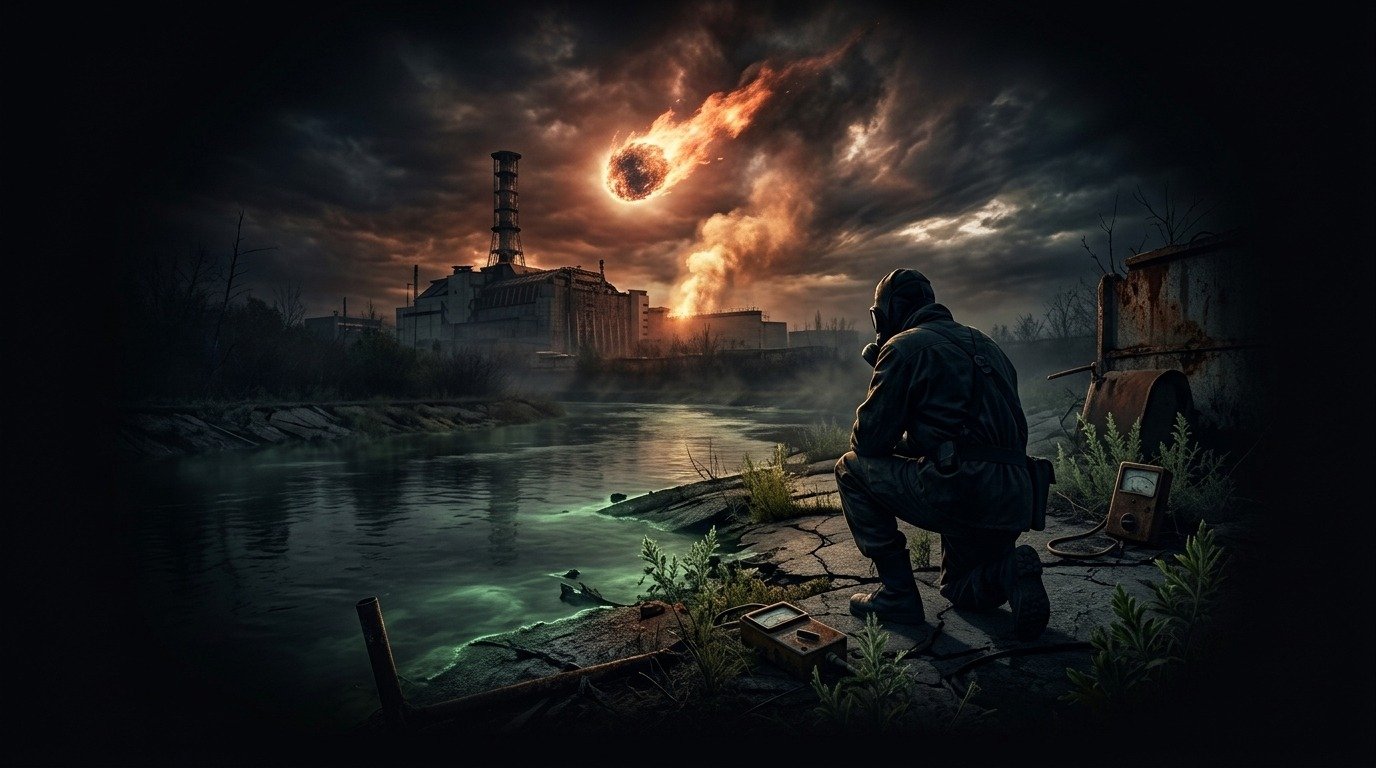
The Wormwood Star: the bitter poison fallen from the sky
At 1:23 a.m. on April 26, 1986, reactor number four of the Chernobyl nuclear power plant in Ukraine exploded during a safety test, releasing into the atmosphere an amount of radiation one hundred times greater than that of the Hiroshima and Nagasaki bombs. In the months following the disaster, the region's inhabitants and various Bible scholars discovered a disturbing coincidence: the Ukrainian word for wild wormwood (*Artemisia vulgaris*), an extremely bitter-tasting plant, is *chornobyl*. The news sparked immediate fear throughout the Christian world, as the catastrophe was interpreted as the exact fulfillment of the prophecy of the Wormwood star described in the Book of Revelation of Saint John.
The prophecy of Wormwood warns of the arrival of a blazing celestial body that will poison Earth's freshwater sources, causing the mass death of human beings. It is not described as a collision that destroys the Earth's crust, but as an invisible and lethal contamination that embitters the water, causing the very source of life to turn into a deadly poison. This star represents divine judgment against a corrupt world, altering nature so that it becomes hostile to man.
The sounding of the third trumpet
The origin of this apocalyptic vision is found in chapter 8 of the Book of Revelation, written by the Apostle John during his exile on the island of Patmos in the 1st century AD. The text details the events that follow the opening of the seventh seal and the sounding of the trumpets of the seven angels.
The biblical passage recounts: "The third angel sounded his trumpet, and a great star fell from heaven, burning like a torch, and it fell on a third of the rivers and on the springs of water. And the name of the star is Wormwood. And a third of the waters became wormwood; and many men died because of the waters, because they had been made bitter." In ancient Hebrew culture, wormwood (*La'anah*) was a traditional symbol of bitterness, divine punishment, and the consequences of sin and idolatry.
From spiritual interpretation to the nuclear age
For centuries, theologians interpreted the Wormwood star allegorically. For the early Church Fathers, the star represented false prophets or heretics who fell from divine grace and poisoned Christian doctrine, making the faith of believers bitter. During the Protestant Reformation, some reformers identified the star with the Roman papacy, arguing that its teachings had corrupted the pure sources of Scripture.
The arrival of the nuclear age in the 20th century completely transformed the reading of the prophecy. The star that "burns like a torch" began to be interpreted as an intercontinental ballistic missile loaded with nuclear warheads, or as the radioactive fallout descending from the sky after a nuclear war, contaminating Earth's aquifers and rivers. The 1986 Chernobyl disaster seemed to provide a definitive geographical and linguistic basis for this technological interpretation of the biblical prophecy.
The analysis of the linguistic coincidence
The relationship between Chernobyl and wormwood generated a broad debate that crossed the boundaries of faith and science. Botanists clarified that, while the Ukrainian word *chornobyl* designates the herb known as wild wormwood or mugwort, the plant mentioned in the original Greek biblical text is *apsinthos* (common wormwood or *Artemisia absinthium*), a related but distinct species.
Despite these taxonomic clarifications, the psychological impact of the coincidence was so profound that even Soviet President Mikhail Gorbachev alluded to the biblical prophecy when reflecting on the consequences of the accident. The idea that the name of the site of the catastrophe had been written in a sacred book nearly two thousand years before the invention of nuclear energy became engraved in popular culture as one of the darkest warnings of modernity. The invisible poison of radiation remains latent in the exclusion zone, reminding those who venture into it of the bitter taste of the star fallen from heaven.
Comments
Share information, an experience, or a source to help enrich this entry. They are automatically reviewed before being published.
Loading comments...