Three Days of Darkness
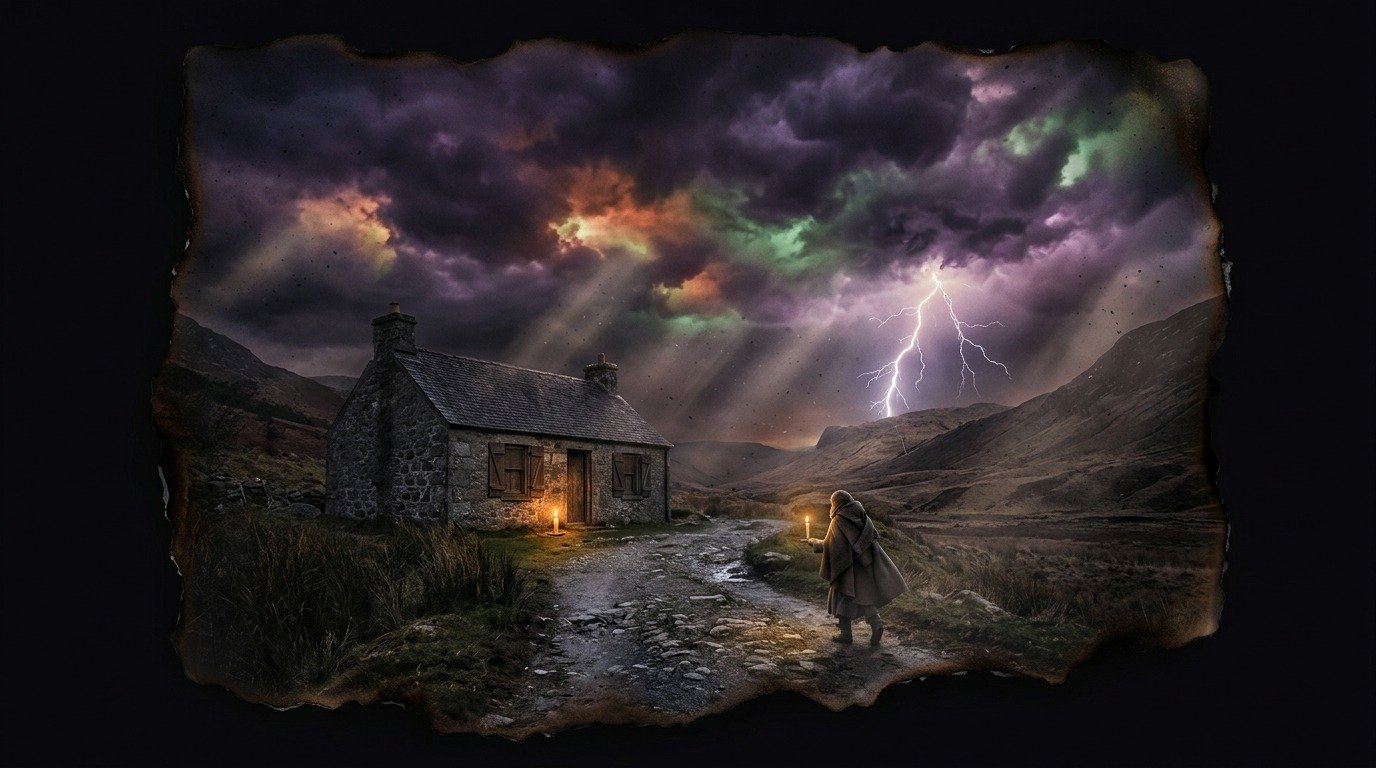
The Eternal Night of the Wax Candles
The prophecy of the Three Days of Darkness, an eschatological account shared by numerous Catholic mystics from the 19th to the 20th century, foretells that the Earth will be enveloped in a night of absolute and supernatural darkness lasting exactly seventy-two hours. During this event of biblical proportions, every source of electrical energy, artificial light, and common fire will fail completely, the atmosphere will become toxic, and legions of demons will rise from the abyss to claim the ungodly. The prophecy warns that only pure beeswax candles that have been previously blessed will be able to be lit and provide light to the homes of the faithful. This cataclysm is presented as the final purification before the restoration of the world and the beginning of an era of Christian peace. The instructions for survival are rigorous: when the darkness begins, believers must lock themselves in their homes, hermetically seal doors and windows with thick blankets, light the blessed candles, and devote themselves to continuous prayer without attempting to look outside, under the warning that the wrath of God will be visible outdoors and anyone who dares to look will die instantly.
The Terror of the Seventy-Two Hours
The account describes a scenario of cosmic terror. The beginning of the phenomenon will be announced by a thunderclap so powerful that it will shake the foundations of the Earth, accompanied by earthquakes and a sudden change in global temperature. The sun will completely disappear and the moon will turn red before absolute darkness falls upon the planet. The air will become saturated with sulfur and poisonous vapors, making breathing impossible for anyone outdoors. Demons will take on frightful forms and roam the streets, mimicking the voices of deceased relatives and friends to deceive people into opening their windows. Only the interior of homes protected by faith and the light of the blessed candles will remain safe. At the dawn of the fourth day, the sun will shine once more upon an Earth cleansed of evil, where fields will bloom again and a time of spiritual renewal and abundance will begin.
The Origin of the Plague of Darkness
Although the concept of a divine darkness has roots in the plague of the biblical Exodus and the Apocalypse of Saint John, the modern structure of the Three Days of Darkness took definitive shape through the visions of the Italian mystic Anna Maria Taigi (1769–1837). Taigi, beatified by the Church in 1920, described in detail the falling of the mystical night and the futility of any fire other than that of the blessed candles. Subsequently, the French stigmatist Marie-Julie Jahenny (1850–1941) expanded upon these revelations, specifying that the darkness would occur over three full days, from Thursday to Saturday, and that the beeswax candles would burn without being consumed in the homes of the just. In the second half of the 20th century, the dissemination of alleged messages attributed to Padre Pio of Pietrelcina consolidated this prophecy within traditionalist Catholic folklore, spreading fear throughout the Western world.
The Propagation of the Sacred Panic
Throughout recent decades, the prophecy of the Three Days of Darkness has been regularly triggered by global crises, unusual eclipses, or geopolitical tensions. Groups of traditionalist Catholics in Europe and the Americas maintain the custom of stockpiling pure beeswax candles and taking them to be blessed on Candlemas Day as a preparation measure for the great night. During the turn of the millennium in the year 2000, and later in the face of the prediction of the end of the Mayan calendar in 2012, rumors of the imminent arrival of darkness flooded social media and parish bulletins. The combination of real scientific elements (such as massive solar storms that could disable the global power grid) with the mystical aspects of the prophecy endowed the narrative with a technological realism that frightened thousands of people outside the religious tradition.
The Mystery of the Elusive Date
The Catholic Church has never adopted the prophecy of the Three Days of Darkness as official doctrine, keeping it strictly within the realm of private spiritual opinions that do not bind the faith of the baptized. Theologians frequently warn against the danger of falling into material superstitions, such as fetishism surrounding wax candles, pointing out that true preparation for the end times must be internal and moral. Despite the fact that the multiple dates suggested by modern interpreters have passed without the sun going out, the prophecy maintains its strength due to its dramatic and visual character. It has not been fulfilled, yet its power lies in the primal fear of absolute darkness and in the promise that salvation may depend on a simple candle stub lit in the corner of a closed room. When night falls and the wind rises, the whisper of the seventy-two hours of darkness continues to echo in the memory of those who await the final thunderclap.
Comments
Share information, an experience, or a source to help enrich this entry. They are automatically reviewed before being published.
Loading comments...