Whore of Babylon
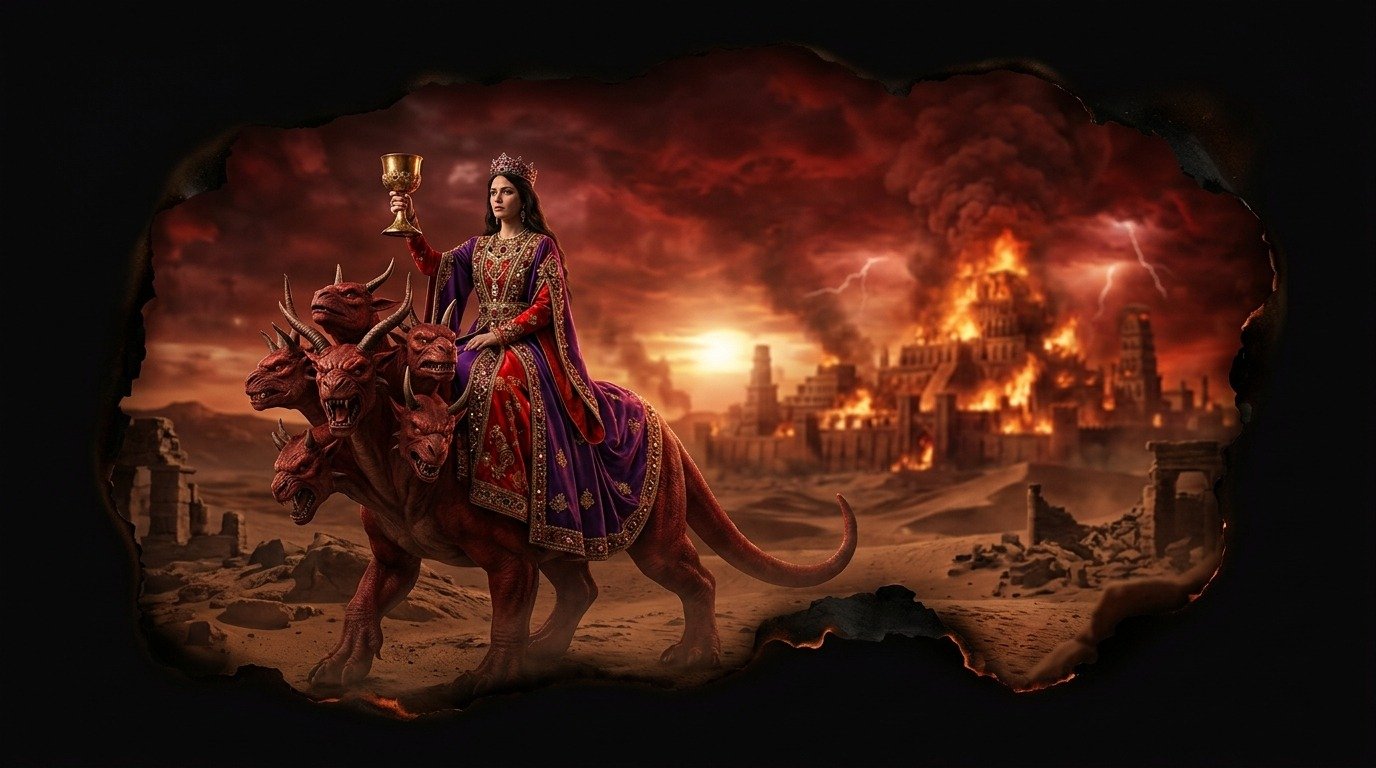
The Whore of Babylon: The Fall of the Great Corrupting Metropolis
The author of the Book of Revelation wrote down in the year 95 of our era the vision of the Whore of Babylon, a woman dressed in purple and scarlet holding a golden cup full of abominations while riding a seven-headed beast. This figure represents the most corrupt political, financial, and moral system on the planet, whose sudden destruction will mark the collapse of world trade before the final judgment. In the biblical narrative, an angel takes the prophet John into the wilderness to witness the fate of her who is called "the great city that reigns over the kings of the Earth." The woman is drunk with the blood of the saints and the martyrs of Jesus, evidencing a violent persecution against those who did not submit to her cultural and commercial influence.
The Vision of the Wilderness
The physical description of the woman underscores her immense wealth and her power of seduction. She is adorned with gold, precious stones, and fine pearls, elements that symbolize the opulence of empires that prosper through the exploitation of other nations. On her forehead, she has a mysterious name written: "Babylon the Great, the Mother of Harlots and of the Abominations of the Earth." The red beast she rides is the same seven-headed monster that represents tyrannical political power. The woman manipulates and directs this monster, indicating an intimate alliance between corrupt religion, global commerce, and military power. However, the prophecy foretells a dramatic turn: the very political forces that grew rich through her will end up hating her, will devour her, leave her naked, and burn her with fire. The collapse of this entity causes the weeping of the world's merchants and sailors, who watch the smoke of her burning from afar. No one buys their merchandise of gold, silver, silk, iron, slaves, and human lives anymore, paralyzing the international economy in a single day.
The Historical Target: Imperial Rome
For first-century readers, the identity of the Whore of Babylon presented no mystery. The use of the name "Babylon" was a code widely used by Jews and early Christians to refer to the Roman Empire. Just as ancient Babylon had destroyed the First Temple of Jerusalem in the year 586 BC, Rome had destroyed the Second Temple in the year 70 AD. The geography described in the text confirms this historical interpretation. The angel explains that the seven heads of the beast on which the woman sits are "seven mountains," a direct reference to the seven hills of Rome. Furthermore, the purple and scarlet garments were the official colors of Roman senators and magistrates, obtained through extremely expensive dyes that only the capital of the empire could import in large quantities.
The Theological Disputes of the Reformation
During the Middle Ages and the Renaissance, the symbol of the Whore of Babylon became a weapon of political and theological propaganda. With the outbreak of the Protestant Reformation, leaders like Martin Luther and John Calvin applied this title directly to the Catholic Church and the papal court of Rome. They argued that the wealth accumulated by the Vatican, the sale of indulgences, and the political influence of the Pope over European monarchies fit perfectly with the golden cup full of filth. In response, Catholic Counter-Reformation theologians maintained that the Whore represented only the pagan Rome of the early centuries that persecuted the apostles Peter and Paul, or else a future apostate Jerusalem that would betray the Christian faith in the times of the Antichrist.
The Echo of the Fall
The physical destruction of Rome by heavenly fire, as described literally in Revelation, never occurred. However, the sack of Rome by the Visigoths in the year 410 and the subsequent fall of the Western Roman Empire in 476 were interpreted by Christian thinkers of the time, such as Saint Augustine, as the spiritual fulfillment of the fall of great Babylon. The figure of the Whore of Babylon survives in cultural and religious analysis as the universal symbol of excessive luxury, institutional decadence, and the corruption that inevitably precedes the fall of the great economic empires of human history.
Comments
Share information, an experience, or a source to help enrich this entry. They are automatically reviewed before being published.
Loading comments...