Hermeticism
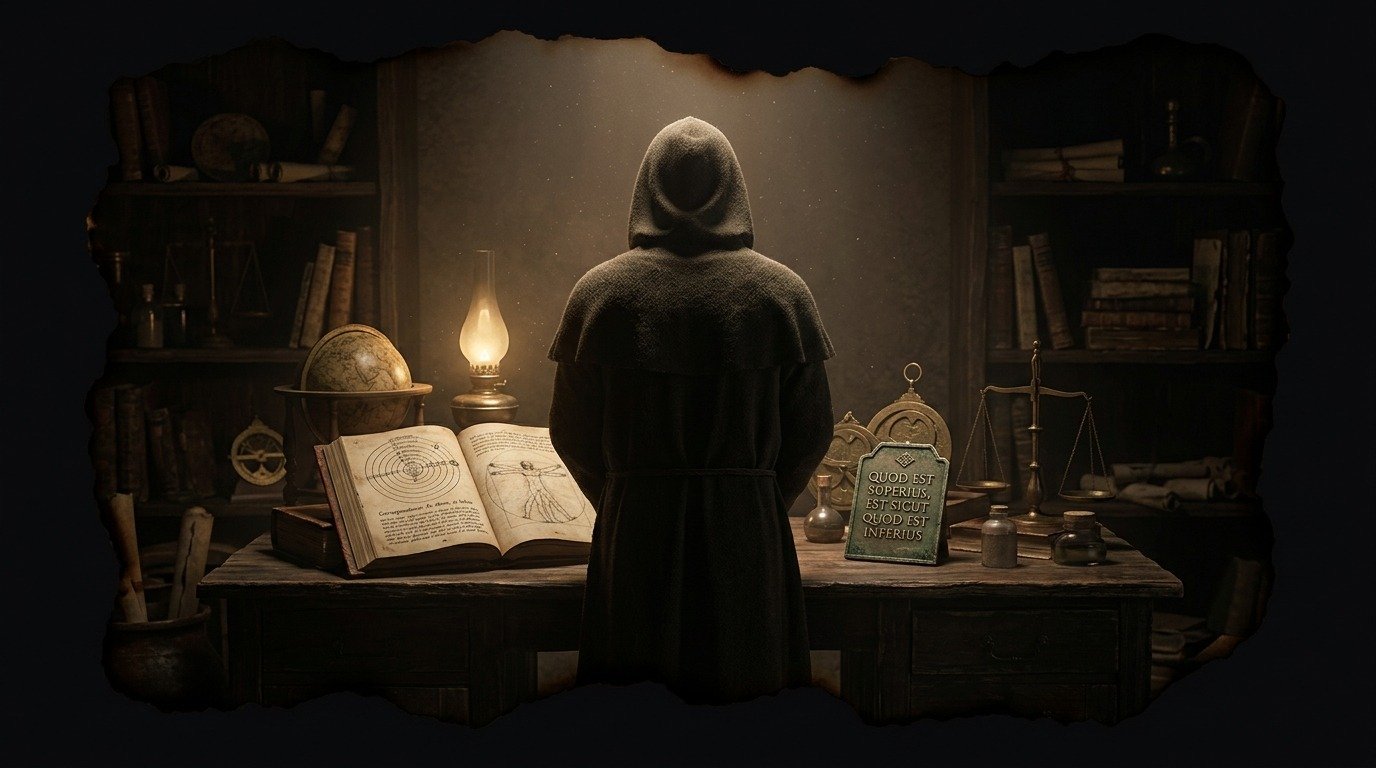
Hermeticism: The Philosophy of the Thrice-Greatest
What it is
Hermeticism is a school of philosophical and esoteric thought based on the teachings attributed to Hermes Trismegistus, a syncretic figure combining the Egyptian god Thoth and the Greek god Hermes. This doctrine proposes that the cosmos is an organic and living whole, governed by immutable laws, and that human beings can achieve divinization and the understanding of reality through inner knowledge or *gnosis*.
How it works
The Hermetic system is organized around the understanding of the cosmos and the divine mind. Its language is that of analogy and correspondence. The modern doctrinal framework is synthesized into seven universal principles compiled in the text *The Kybalion*: 1. **Mentalism**: The All is mind; the universe is mental. 2. **Correspondence**: As above, so below; as within, so without. This principle connects the macrocosm with the microcosm. 3. **Vibration**: Nothing is motionless; everything moves and everything vibrates. 4. **Polarity**: Everything is dual; everything has two poles; likes and opposites are the same. 5. **Rhythm**: Everything flows and reflows; everything has its periods of advance and retreat. 6. **Cause and effect**: Every cause has its effect; every effect has its cause. 7. **Gender**: Gender is in everything; everything has its masculine and feminine principles. The Hermetic spiritual process seeks mental transmutation, which allows the practitioner to change their own mental states and operate upon their reality. Furthermore, it proposes the ascent of the soul through the seven planetary spheres to free itself from astral influences and reintegrate into the divine source.
Origin and history
Historical Hermeticism was born in Greco-Roman Alexandria (Egypt) between the 1st and 3rd centuries AD. It emerged as a fusion of Egyptian theology, Platonism, Stoicism, and Jewish mysticism. The foundational texts of this period are known as the *Hermetica*. The main compendium is the *Corpus Hermeticum*, a collection of seventeen treatises written in Greek. Another key text is the *Asclepius*, preserved in Latin. The famous *Emerald Tablet*, attributed to Hermes Trismegistus, contains the maxim "as above, so below" and serves as the foundation for medieval and Renaissance alchemy. During the Middle Ages, Hermeticism survived mainly in the Islamic world. In 1460, the monk Leonardo de Pistoia brought a manuscript of the *Corpus Hermeticum* to Florence. The patron Cosimo de' Medici ordered the philosopher Marsilio Ficino to halt his translation of Plato to immediately translate these Hermetic texts, sparking the esoteric renaissance in Europe.
Key figures
- **Hermes Trismegistus**: The "Thrice-Greatest", a legendary master conceived as an Egyptian sage of remote antiquity. - **Marsilio Ficino (1433–1499)**: Italian philosopher who translated the *Corpus Hermeticum* into Latin, introducing the doctrine to European intellectuals. - **Giordano Bruno (1548–1600)**: Philosopher and cosmologist who integrated Hermeticism into his vision of the infinite universe, executed by the Inquisition. - **Heinrich Cornelius Agrippa (1486–1535)**: Author of *De occulta philosophia*, a work that systematizes Hermetic magic. - **Three Initiates**: Pseudonym of the authors of *The Kybalion* (1908), a key text for modern Hermeticism.
How it is understood today
Today, Hermeticism is the theoretical foundation of Western ceremonial magic and contemporary esoteric movements. Historical and philological research recognizes Hermeticism as an intellectual current of significant weight in the Renaissance; according to the thesis of historian Frances Yates, it even contributed to the birth of modern science by encouraging the active study of nature, although other historians debate that scope.
Connections
Hermeticism connects directly with Alchemy (considered its practical branch), Astrology (which reads the correspondence of the spheres), Hermetic Qabalah, Tarot, and the Rosicrucians.
Comments
Share information, an experience, or a source to help enrich this entry. They are automatically reviewed before being published.
Loading comments...