Rosicrucians
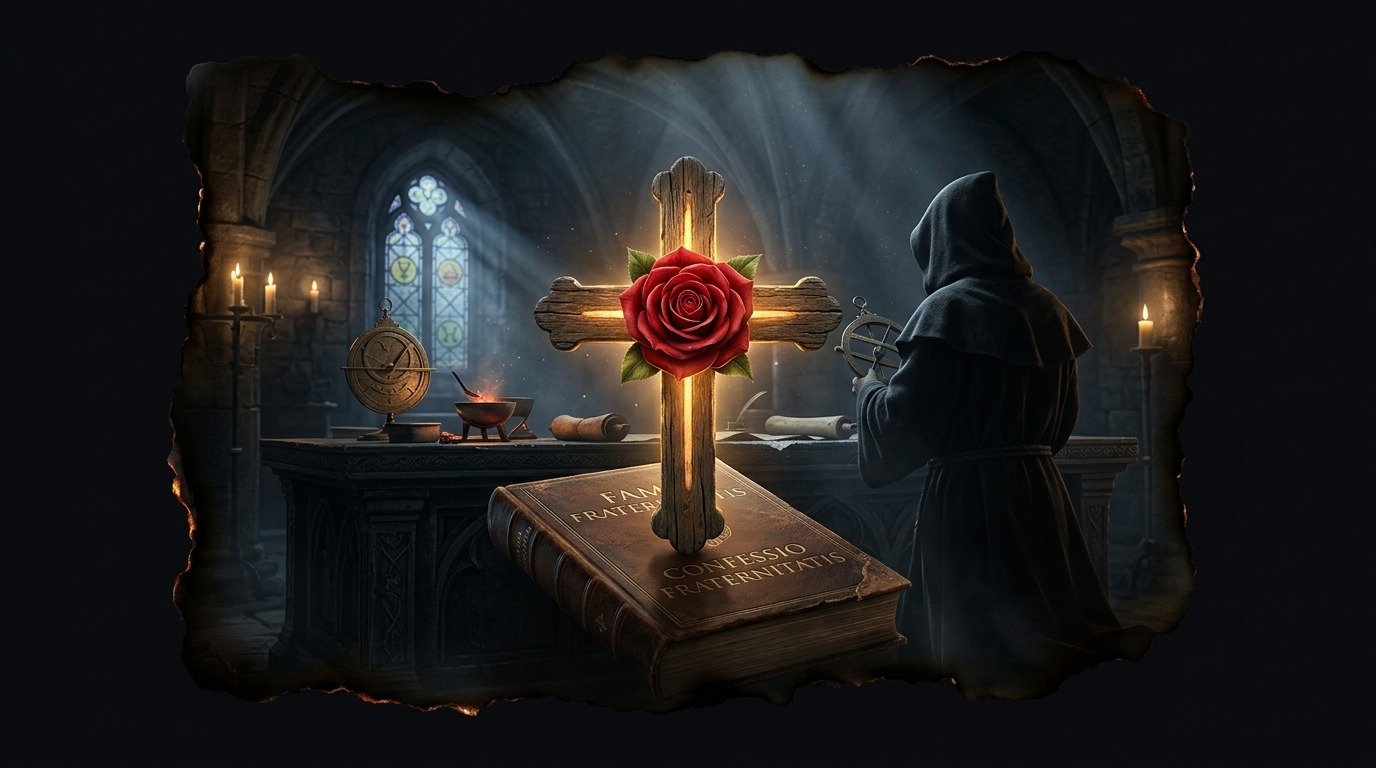
Rosicrucians: The Secret Fraternity of Spiritual Reform
What it is
The Rosicrucian tradition is a mystical, philosophical, and esoteric movement that emerged in the 17th century. It proposes a profound intellectual, scientific, and spiritual reform of human society through the study of the laws of nature and the awakening of the divine potentialities residing within human beings. Its doctrine is syncretic in nature, uniting science and mysticism into a single wisdom.
How it works
The Rosicrucian system functions as an individualized path of spiritual development, structured through degrees of initiation. Its language and symbology are inherited from spiritual alchemy and mystical Christianity.
The central emblem of the tradition is the Rosy Cross: a red rose blooming in the center of a wooden cross. The cross represents the individual's physical body and the material plane of existence; the blooming rose represents the human soul unfolding harmoniously through consciousness.
The Rosicrucian school teaches the integration and mastery of natural forces in daily life. Rosicrucian alchemy is mental and spiritual: the practitioner does not transmute physical metals, but rather works on their own flaws (the lead) to convert them into divine virtues (the gold of the spirit).
Origin and history
The Rosicrucian movement manifested publicly in Germany in the early 17th century through the anonymous publication of three texts:
1. **Fama Fraternitatis** (1614): Announces the existence of the fraternity and recounts the story of its symbolic founder, the knight Christian Rosenkreutz, who traveled to the East to acquire sacred science. 2. **Confessio Fraternitatis** (1615): Details the order's intentions to guide a great scientific, philosophical, and religious reform in Europe. 3. **The Chymical Wedding of Christian Rosenkreutz** (1616): A mystical allegory that narrates the spiritual initiation of Rosenkreutz in a mysterious castle.
Although the manifestos described an order active in secret, historical research attributes the authorship of these texts to a group of Protestant intellectuals from Tübingen, led by the Lutheran theologian Johann Valentin Andreae. The publication sparked an enormous intellectual stir that attracted great thinkers of the era.
Key figures
- **Christian Rosenkreutz**: An allegorical figure conceived as the mystical founder of the order in the 14th century. - **Johann Valentin Andreae (1586–1654)**: German theologian who wrote *The Chymical Wedding* and is considered the intellectual driving force behind the original manifestos. - **Robert Fludd (1574–1637)**: English physician and hermetic philosopher who publicly defended the Rosicrucian order through detailed writings on cosmology. - **Michael Maier (1568–1622)**: German physician and alchemist who served as an advisor to Emperor Rudolf II and structured the Rosicrucian apology. - **Harvey Spencer Lewis (1883–1939)**: Founder in 1915 of the Ancient and Mystical Order Rosae Crucis (AMORC), the largest modern Rosicrucian organization in the world.
How it is understood today
In today's esoteric landscape, the Rosicrucian tradition is represented by several independent orders and fraternities (such as AMORC, the Lectorium Rosicrucianum, and Max Heindel's Rosicrucian Fellowship). These organizations offer courses in metaphysics, mystical health, and philosophy of life. Historians analyze the original Rosicrucian phenomenon as a reformist movement that stimulated critical thinking, also acting as a catalyst for the development of speculative Freemasonry and, according to some historians, the intellectual environment from which scientific institutions like the Royal Society of London were born.
Connections
The Rosicrucian tradition connects directly with Alchemy (from which it takes its spiritual lexicon), Hermeticism, Freemasonry (which possesses a "Knight Rose Croix" degree), Kabbalah, and Theosophy.
Comments
Share information, an experience, or a source to help enrich this entry. They are automatically reviewed before being published.
Loading comments...