Theosophy
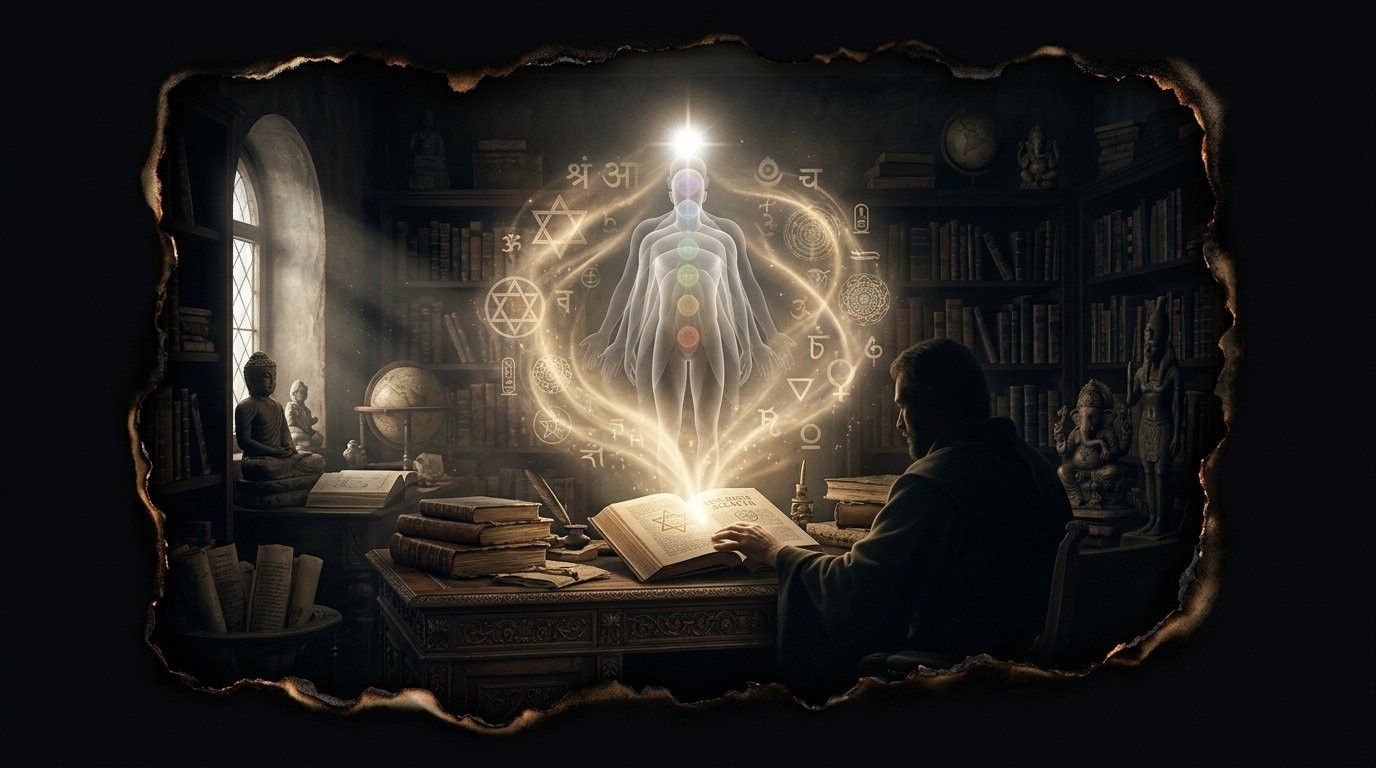
Theosophy: the search for universal truth
What it is
Theosophy is a philosophical and esoteric movement that seeks the direct understanding of the divine, the laws of nature, and the origin of the cosmos. The modern Theosophical movement, founded in the late 19th century, postulates the existence of a "Secret Doctrine" or primordial wisdom that lies at the core of all great religions and philosophical systems in human history.
How it works
Modern Theosophy does not operate through magical rituals or religious devotion, but rather through the comparative study of religion, science, and philosophy. Its organizational structure is defined around three fundamental objectives drafted in its bylaws: 1. To form the nucleus of a universal brotherhood of humanity, without distinction of race, creed, caste, or color. 2. To encourage the comparative study of religion, philosophy, and science. 3. To investigate unexplained laws of nature and the powers latent in humanity. Doctrinally, Theosophy teaches that the cosmos evolves in orderly cycles and that human life is governed by the laws of Karma (spiritual cause and effect) and reincarnation (the cycle of birth and death for the evolution of the soul). According to its esoteric anthropology, the human being possesses a septenary constitution; it is composed of seven bodies or vehicles of consciousness ranging from the dense physical body, through the astral and mental bodies, to the Atman or pure divine spark.
Origin and history
Although the term "theosophy" (from the Greek *theosophia*, "wisdom of God") was used since the 3rd century by Neoplatonic philosophers and mystic-theologians, modern Theosophy was formally founded on November 17, 1875, in New York with the creation of the Theosophical Society. Its founders were the Russian aristocrat Helena Petrovna Blavatsky, the American colonel Henry Steel Olcott, and the attorney William Quan Judge. Blavatsky claimed that her works were dictated or inspired by the Mahatmas or Masters of Wisdom, a group of highly evolved human beings residing in Tibet. Blavatsky's seminal works, *Isis Unveiled* (1877) and *The Secret Doctrine* (1888), laid the theoretical foundations of the society. In 1882, the Theosophical Society moved its international headquarters to Adyar, India. There, the spiritual traditions of Hinduism and Buddhism were assimilated, concepts that were translated into the esoteric vocabulary of the West.
Key figures
- **Helena Petrovna Blavatsky (1831–1891)**: Co-founder of the Theosophical Society and the primary theorist of the movement. - **Henry Steel Olcott (1832–1907)**: American military officer and attorney, first president of the Theosophical Society, responsible for its global organization. - **Annie Besant (1847–1933)**: British social activist and second president of the Theosophical Society, promoter of Indian self-rule. - **Charles Webster Leadbeater (1854–1934)**: Clergyman and influential Theosophist whose descriptions of the subtle bodies and chakras defined the movement's energetic doctrine. - **Rudolf Steiner (1861–1925)**: General secretary of the German section of the Theosophical Society, from which he split in 1913 to found Anthroposophy following doctrinal differences.
How it is understood today
The Theosophical Society remains active globally from its headquarters in Adyar and through various independent national sections. Its historical role was to act as the primary bridge for transmitting Eastern religious and philosophical concepts (such as karma, yoga, and chakras) to 20th-century Western society. Furthermore, Theosophy is the foundational pillar upon which the New Age (*New Age*) and transpersonal psychology movements were built.
Connections
Theosophy connects directly with Buddhism, Hinduism, Hermeticism, spiritual Alchemy, Anthroposophy, and co-freemasonry (Le Droit Humain), which Annie Besant helped to expand.
Comments
Share information, an experience, or a source to help enrich this entry. They are automatically reviewed before being published.
Loading comments...