Golden Dawn
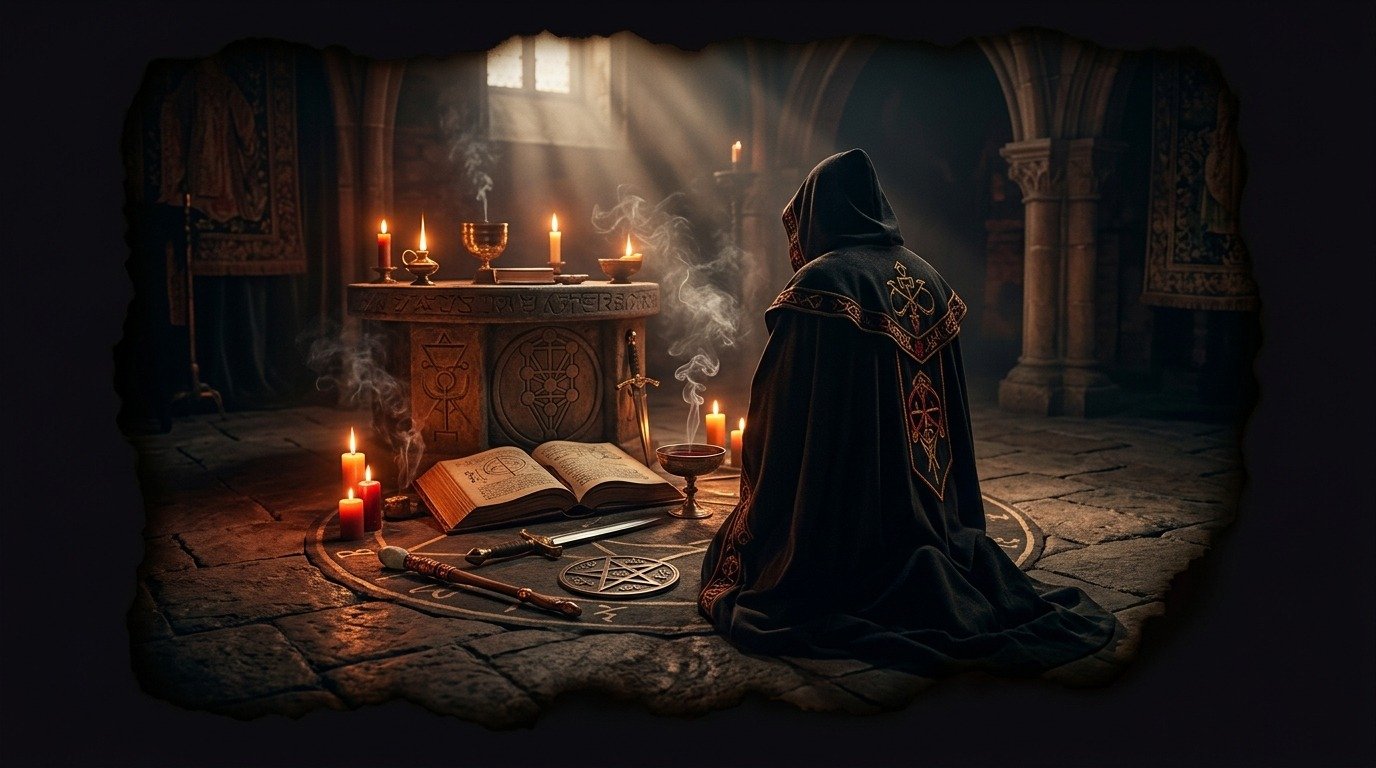
Golden Dawn: The Temple of Western Ceremonial Magic
What it is
The Hermetic Order of the Golden Dawn (*Hermetic Order of the Golden Dawn*) is an esoteric and initiatory society founded in England in the late 19th century. Its historical merit lies in having taken the scattered currents of Western esotericism (Qabalah, tarot, alchemy, astrology, and Enochian magic) to unify them into a single coherent, structured, and progressive system of spiritual and practical development.
How it works
The order works through a hierarchical structure of grades based on the Tree of Life of the Hermetic Qabalah. Members advance from the grade of Neophyte (0=0) to reach the higher grades of the Second Order. This structure is divided into three levels: 1. **First Order (Golden Dawn)**: focused on the theoretical study of occult correspondences, meditation, and the mastery of the elemental forces of one's own being. 2. **Second Order (Rosae Rubeae et Aureae Crucis)**: where practical ceremonial magic, the consecration of tools, and astral projection are taught. 3. **Third Order (Secret Chiefs)**: made up of incorporeal spiritual entities who direct the internal current of the organization. Practitioners use four basic ceremonial tools associated with the elements: the fire wand, the water cup, the air dagger, and the earth pentacle. The system includes daily banishing rituals, such as the *Lesser Ritual of the Pentagram*, to cleanse the space of unwanted influences before performing any magical operation of invocation.
Origin and history
The Golden Dawn was founded in London in 1887 by three high-ranking occultists and Freemasons: William Wynn Westcott, Samuel Liddell MacGregor Mathers, and William Robert Woodman. The foundation of the system arose from the decoding of the *Cipher Manuscripts*, a coded document of uncertain origin in Westcott's possession, which contained the outlines of the elemental initiation rituals. The order flourished rapidly and opened temples in London, Weston-super-Mare, Bradford, Edinburgh, and Paris. However, in 1900, internal tensions over Mathers' leadership, the eccentricity of its members, and disputes over initiatory control caused the original group to fracture into various branches, from which the *Stella Matutina* and *Alpha et Omega* emerged.
Key figures
- **Samuel Liddell MacGregor Mathers**: the primary translator of ancient magical texts and drafter of most of the order's practical rituals. - **William Wynn Westcott**: a physician and coroner (*coroner*) from London, who provided the *Cipher Manuscripts* and coordinated the initial administration of the order. - **Arthur Edward Waite**: a member of the order who shifted its focus toward Christian mysticism and designed the Rider-Waite-Smith tarot. - **Dion Fortune**: a British occultist, psychotherapist, and author who used the foundations of the order to develop esotericism centered on psychology and the astral plane.
How it is understood today
The Golden Dawn is the school that defines the structure of ritual magic in the West. The resurgence of neopaganism and the creation of modern religions such as Wicca draw directly from its elemental and ceremonial correspondences. Today, independent organizations continue to use the order's historical material for initiatory instruction, while academia studies it as the primary reference point for Victorian-era occultism.
Connections
It is related to the Rosicrucians, Hermetic Qabalah, Enochian Magic, Tarot, and the *Stella Matutina* society.
Comments
Share information, an experience, or a source to help enrich this entry. They are automatically reviewed before being published.
Loading comments...