Upír
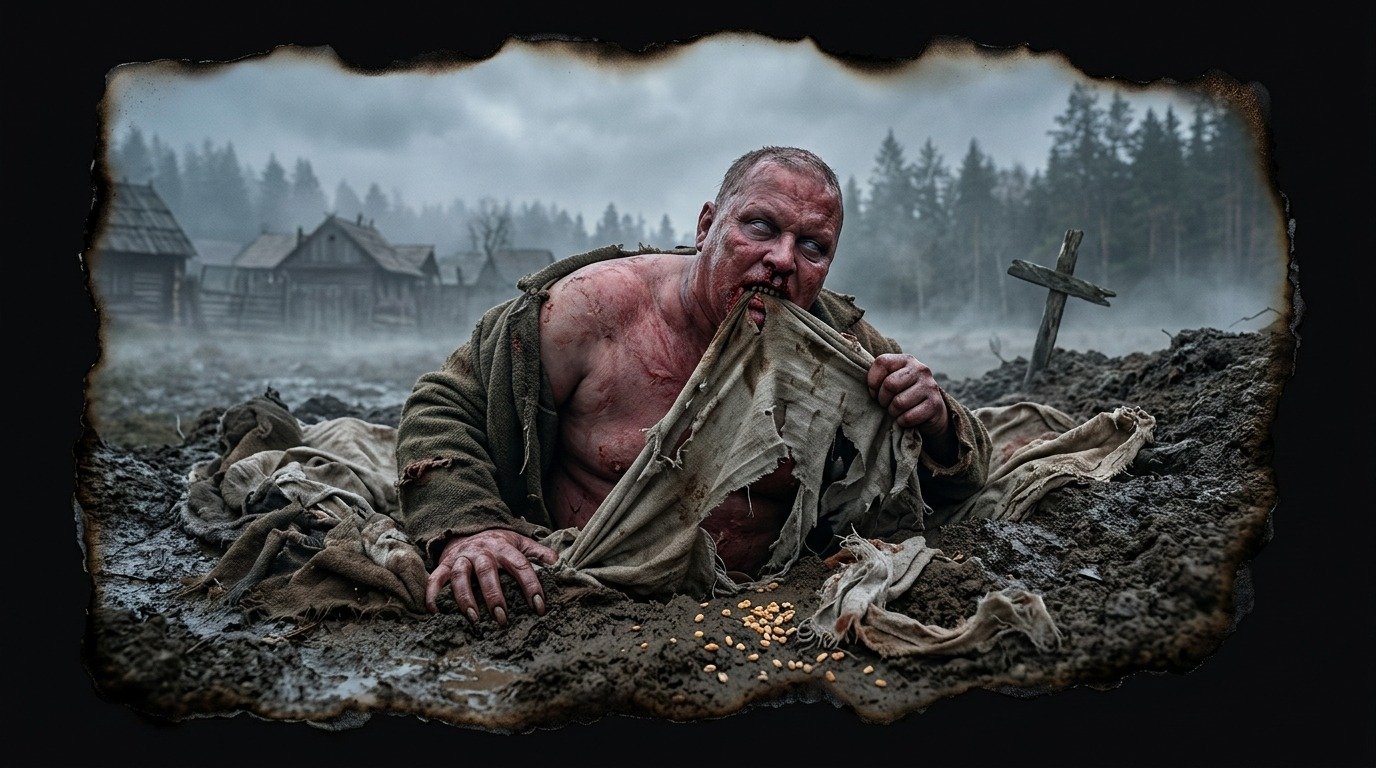
Upír: The Devouring Corpse and the Root of Slavic Vampirism
Origin and Legend
To find the genesis of the vampiric figure, one must not look to Victorian salons or Central European aristocracy, but to the muddy fields, deep forests, and peasant communities of pre-Christian and early medieval Eastern Europe. The *Upír* (with lexical variants such as the Polish *Upier*, the Kashubian *Upor*, or the Ukrainian *Opyr*) is the primal archetype of the Slavic undead. Etymologically, linguists and folklorists like Aleksandr Afanasyev have traced the word back to the Proto-Slavic roots *\*upirь*, alternatively associating it with the term *\*pyrъ* (fire, inflammation, alluding to the reddish complexion of the bloated corpse) or with the Turkic-Bulgar root *\*uber* (witch or evil being).
In pagan Slavic cosmological thought, death was not an instantaneous event, but a prolonged transition of forty days during which the soul (*duša*) had to detach itself from the body (*telo*). If this process was interrupted by a violent or premature death, suicide, the practice of witchcraft, or the omission of proper funerary rites, the individual failed to become a protective ancestor (*Dziad*). Instead, the corpse retained a grotesque and hostile animation, transforming into an *Upír*: a corporeal vessel possessed by a telluric force or an unclean spirit (*nechistaya sila*).
Unlike ethereal creatures, the original *Upír* is markedly physical, dense, and voracious. It is not a substanceless specter, but the dead flesh itself refusing to reintegrate into the earth, returning to the home of its former loved ones to consume not only their blood, but their vital energy, their grain reserves, and the life of their livestock.
Historical and Regional Evolution
The arrival of Orthodox and Catholic Christianity in Slavic lands did not eradicate the belief in the *Upír*, but rather systematized it and altered its meaning. In medieval Russian chronicles, such as *The Tale of Igor's Campaign* and ecclesiastical commentaries from the 11th to the 13th centuries, it is mentioned how peasants continued to offer sacrifices to the *Upiri* and the *Beregini* (protective spirits of water and riverbanks) before invoking the Christian God. The Church recontextualized the *Upír* not as a purely folkloric phenomenon, but as the direct consequence of excommunication, lack of baptism, or a pact with the Devil.
Geographically, the myth branched into highly specific regional traditions: - **Poland and Ukraine (*Upier* / *Upiór*):** It was believed that the *Upier* was born with two hearts and two souls. Upon death, only one of the souls left the body, while the second remained trapped in the corpse, forcing it to rise from the grave. They were usually associated with people of abnormally red complexions or those born with a caul (*cawl*). - **Northern and Central Russia (*Upyr*):** The narrative emphasized that the corpse rose at night to devour its own children and relatives in order of kinship. If not stopped, it would destroy the entire village. - **Kashubia Region (*Upór* / *Wieszczy*):** On the Baltic coast, it was believed that the corpse in the grave began to devour its own garments, its hands, or its shroud (*tuszka*). As it devoured its shroud, plague and death spread through the deceased's family.
During the great plague and typhus epidemics that ravaged Eastern Europe between the 16th and 18th centuries, vampiric hysteria reached its zenith. Untimely or hasty burials led to the exhumation of bodies showing natural processes of decay—such as anaerobic decomposition that generates abdominal bloating, exudation of bloody fluids from the mouth and nose, and the retraction of gums and skin that gives the illusion of nail and tooth growth. To the peasant mind, these scientific signs were irrefutable proof that the *Upír* was "fed" and active in its grave.
Esoteric and Symbolic Significance
Within occult geography and archetypal symbolism, the *Upír* embodies the **retention of form in decaying matter**. In the esoteric traditions of the Left-Hand Path and traditional necromancy, the *Upír* is the primary symbol of the "unclean will not to dissolve." It represents the material ego desperately clinging to physical existence at the expense of the natural order of transmutation.
Kabbalistically, the *Upír* dwells in the sphere of *Yesod of Qliphoth* (the shadow of the sphere of the Moon and astral projection), interacting directly with *Malkuth* (the material plane). It is the condensation of the dense astral body (*kama-rupa* or desire body) that has not been purified after biological death. The physical body, instead of returning to the four elements, becomes a vampire fed by unresolved passions, greed, envy, or earthly fixation.
From a depth psychology perspective, the *Upír* represents the unprocessed collective trauma of a community: unresolved grief, the fear of the tyranny of the ancestor who continues to dominate the living from beyond, and survivor's guilt. The *Upír* first devours its immediate family because the blood cord acts as the psychic channel of least resistance for the discharge of that obsessive fixation.
Manifestation, Testimonies, and Practice
The manifestation of the *Upír* in field chronicles and ecclesiastical exhumation records of the 17th and 18th centuries (such as those documented by the Benedictine monk Augustin Calmet) follows a rigorous pattern of physical oppression and nocturnal shadows. Unlike the cinematic vampire, the *Upír* rarely spoke; it manifested as a suffocating heaviness on the victim's chest while sleeping (sleep paralysis) or as a rumor of noisy chewing coming from the cemetery.
**Archaeological Records and Documented Testimonies:**
The historical record does not spare documented physical interventions. Excavations at sites such as Gliwice and Drawsko (Poland), as well as Kamień Pomorski, have brought to light "anti-vampiric" cemeteries dating from the 13th to the 17th centuries. The remains found show overwhelming evidence of social panic: - Decapitated corpses with the head placed between the legs or between the feet, to prevent the body from finding its own head. - Iron sickles placed over the necks of the deceased, arranged in such a way that, if the corpse attempted to rise from the grave, the blade would automatically decapitate it. - Massive rocks or large blocks of stone placed directly over the jaw or chest to immobilize the bodily structure. - The practice of pinning the corpse to the ground with stakes of oak, hawthorn, or ash, binding its hands and feet.
**Traditional Protection Protocols:**
In Slavic folklore, prevention against the *Upír* required preventive rituals in the grave itself: 1. **The Mutilation of the Corpse:** If an individual was suspected of becoming an *Upír*, the tendons of their knees were severed before burial, or poppy seeds (*mak*) were sprinkled inside the coffin. Popular belief dictated that the *Upír* possessed an arithmomanic compulsion: it was obliged to count every poppy seed before it could leave the grave; since it could only count one seed per year, it remained trapped indefinitely. 2. **The Use of Iron and Fire:** Iron (a symbol of civilization and order against primal chaos) and sacred wood ash were placed in the cavities of the body. 3. **Exhumation and Cremation:** If the plague had already begun, the community proceeded with exhumation under the supervision of the *Dhespina* or local healer. If the body was found to be flexible, with rosy skin and fluid blood in the abdominal cavities, the heart was pierced with a stake in a single blow (it was believed that a second blow would revive the being) and the entire body was reduced to ashes on a pyre outside the village limits.
Comments
Share information, an experience, or a source to help enrich this entry. They are automatically reviewed before being published.
Loading comments...