Strigoi
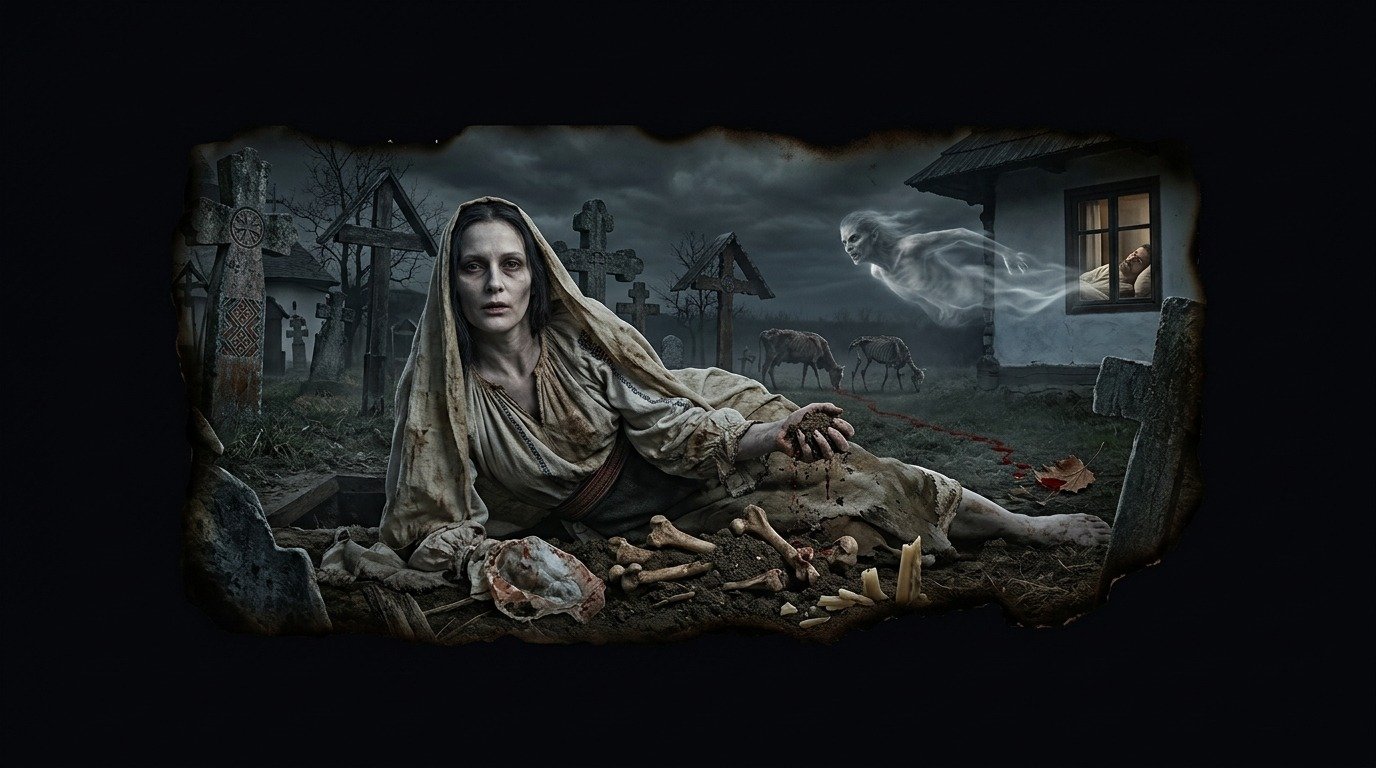
Strigoi: The Restless Spirits and the Blood Plague of Romanian Folklore
Origin and Legend
In the heart of Dacian mythology and Romanian folklore from the regions of Transylvania, Oltenia, and Moldavia stands the figure of the *Strigoi* (feminine: *Strigoaică*). The linguistic root of the term refers directly to the Latin *strix* or *striga*, the nocturnal bird of ill omen from Roman mythology that fed on human flesh and blood, particularly that of children. However, the Romanian *Strigoi* is a much more complex ontological construct than the classical *strix*, the result of syncretism between the animist beliefs of the ancient Dacians and Orthodox peasant Christianity. In the Romanian worldview, existence is divided between the earthly plane and the invisible dimension. The *Strigoi* is not simply a walking dead person, but a cosmic disruption in the cycle of the soul. Tradition rigorously divides these entities into two fundamental categories: - **Strigoi Viu (Living Strigoi):** A human being born marked with the vampiric condition. They possess two souls or an altered spirit that leaves the physical body during the night (especially on the eves of sacred holidays such as St. George's or St. Andrew's) to gather with others of their kind, devour the energy of animals, or threaten the health of their neighbors. - **Strigoi Mort (Dead Strigoi):** The corpse of a *Strigoi Viu* that, after biological death, does not decay in the grave. It rises from its tomb to suck the blood of its relatives, spread deadly diseases, and drain the fertility of the land and livestock.
Historical and Regional Evolution
The figure of the *Strigoi* has demonstrated extraordinary tenacity in the Romanian countryside, remaining active well into the 21st century. Unlike the romanticized versions of Western literature, the *Strigoi* was never perceived as an aristocrat secluded in a castle, but rather as an immediate, domestic, and neighborhood threat. Throughout the centuries, Romanian Orthodox demonology attempted to frame the *Strigoi* within the context of demonic possession or divine punishment for unconfessed sins. However, the peasant mindset preserved pre-Roman criteria for identification. It was firmly believed that a person would become a *Strigoi* if: - They were born with an amniotic caul (*scufiță*) over their head or a membrane of skin on their shoulders. - They were the seventh child of the same sex in an unbroken family line. - They were conceived on a forbidden religious holiday. - They died suddenly without a pure wax candle (*lumânare de trecere*) being lit for them to guide their soul through the dark realms. - A cat, a dog, a chicken, or even a person's shadow passed over the corpse before it was buried. In the Oltenia region, the belief became closely intertwined with the figure of the *Moroi* (often considered the ghost of an unbaptized child or a lower-ranking vampire), while in Moldavia the transition from *Strigoi Viu* to *Strigoi Mort* was understood as an inevitable hereditary curse affecting entire lineages.
Esoteric and Symbolic Significance
On the plane of mysticism and Left-Hand Path occultism, the *Strigoi Viu* is the archetype of the **astral sorcerer or the practitioner of energy vampirism**. It represents the ability of the trained or instinctive mind to project the etheric double (*doppelgänger*) outside the vessel of the flesh, operating in the subtle realms while the physical body remains in a state of catalepsy or stupor. Symbolically, the *Strigoi* is the embodiment of the **ancestral parasite**. It shows how the unresolved traumas, grudges, and bitterness of ancestors survive the dissolution of the flesh and continue to consume the life force of descending generations. The *Strigoi* does not seek world domination; it seeks the retention of vital fluid (*mana*, *prana*, or blood) to avoid the judgment of dissolution. Kabbalistically, it is placed in the shadows of the Qliphah *Gamaliel* (the Dark Dreams of God), where repressed desire, astral lust, and hunger for material existence coagulate into monstrous forms that assault the living during their moments of greatest psychic vulnerability: sleep paralysis and nighttime wakefulness.
Manifestation, Testimonies, and Practice
The manifestation of a *Strigoi* in a Romanian rural community was identified through specific indicators of community blighting: cows' milk dried up overnight, members of the same family fell ill with an inexplicable weakness in succession, and the village dogs howled, staring insistently toward a particular grave. **Documented Evidence and Modern Cases:** One of the most documented and controversial cases of the 21st century regarding the practical persistence of the ritual against the *Strigoi* occurred in February 2004 in the small village of Marotinu de Sus (Dolj, Romania). Following the death of a villager named Petre Toma, his niece fell gravely ill. The family concluded that Toma had become a *Strigoi Mort*. On the night of February 10, six men from the village went to the cemetery, exhumed Petre Toma's body, and discovered that, according to their testimonies, the corpse showed no rigor mortis, had fresh blood at the corners of its mouth, and its feet were shriveled. Following the ancestral protocol of ritual desecration: 1. They pierced his chest with a pitchfork. 2. They extracted his heart from the chest cavity. 3. They burned the heart over wooden embers until it was reduced to ashes. 4. They mixed the ashes with holy water and gave it to the sick relative to drink, who, according to local records, healed immediately. The case led to the intervention of Romanian judicial authorities and the conviction of the six men for grave desecration, but it made clear to modern anthropology that the protocols of the *Strigoi* remained alive in the collective unconscious. **Traditional Protection Protocols:** Romanian folklore specifies rigorous preventive procedures: - **St. Andrew's Eve (November 29):** This is considered the night of greatest *Strigoi* activity. Families anoint the frames of all doors, windows, and chimneys with crushed garlic (*usturoi*), turn all kitchen vessels upside down, and place hawthorn branches at the entrances to the home. - **White Horse Ritual:** To locate the grave of an unidentified *Strigoi*, a virgin stallion, of absolute white or absolute black color, ridden by a prepubescent youth, was led into the cemetery. The horse was made to walk over the graves; the tomb over which the animal flatly refused to advance, emitting neighs of terror, contained the *Strigoi*. - **Extraction and Destruction:** The definitive method required piercing the corpse with a red-hot iron bar or an ash stake, placing the body face down (*face down*) so that if it tried to dig, it would go deeper into the earth, and burying the body with its mouth full of garlic cloves.
Comments
Share information, an experience, or a source to help enrich this entry. They are automatically reviewed before being published.
Loading comments...