Vrykolakas
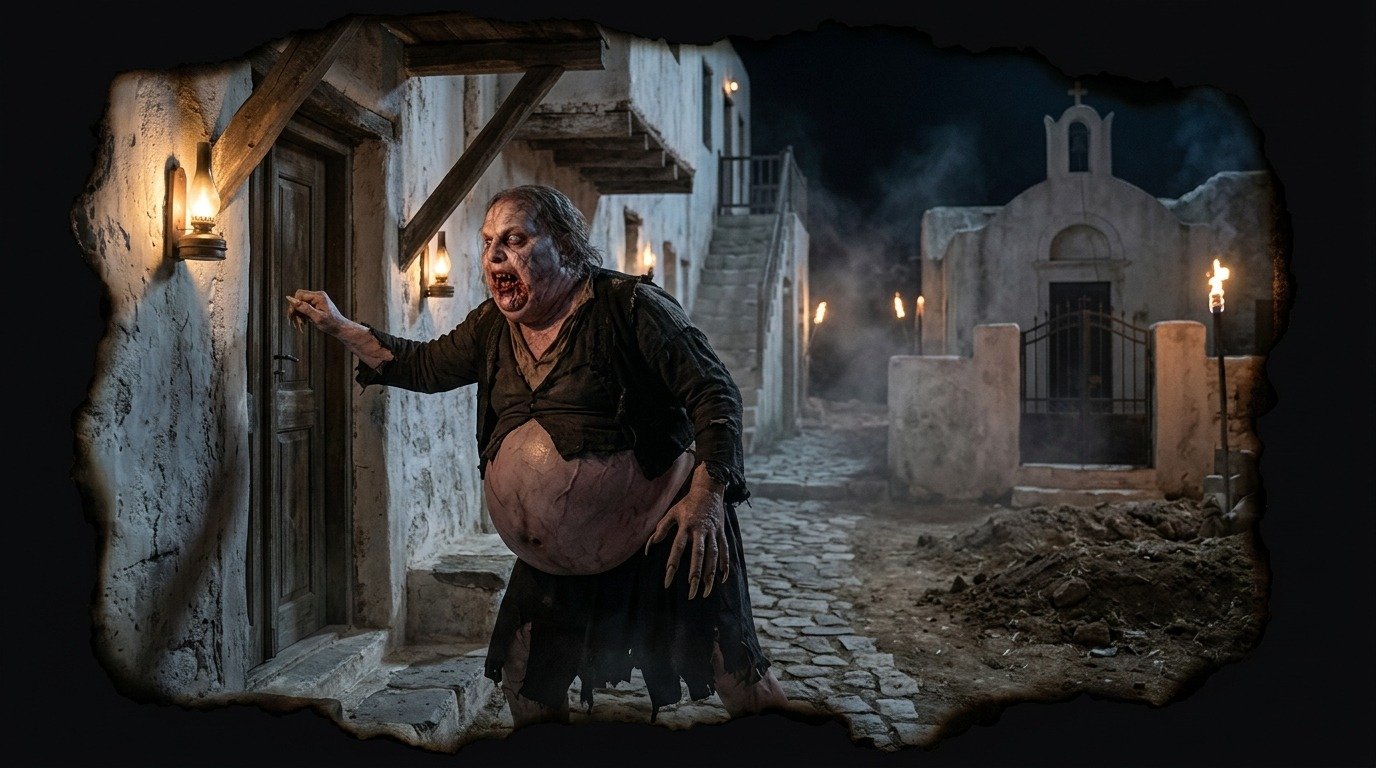
Vrykolakas: The Sleepless Excommunicate of the Mediterranean Levant
Origin and Legend
The *Vrykolakas* (variants: *Vorvolakas*, *Vrykolakos*; from Church Slavonic *vukodlak*, "wolf-skin") is the undead entity par excellence of Greece, the Aegean archipelago, and the island of Crete. Although its etymology denotes a primal Slavic root linked to lycanthropy, in Hellenic and Orthodox folklore the entity crystallized unequivocally as an incorrupt, bloated, and hungry corpse that returns from the grave to devour the living and drink their vital fluids.
The definitive chronicles of this creature come from European observers of the 17th and 18th centuries, most notably the French botanist Joseph Pitton de Tournefort in his *Relation d'un voyage du Levant* (1717), where he gives a first-hand account of the collective hysteria and subsequent exhumation and destruction of a Vrykolakas on the island of Mykonos in 1701. Unlike the incorporeal specter, the Vrykolakas possesses a body characterized by cadaveric bloating and digital rigidity: the skin stretches so tight that it resounds like a taut drum when struck (hence the popular term *typaniaios*, "drum-like body"). The creature leaves its grave at night, wanders the streets calling out the names of the town's inhabitants at their doors, and suffocates those who answer, or consumes their blood while they sleep.
Historical and Regional Evolution
The development of the Vrykolakas myth is inextricably linked to the ecclesiological theology of the Eastern Orthodox Church and the concept of the incorruptibility of the body. While in Roman Catholicism the preservation of a corpse after death is frequently interpreted as a miracle of sanctity, in the Byzantine and Islamic orthodoxy of the Balkans, the lack of natural decomposition is irrefutable proof of a curse or excommunication (*aphorismos*).
An individual became a Vrykolakas for various taboo reasons: 1. Dying under the formal excommunication of a bishop or priest. 2. Being buried in unconsecrated ground or without the proper funeral rites (*akedeia*). 3. Having consumed the meat of an animal killed by a wolf. 4. Being born on a sacred feast day or having led a life of extreme impiety and sacrilege.
During the Ottoman yoke in Greece, the belief reached endemic proportions. The inability of consecrated ground to "accept" the body of the deceased implied that the soul remained imprisoned in a deferred decay. The creature would continue to visit its widow or family, performing domestic chores at night or devouring the food supply, before escalating into outbreaks of hematophagy and destructive violence against the local population.
Esoteric and Symbolic Significance
From the perspective of theological esotericism and archetypal psychology, the Vrykolakas is the symbol of the *unresolved bond*. It represents the terrifying impossibility of the reintegration of physical matter into the primordial elements. The earth refuses to swallow the flesh of the excommunicate because the word of ecclesiastical authority (or the violent rupture of the social order) has closed the gates to the plane of spiritual rest.
The Vrykolakas preys upon the communal neurosis of guilt. It is the literal return of the unprocessed taboo. The creature knocking on the door and only pronouncing the victim's name once represents the summons of deferred death: Hellenic oral tradition maintains the strictly observed rule of never answering the first nightly knock at the door, but only the second, as the Vrykolakas lacks the ability or divine permission to repeat a name more than once consecutively.
Manifestation, Testimonies, and Exorcism Practices
Tournefort's records and the archives of the Orthodox dioceses in the Cyclades islands detail a very rigid anatomical and liturgical protocol for the eradication of the scourge:
* **Grave inspection:** After ninety days have passed since the burial, if the presence of the entity is suspected, the body is exhumed. If the corpse is found bloated, flexible, with open eyes, and with a ruddy face swollen with fresh blood in the chest or abdominal cavity, the condition of *typaniaios* is ruled. * **Pre-absolution rites:** Before proceeding to physical destruction, a priest must read the formal prayers of absolution (*sychorocharti*) over the coffin, attempting to lift the spiritual excommunication so that the flesh decomposes naturally and instantaneously. * **Somatic destruction:** If the prayers did not take immediate effect, the creature's heart was torn out with iron hooks right in the cemetery and impaled with a hawthorn stake or incinerated on a pyre of aromatic wood. Finally, the rest of the body was drenched in boiling oil and consecrated wine, or dismembered and completely burned on an uninhabited desert island (such as the islet of St. George), to prevent the ashes from contaminating the mainland.
Comments
Share information, an experience, or a source to help enrich this entry. They are automatically reviewed before being published.
Loading comments...