Wampir
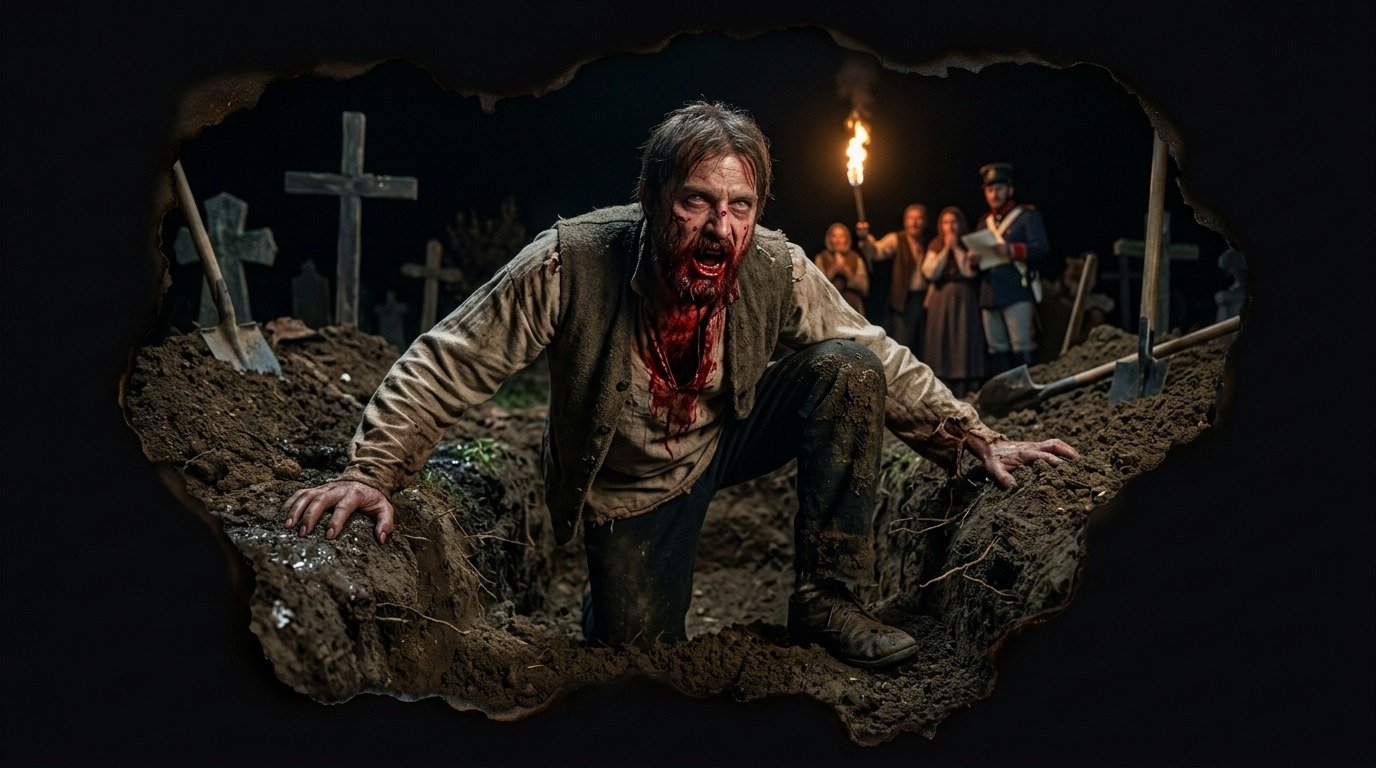
Wampir: The Parasite of Earth and Blood in Slavic Folklore
Origin and Legend
The *Wampir* (Polish: *wampierz*, *upiór*; Serbian: *vampir* / *вампир*) represents the primal archetype from which all literary and cinematic adaptations of the modern vampire derived. The first documented lexical appearance of the word appears in an Old Church Slavonic manuscript dated to the year 1047 AD, where reference is made to a prince named *Upir Lichy* ("the Wicked Vampire"). However, it was in early 18th-century Serbia and Poland—especially through cases highly documented by military administrators of the Austro-Hungarian Empire—that the phenomenon burst forth with historiographical rigor. The official files of the cases of **Peter Plogojowitz** (1725, village of Kisiljevo) and **Arnold Paole** (1727-1732, village of Meduegna), signed by imperial surgeons and Austrian officers, describe with surgical precision the characteristics of the Wampir: the bodies of individuals who had died weeks or months prior were found in their graves without any symptoms of cadaveric decay. They exhibited new, firm skin beneath a peeling epidermal layer, nail and hair growth, an absence of *rigor mortis*, and an abundant flow of fluid, fresh blood gushing from the mouth, nose, and ears. These entities would leave their graves at night to strangle peasants in their beds, feed on the blood from their throats or chest region, and cause epidemics of deadly weakness and consumptive fever in entire communities.
Historical and Regional Evolution
In the pre-adoptive Slavic mythological context, belief in the Wampir rested on the concept of the *dvoedushnik* (a person possessing two souls). One of the souls was mortal and departed the body at the moment of death; the second soul was immortal, telluric, or demonic, and remained trapped in the bodily tissues if the person had been a healer, a suicide victim, a victim of unpunished murder, or if an animal (especially a cat or dog) had jumped over the exposed corpse before its burial. The expansion of the Habsburg Empire over Ottoman territories ceded after the Treaty of Passarowitz (1718) brought the enlightened hygienists and bureaucrats of Vienna into direct contact with Balkan rural beliefs. The medical reports of the official commission sent by Emperor Charles VI popularized the term *Vampyren* throughout continental Europe, unleashing a wave of philosophical debate that involved thinkers of the stature of Voltaire, Rousseau, and the Benedictine monk Augustin Calmet (*Dissertations sur les apparitions des anges, des démons et des esprits, et sur les revenants ou vampires de Hongrie, de Bohême, de Moravie et de Silésie*, 1746).
Esoteric and Symbolic Significance
Etymologically and at the level of Slavic sympathetic magic, the Wampir is a channeler of chthonic force. It is not a refined Gothic aristocrat; it is a shapeless peasant, an undigested element of the earth returning to reclaim the life force of its own family unit (*rod*). The consumption of blood by the Wampir is an act of reverse sympathetic magic: the entity devours the soul force (*krv*) of the living to maintain the temperature and elasticity of its own physical vessel. Symbolically, the Wampir embodies the communal infection of death. It does not attack randomly; its first victims are inevitably its spouses, children, and immediate neighbors. It represents the inertia of the repressed past returning to suck the resources, health, and future of living generations. In medieval Polish cemeteries (such as the archaeological sites recently excavated in Pień and Draško), apotropaic burials demonstrate that the fear of the Wampir systematically affected those individuals perceived as outcasts, deformed, or possessing anomalous abilities within the community.
Manifestation, Testimonies, and Apotropaic Practices
Recent archaeological findings and Austrian reports from 1732 confirm a battery of highly specific physical containment protocols: * **Immobilization using iron and sickle:** In the cemetery of Pień (Poland, 17th century), female remains were discovered buried with an iron sickle placed over the neck, in such a way that if the entity attempted to rise from the grave, she would automatically decapitate herself. Likewise, a padlock was fastened to the big toe of the left foot to symbolize the impossibility of earthly movement. * **The ritual of the stake:** The stake had to be carved from wood with specific magical and purifying properties: hawthorn, oak, or rowan. It was not to be driven into the heart for anatomical reasons alone, but into the abdomen or sternum to transfix the body directly to the floor of the grave (*transfixion*), releasing the trapped blood with a characteristic groan from the escape of imprisoned gases. * **Use of the virgin horse:** To locate the unidentified grave of a Wampir in a cemetery, Balkan communities would have a young stallion, completely black and without blemish, ridden by a chaste youth through the sacred grounds. The spot where the animal flatly refused to move forward or showed signs of panic marked the exact location of the infected grave.
Comments
Share information, an experience, or a source to help enrich this entry. They are automatically reviewed before being published.
Loading comments...