Soucouyant
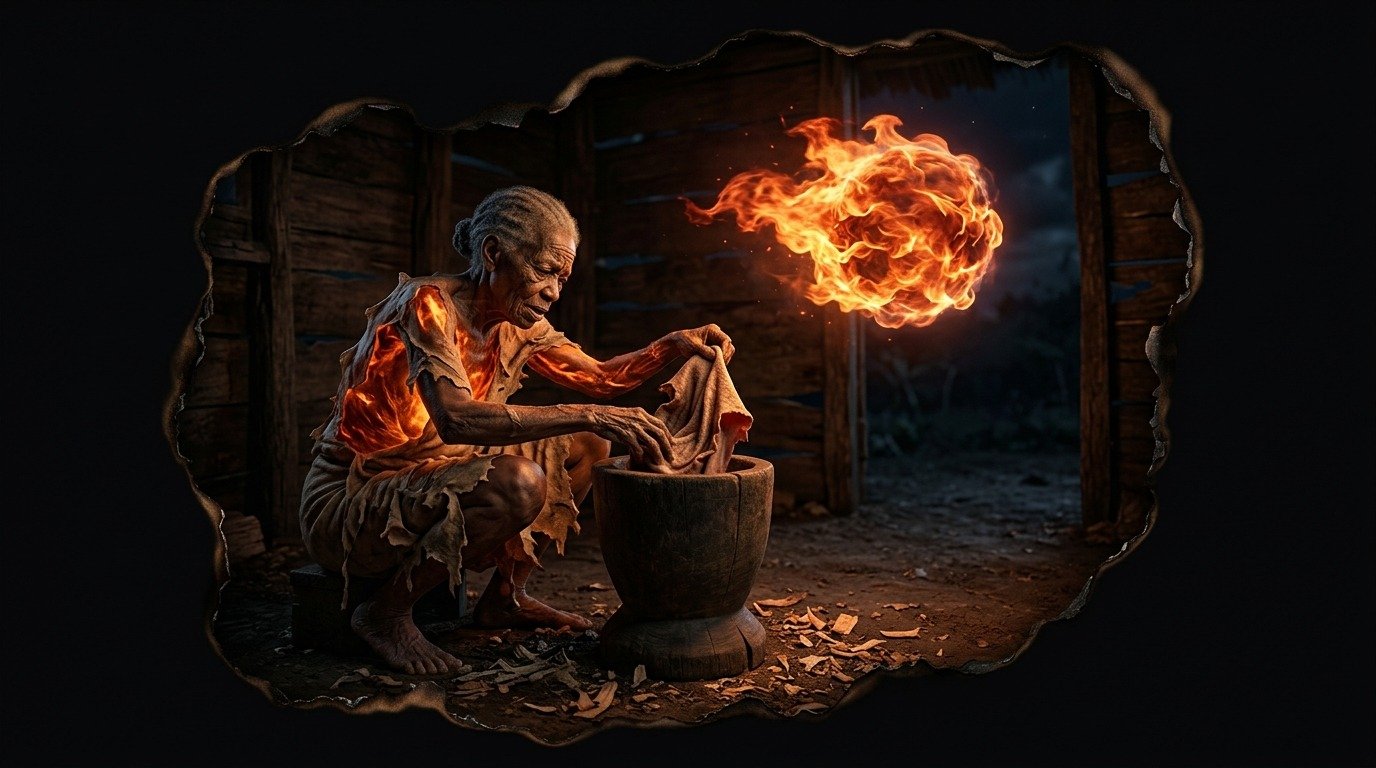
Soucouyant: Astral Fire and the Shedding of Skin in the Caribbean
Origin and Legend
The Soucouyant (with variants such as Sukuya, Loogaroo in Haiti, or Asema in Suriname) is a central figure in Caribbean folklore, prominently featured in Trinidad and Tobago, Saint Lucia, Dominica, and Grenada. The creature is a complex syncretic synthesis resulting from the fusion of three cultural matrices: European spirit mythology (French vampires and *loups-garous*), West African witchcraft traditions (particularly the Ashanti myths of the Asanbosam and the Obayifo fire spirit), and mystical-animist elements of the indigenous Taíno and Carib peoples. In popular tradition, the Soucouyant appears during the day as a helpless, lonely, and wrinkled old woman living on the fringes of the community. However, at nightfall, the woman performs a secret ritual in which she completely sheds her human skin, carefully storing it inside a wooden mortar (pilon) or under a vessel, and transforms into a floating, incorporeal ball of fire (fireball) that crosses the night skies in search of human blood.
Historical and Regional Evolution
The origin of the Soucouyant reflects the history of resistance, trauma, and forced syncretism on Caribbean plantations: La Variante Loogaroo (Haiti): In the Haitian context, the term derives directly from the French *loup-garou* (werewolf), but the entity lost its lycanthropic characteristics to adopt the nature of an astral vampire. The Loogaroo makes a pact with the devil or a Loa of the Petro family (such as Maman Brigitte or Baron Samedi), offering a fixed amount of warm blood in exchange for magical powers and earthly wealth. The Asema of Guyana and Suriname: Among the Maroon (Cimarron) communities of the Guianas, the Asema is a similar being that can take the form of a nocturnal bird or a bluish light. Belief holds that the Asema's skin is heavy and old; by removing it, the creature experiences a temporary liberation from physical decrepitude.
Esoteric and Symbolic Significance
The Soucouyant represents the Mystery of the Skin as the Boundary of Identity and the Vampirization of Life Force. In Afro-Caribbean esoteric systems, the skin is the container of *Nsumo* or individual cosmic energy; shedding the skin is equivalent to dissolving the human form to release the purely energetic astral body (the ball of fire). From a socio-anthropological reading, the Soucouyant projects community bias and the isolation of non-reproductive elderly women within post-slavery societies. The marginalized old woman, suspected of subsisting without family support, is accused of stealing it from the community's youth through the invisible draining of their vitality. She is the personification of parasitic accumulation and the destructive fire that produces no light, only consumption.
Manifestation and Neutralization Practice
The presence of a Soucouyant is evidenced by the appearance of bruises and hyperemia with no medical cause on the victims' arms and thighs upon waking (known locally as *coki-bea* or "Soucouyant marks"). Likewise, the entity can enter homes through keyholes, cracks in the walls, or window joints, condensing its fireball form into an ethereal mass. The methods for capturing or destroying the Soucouyant are precise and require locating the shed skin before dawn arrives: Salt and Pepper in the Mortar: The hunter must search for the place where the old woman hides her skin while she flies as fire. Once found, abundant sea salt, allspice (pimento), and hot pepper (Scotch bonnet) must be sprinkled on the inside of the empty skin. The Destruction of the Skin: When the Soucouyant returns exhausted before the first light of dawn to put on her human envelope, the salt and pepper shrink the skin and cause an intolerable burning. Unable to wear her flesh ("Skin, skin, you no know me?" is the creature's traditional folkloric lament), she remains exposed to direct sunlight, which incinerates her into pure ashes. Grain Barrier: As with other obsessive-compulsive entities of universal folklore, leaving a pile of uncooked rice or sesame seeds at the entrance of the house or at crossroads forces the Soucouyant to stop and count every single grain one by one; if dawn catches her before she finishes, she is immediately destroyed by sunlight.
Comments
Share information, an experience, or a source to help enrich this entry. They are automatically reviewed before being published.
Loading comments...