Vedic astrology
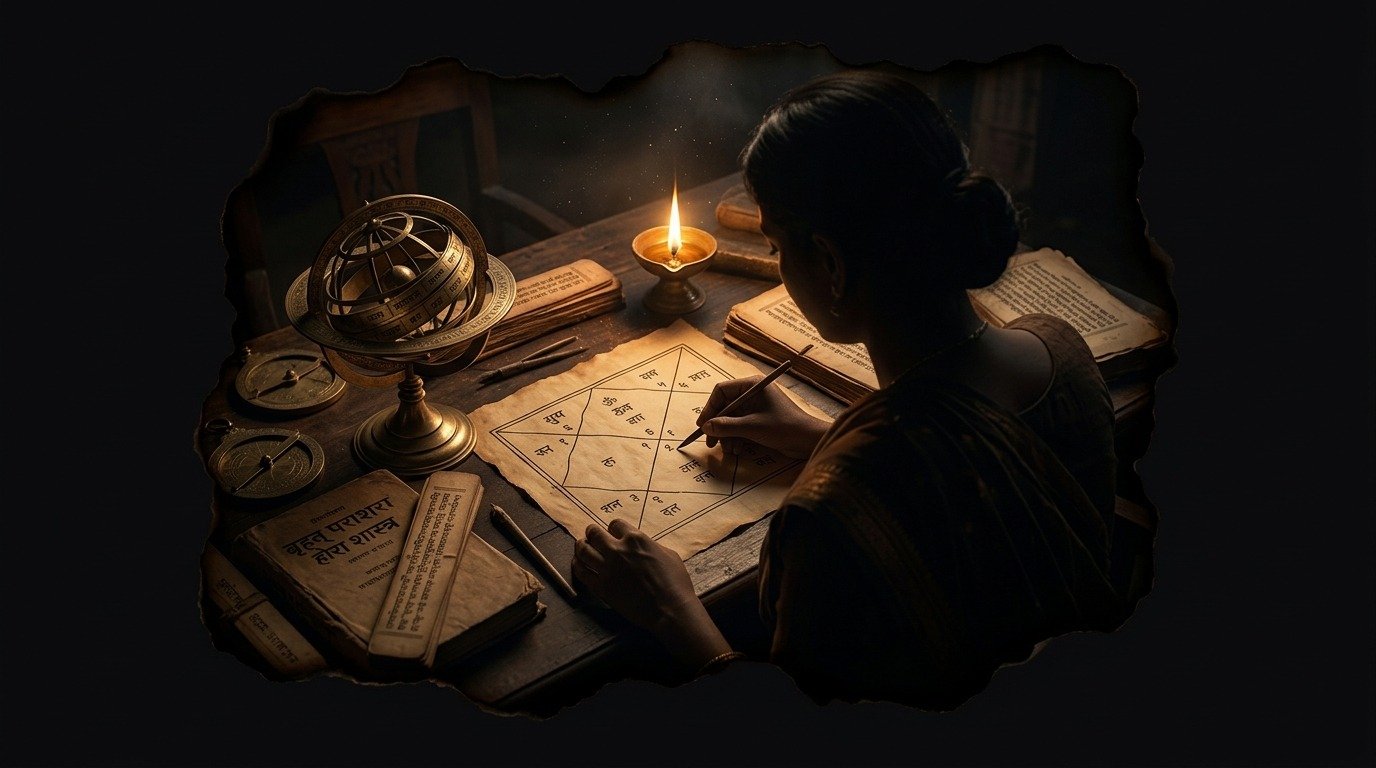
Vedic astrology: the map of karma and time
What it is
Vedic astrology, traditionally known as *Jyotish* (the science of light), is the astronomical and astrological system originating in ancient India. It is one of the six auxiliary disciplines (*Vedangas*) of the sacred Vedic texts. Its fundamental purpose is not to predict the future in a deterministic way, but to reveal an individual's accumulated karma, the spiritual lessons of their current incarnation, and the auspicious times for making vital life decisions.
How it works
Unlike Western astrology, which uses the tropical zodiac based on the seasons of the year, Vedic astrology employs the **sidereal zodiac**. This system aligns with the actual astronomical positions of the constellations in the physical sky, calculating the precession of the equinoxes through a mathematical correction called *Ayanamsha* (with the *Lahiri Ayanamsha* being the most widely used). The system works through the following basic components: * **Grahas (Planets):** These are nine primary cosmic forces. They include the Sun (Surya), the Moon (Chandra), Mars (Mangal), Mercury (Budha), Jupiter (Guru), Venus (Shukra), Saturn (Shani), and the two lunar nodes: the north node or dragon's head (Rahu) and the south node or dragon's tail (Ketu). * **Rashis (Signs):** The twelve signs of the traditional zodiac, from Aries (Mesha) to Pisces (Meena). * **Bhavas (Houses):** Twelve divisions representing specific areas of human experience, calculated from the Ascendant or *Lagna*. * **Nakshatras (Lunar Mansions):** Twenty-seven sectors of the sky through which the Moon transits. Each Nakshatra provides a deep level of psychological and predictive analysis that does not exist in the Western system. * **Dashas (Planetary Periods):** A unique predictive system that divides human life into cycles ruled by specific planets. The most common is the *Vimshottari Dasha*, a 120-year cycle that precisely determines when the beneficial or adverse effects of the natal chart will be activated.
Origin and history
The primary references to Jyotish are found in the *Rigveda* and the *Atharvaveda*, dating back to the second millennium BCE. Originally, the system was used to calculate the exact dates for Vedic sacrifices and fire rituals. The transition from purely ritual astrology to individual predictive astrology was consolidated in the treatise *Brihat Parashara Hora Shastra*, written by the sage Parashara. This text remains the fundamental pillar of modern Jyotish. During the Hellenistic period, there was an exchange of knowledge between Indian and Greek astrology, documented in texts such as the *Yavanajataka* (2nd century CE).
Key figures
* **Maharishi Parashara:** Vedic sage considered the father of horary and birth astrology. * **Varahamihira (505–587 CE):** Royal astronomer and astrologer who refined the mathematical system and wrote the *Brihat Samhita*, an encyclopedia of mundane astrology. * **Bangalore Venkata Raman (1912–1998):** Key 20th-century astrologer who translated classical Sanskrit texts into English, founded the *Astrological Magazine*, and popularized Jyotish in the West under the name of Vedic astrology.
How it is understood today
In contemporary India, Vedic astrology has an institutional place: since 2001, some universities have offered studies in *Jyotir Vigyan*, a decision that generated debate among Indian scientists. It is used on a daily basis to determine marriage compatibility (through the *Koota* matching system), set wedding dates, inaugurate businesses, and choose first names based on the syllable corresponding to the birth Nakshatra. In the West, astrologers value it for its technical precision and its spiritual approach to destiny. From a historical and scientific standpoint, it is appreciated as a highly complex ancient mathematical record and as a cultural monument of Hindu civilization.
Connections
Vedic astrology is inextricably linked with **Ayurveda** (traditional Indian medicine, which relates each person's constitution to planetary influences), **Vastu Shastra** (sacred architecture), **Yoga**, and the application of gemstones (*Upayas*) or the chanting of specific mantras to mitigate unfavorable planetary influences.
Comments
Share information, an experience, or a source to help enrich this entry. They are automatically reviewed before being published.
Loading comments...