Horus
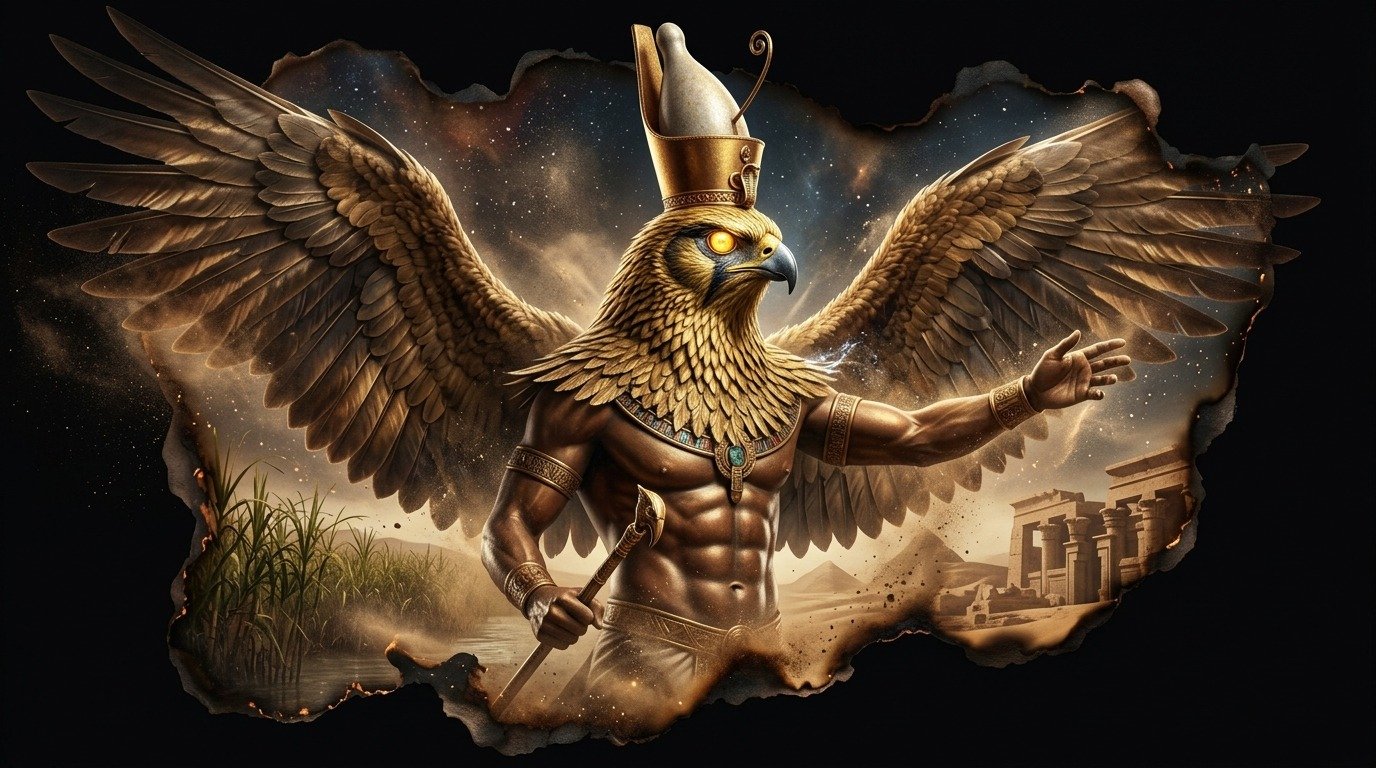
Horus: The falcon who crowns divine justice
The heir of the marshes
Born in exile and secrecy, Horus's destiny was marked even before his first breath by the shadow of vengeance and restitution. While hiding with his mother Isis in the depths of the Delta's reed beds, the young god grew up listening to the stories of the glorious reign of his father Osiris and the bloody betrayal of his uncle Set. His childhood was a constant test of survival against the vermin and curses sent by the usurper of the throne. But under the tutelage of the great gods and the protective magic of his mother, Horus grew strong. His muscles were tempered like bronze and his spirit was sharpened with the determination of justice. He ceased to be a vulnerable child to become the great golden falcon, whose outstretched wings span the vastness of the sky and whose cold, relentless gaze never loses sight of his enemies.
The eye that watches the sky
The anatomy of Horus is the map of the firmament itself. His eyes are no ordinary organs: his right eye is the sun, radiating the scorching light of truth, and his left eye is the moon, watching over the shadows of the night with a cold, silvery glow. During the brutal battles against Set, the usurper managed to tear out his left eye, tearing it to pieces and casting it into the darkness of the desert. However, the wise god Thoth recovered the fragments of the moon and unified them once again using the magic of time, restoring Horus's full vision. This restored eye, known as the *Wedjat*, became the most sacred amulet of the kingdom: the symbol of healing, cosmic wholeness, personal sacrifice for the sake of order, and the living proof that what has been destroyed by chaos can always be repaired with justice and wisdom.
The eternal battle for the two lands
The conflict between Horus and Set for the throne of Egypt was no simple dynastic dispute, but a war of cosmic attrition that lasted eighty years. They clashed in the form of giant hippopotamuses beneath the waters of the Nile, measured their strength in scorching deserts, and brought their grievances before the great tribunal of the gods. Set represented the brute force of the desert, the necessary yet destructive chaos; Horus embodied dynastic order, the law of civilization, and the light of the sky. Finally, after countless trials of strength, cunning, and magic, the divine tribunal ruled in favor of the young falcon. Horus was crowned with the double crown of the northern and southern lands, unifying the country under his protective wing. Every pharaoh who sits on the throne of the black land is the living incarnation of Horus, the god who descended from heaven to restore his father's order and ensure that the light of justice never ceases to shine upon the two lands.
Comments
Share information, an experience, or a source to help enrich this entry. They are automatically reviewed before being published.
Loading comments...