Khnum
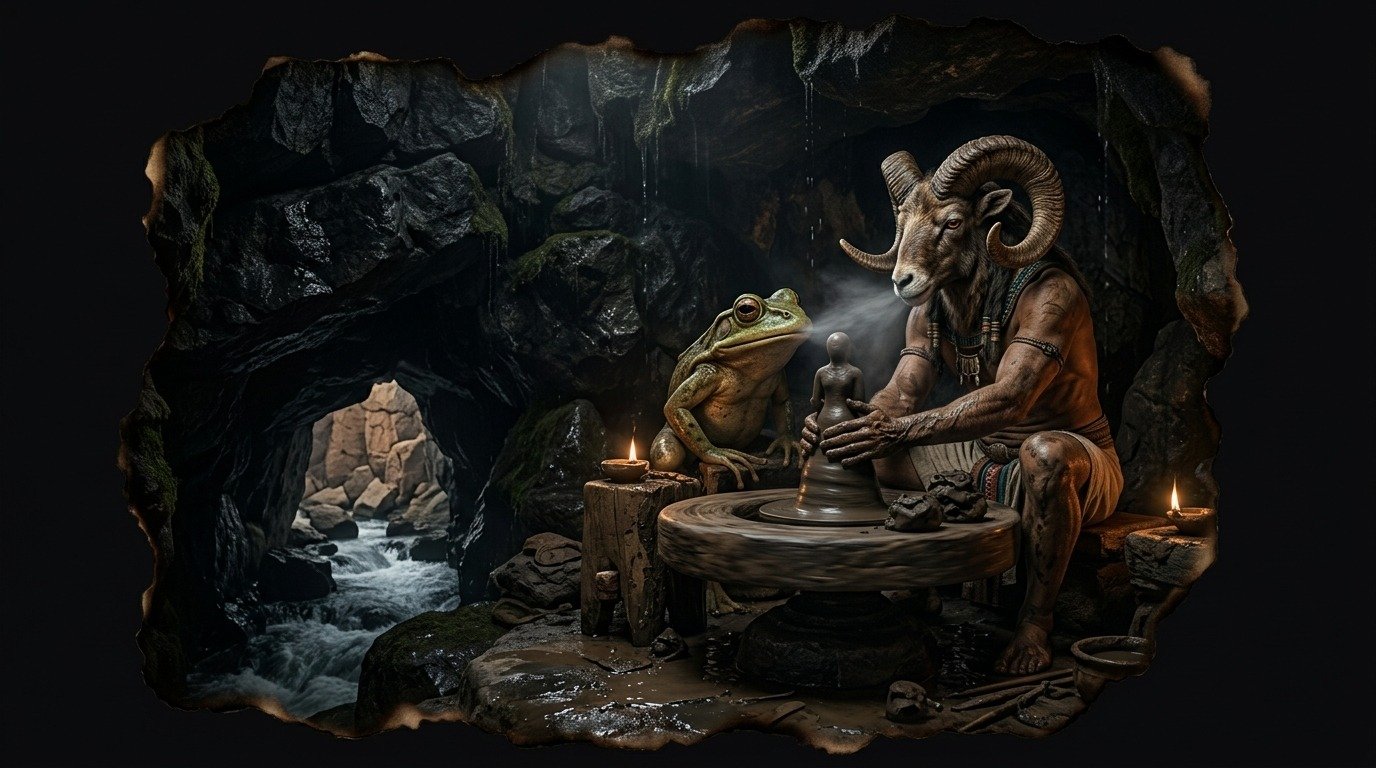
Khnum: The Divine Potter of the Sources of the Nile
The Guardian of the Flooded Caverns
At the southern end of the known world, where the Nile River roars as it forces its way through the rocks of the first cataract, lies the island of Elephantine. It is a place of wild waters, treacherous whirlpools, and black rocks that seem to emerge from the bowels of the earth. There, in the twilight of underwater caverns inaccessible to mortals, dwells Khnum, the ram-headed god with long, spiraled horns. Khnum is the lord of the life-giving water, the absolute guardian of the keys of the Nile. The ancients knew that the annual floods, which brought the black, fertile silt indispensable for agriculture, were not a whim of the weather, but the direct result of Khnum's will. With his sandal, the god would press the floor of his caves to release the sacred torrent, controlling the height of the flood with millimetric precision. A flood that was too low meant famine; one that was too high, the destruction of villages. Khnum was, therefore, the arbiter of the physical destiny of the entire valley.
The Potter's Wheel That Shapes Existence
But Khnum's true power goes far beyond the force of the waters. He is the great craftsman, the potter who fashioned the first body of the gods and of men. While other creators used words or thought to shape the universe, Khnum preferred touch, matter, and physical effort. Seated before an eternally spinning potter's wheel, he takes the fresh, dark silt from the bed of the Nile and, with his firm, calloused hands, molds every detail of human anatomy. Khnum does not only sculpt the bones, flesh, and internal organs of newborns before they are conceived in the mother's womb; on the same wheel, with unparalleled virtuosity, he also molds the individual's *Ka*: that divine spark and twin that accompanies each person as their life force and spiritual destiny. By his side, the frog goddess Heket watches the process closely and, with a gentle breath upon the newly finished clay figures, infuses them with the breath of life so they can utter their first cry at birth.
The Support of Living Matter
Khnum's physiognomy, crowned by the horizontal and wavy horns of the ancestral ram, evokes a primordial virility, an indomitable generating force that fertilizes the earth and the creatures that inhabit it. He is a god of infinite patience and stony solidity, immune to divine intrigues and focused on the eternal repetition of his creative work. His legacy is found neither in the clouds nor in the fire of the heavens, but in the moisture of the germinating soil, in the solidity of baked clay, and in the very structure of our bodies. Khnum is the deity who unites the divine with the earthly, reminding every mortal that, before being a soul destined for the stars, they were a pinch of clay from the Nile, caressed and sculpted by the patient fingers of the great potter of the south.
Comments
Share information, an experience, or a source to help enrich this entry. They are automatically reviewed before being published.
Loading comments...