Farkaskoldus
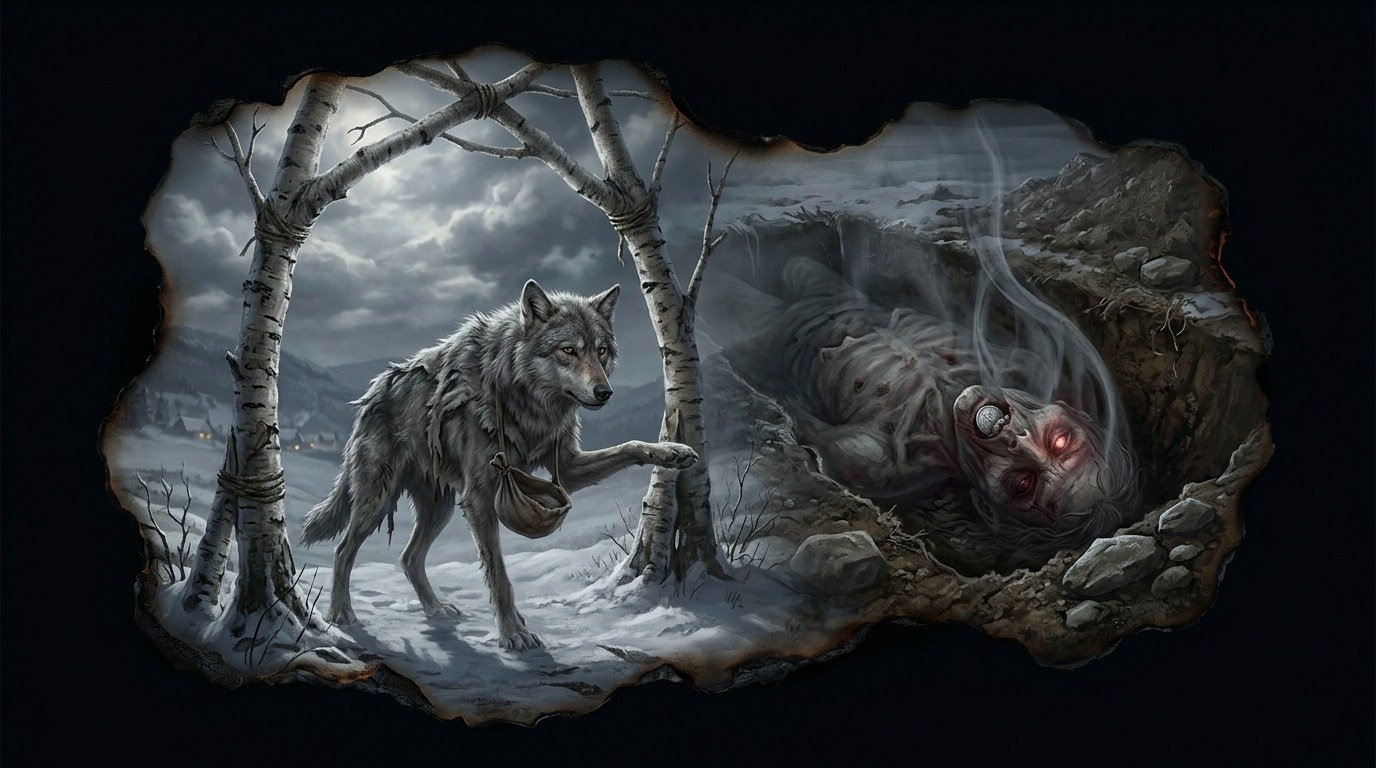
Farkaskoldus: The Werewolf Beggar and the Transmigration of the Hungarian Vampire
Origin and the Practice of Farkaskoldulás
In the rural regions of the Carpathian Basin, specifically in the folklore of Hungary and the neighboring areas of Transylvania, there is a unique lycanthropic figure known as the *Farkaskoldus* (literally, "wolf beggar" or "beggar wolf"). This concept differs substantially from the classic werewolf of Western Europe. The Farkaskoldus is not a wild beast guided solely by killer instinct, but rather a marginalized individual who undergoes a ritual and spiritual transformation, often described as the act of *farkaskoldulás* (wolf beggary).
Belief holds that certain people, stripped of their social status or cursed by a figure of power such as a priest or a *táltos* (the traditional Hungarian shaman), were condemned to wander in the form of a wolf. To transform, the individual had to pass under a natural arch formed by birch branches or use a belt made of wolf skin consecrated with dark rites. Once transformed, these beings roamed the villages not to devour livestock out of instinct, but to beg for food or reclaim the spiritual rights that had been stripped from them in life.
The Post-Mortem Metamorphosis
What makes the Farkaskoldus one of the most feared creatures in Eastern European folklore is its metaphysical destiny. In Hungarian tradition, lycanthropy does not end with physical death. If a Farkaskoldus dies a violent death, if he passes away without having received absolution from the curse that transformed him, or if he is buried in consecrated ground without the proper rites of neutralization, his soul cannot leave the earthly plane.
The residual energy of the wolf and the corruption of the curse cause a post-mortem transmutation. The corpse of the lycanthrope does not decompose naturally; instead, it reanimates in the grave to emerge as a vampire (*vampír* or *görüny*). This duality—being a wolf in life and becoming a vampire after death—reflects an esoteric conception where the soul remains trapped in the lower astral plane, unable to break the cycle of predation. The astral body, accustomed to the form of the beast, densifies within the corpse and seeks the vital sustenance of blood to maintain its undead existence.
Esoteric and Folkloric Interpretation
From the standpoint of folkloric and historical analysis, the Farkaskoldus represents the syncretism between the ancient pagan shamanism of the Magyars and subsequent Christian demonization. The *táltos*, who undertook astral journeys in animal forms (such as wolves or bulls) to fight for the fertility of the land, were reinterpreted by the Church as cursed sorcerers. The "wolf beggar" is the degradation of this spiritual intermediary: a being that has lost its connection to the divine and must beg for energy at the borders of the human world.
Esoterically, the Farkaskoldus personifies the danger of "failed astral projection." Those who learned the arts of zoological projection but lacked the spiritual purity to reintegrate into their human form became "trapped" in the vibration of the beast. Upon death, this vibrational fixation prevented the ascension of the subtle body, forcing it to feed on the dense energy of the living (blood) to avoid dissolving into the astral void.
Methods of Containment and Destruction
Due to its dual nature as a living lycanthrope and a potential dead vampire, the methods of defense against the Farkaskoldus were highly specific and rigorous. If someone suspected of *farkaskoldulás* died in the village, the body had to be treated immediately to prevent vampiric transmutation.
Villagers would place a silver coin or a consecrated stone in the mouth of the deceased to prevent the spirit from re-entering the physical body. The corpse was buried face down, with the hands tied behind the back with blessed hemp ropes. If it was already suspected that the Farkaskoldus had risen as a vampire from its grave, protocol dictated exhuming the body during daylight hours when astral influence was weak. The chest of the corpse had to be pierced with a stake made of hawthorn (*galagonya*) or birch wood, the head severed and placed between the legs of the deceased, and the grave filled with millet or poppy seeds to force the spirit to count them before being able to manifest again.
Comments
Share information, an experience, or a source to help enrich this entry. They are automatically reviewed before being published.
Loading comments...