Kynokephaloi
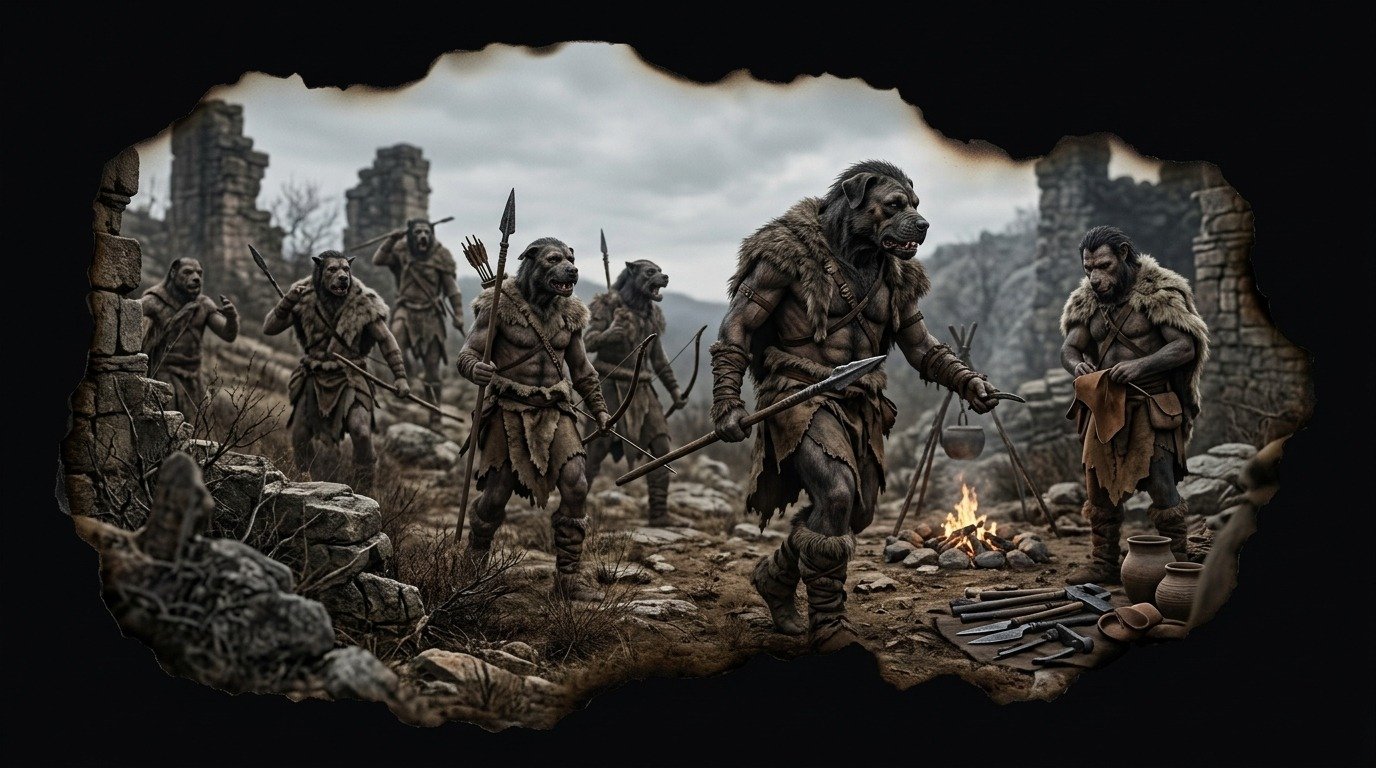
Kynokephaloi: The Guardians of the Edges of Reason
The Inhabitants of the Edges of the World
The *Kynokephaloi* (from the Greek *κυνοκέφαλοι*, "dog-heads") constitute one of the most persistent monstrous races or *monstrua* in the mythical geography and travel literature of Antiquity and the Middle Ages. First systematically recorded by the physician and historian Ctesias of Cnidus in his work *Indica* (5th century BC), and subsequently described by Megasthenes, Pliny the Elder, and Solinus, the *Kynokephaloi* were not seen as magical lycanthropes or victims of a curse, but as a race of hybrid hominids that inhabited the unexplored margins of the known world (the depths of India, Libya, or the steppes of Scythia).
From Pagan Monsters to Saints of Christianity
The historical evolution of the *Kynokephaloi* is a testament to the plasticity of myth. In classical antiquity, they represented the limit of human civilization: beings incapable of speech (communicating through barking and snarling, *latratu non sermone*), yet capable of understanding justice, organizing tribal societies, dressing in animal skins, and trading. With the arrival of Christianity, theology was forced to confront their spiritual status. Saint Augustine, in *The City of God* (Book XVI, Chapter 8), debates whether dog-headed men descended from Adam and therefore possessed a rational soul capable of salvation. This theological tension culminated in the Eastern Orthodox hagiography of Saint Christopher of Lycia, who in Byzantine and Coptic traditions is literally depicted as a giant *Kynokephalos* who converts to Christianity, receives baptism (which grants him human speech), and dies as a martyr.
The Limit of Reason and Humanity
Esoterically, the *Kynokephalos* is the archetype of the *liminality of consciousness*. The dog's head on a human body symbolizes the rational mind subjugated by sensory instincts and blind devotion (canine loyalty). They represent the "no man's land" between the animal kingdom (*Anima*) and the spiritual kingdom (*Pneuma*). In Hermetic and Egyptian iconography, this figure connects directly with Anubis, the psychopomp, the guide of souls who travels between the light of the living and the darkness of the underworld. The *Kynokephalos* is the one who guards the threshold; he possesses the strength of the animal and the structure of man, but lacks the divine spark of revelation until touched by a process of initiation or conversion.
Record of Interaction and Nature
According to classical chronicles compiled in medieval bestiaries, interactions with the *Kynokephaloi* must be recorded under the following parameters of zoological and anthropological observation: - **Communication:** They lack a vocal apparatus suitable for human articulate language. They employ a combination of complex sign language, wheezing, and modulated barking. An observer must avoid sudden movements that could be interpreted as territorial aggression. - **Diet and Trade:** They are described as omnivorous, with a preference for raw meat and nuts. They are skilled in basic metallurgy and hide tanning. The chronicles of Megasthenes indicate that they traded amber and spices for iron tools with border caravans. - **Combat:** They possess extremely strong jaws and sharp claws. In battle, they do not use cavalry tactics, but rather coordinated pack ambushes, using plant poisons on their spears and arrows.
Comments
Share information, an experience, or a source to help enrich this entry. They are automatically reviewed before being published.
Loading comments...