Anubis
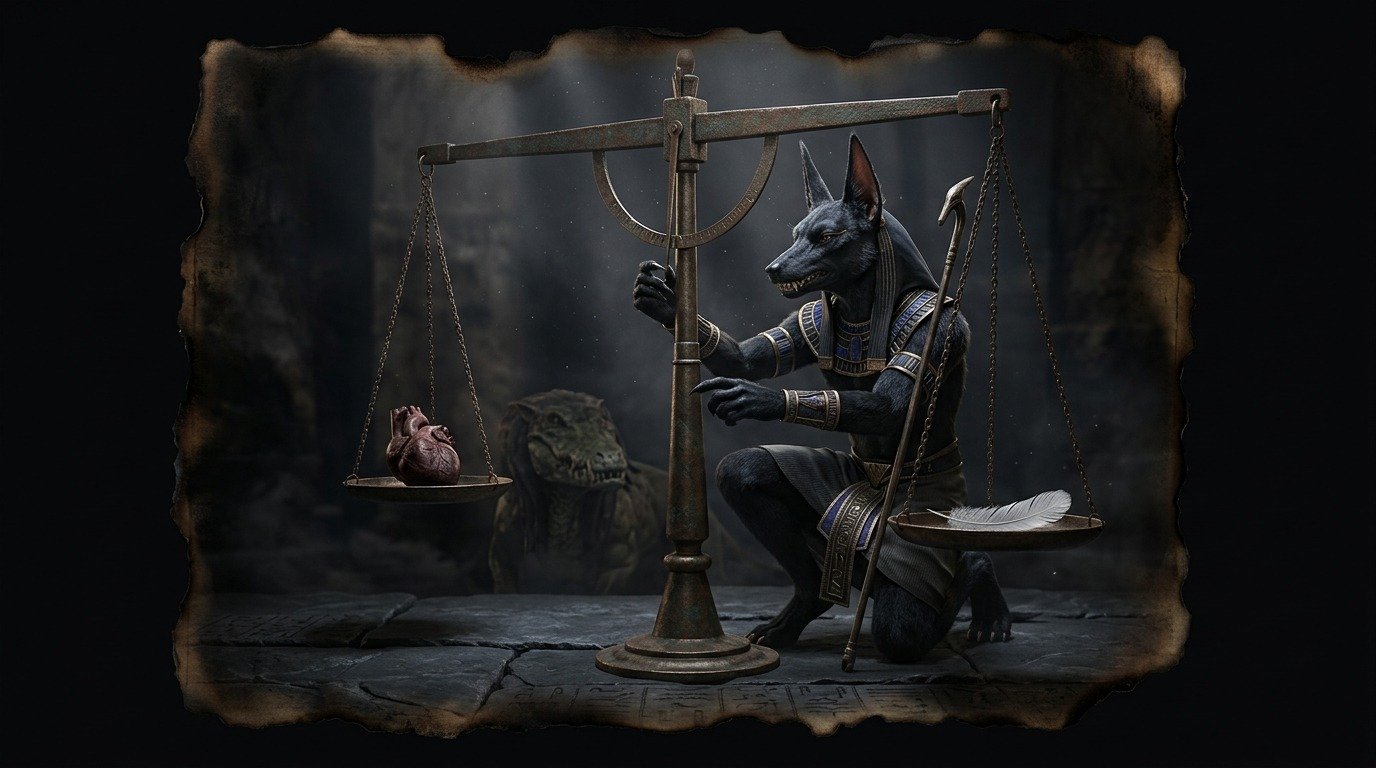
Anubis: The Guardian of the Shadows and the Scales
The Lord of Embalming and Linen
Long before stone temples populated the banks of the Nile, the jackal already prowled the edges of the desert, where the living buried their dead. Anubis, the god with the head of a black canid and skin the color of sacred coal and the rot of fertile earth, was born from the encounter between night and mystery. When the body of Osiris lay torn to pieces and exposed to the corruption of the elements, it was Anubis who took on the task of restoring dignity to the sacred flesh. With reverent care, he gathered the fragments, anointed the withered skin with aromatic oils of myrrh, cedar, and cinnamon, and wrapped each limb in endless bandages of the purest linen to halt the march of time and decay. By performing this first ritual of mummification, Anubis invented the sacred art of embalming, becoming the undisputed protector of the secrets of the flesh and the guardian of the rituals that allow the soul to journey to the afterlife without losing its earthly vessel.
The Howl at the Threshold of Night
The black color of Anubis is not the color of sterile death, but that of the rich alluvial soil of the Nile, which promises new life after the flood. Like the jackal that watches over cemeteries at twilight, Anubis is the sentinel of the necropolises, the herald who waits at the border where light ends and the realm of shadows begins. His figure, crouched upon the lids of sarcophagi or painted on the walls of the deepest tombs, is a warning to looters and evil spirits who attempt to disturb the peace of the deceased. With his pointed ears always alert to the slightest whisper from the shadows and his fangs ready to tear desecrators to pieces, he guides disoriented souls through the labyrinths of the Duat, taking them by their cold hands so they do not get lost in the traps of the underworld.
The Judgment of the Feather
The most crucial moment in the journey of any soul occurs in the Great Hall of the Two Truths, under the watchful gaze of Anubis. There stands the great bronze balance, the instrument that decides the eternal destiny of men. The jackal god kneels with millimetric precision beside the fulcrum of the instrument. On one pan of the balance, he places the *Ib*, the heart of the deceased, where all their earthly deeds, thoughts, and sins have been recorded. On the other pan, he deposits the feather of Maat, the emblem of truth, harmony, and cosmic justice. With his black fingers and sharp claws, Anubis adjusts the needle of the balance in absolute silence, while the beast Ammit waits anxiously at the foot of the structure to devour the hearts of those who lie. If the heart is as light as the feather, Anubis declares the soul worthy and leads it before the throne of Osiris to begin its eternity among the Field of Reeds, having been the silent and just witness to the deepest truth of every human being.
Comments
Share information, an experience, or a source to help enrich this entry. They are automatically reviewed before being published.
Loading comments...