Bacchus
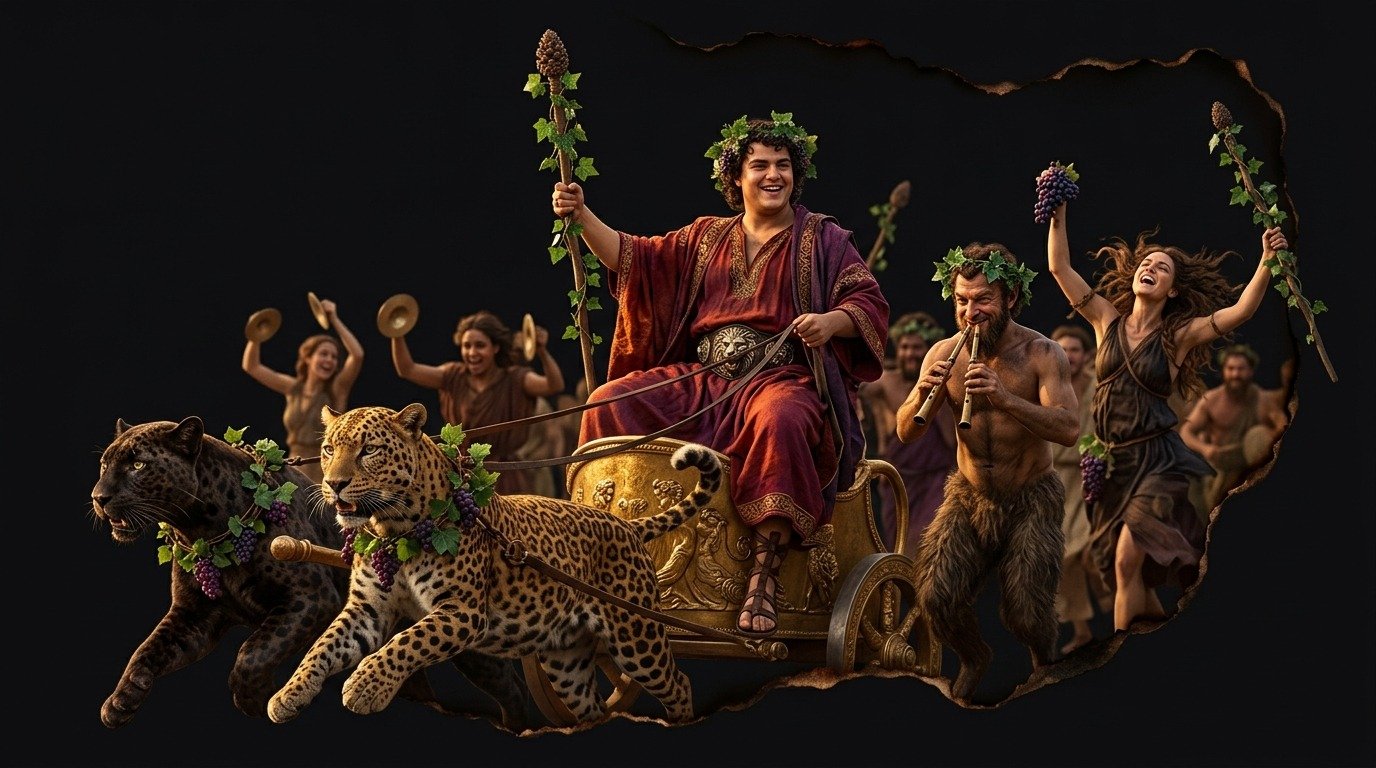
Bacchus: the delirium of the vine and the liberation of the soul
Fire in the blood
Bacchus was born of ash and thunder, an origin marked by tragedy and the mystery of resurrection. His mother, the mortal Semele, died consumed by the unbearable splendor of Jupiter, who presented himself to her in his true divine form. To save the unborn child, the sovereign of Olympus took the fetus from the flames and sewed it into his own thigh until the time came for birth. In this way, Bacchus emerged into the world as the twice-born god, carrying within his being the fragility of mortal flesh and the untamed fury of celestial fire. To protect him from the relentless wrath of Juno, the young god was raised in the hidden valleys of Nysa, where the nymphs and the wise Silenus taught him the secrets of the earth. There, among the shadows of the caves and the coolness of the mountain, Bacchus discovered the miracle of the vine: the art of extracting from the ripe fruit a juice that contained the strength of the sun and the freshness of the rain, a drink capable of transforming the pain of men into a rapture of divine joy.
The march of the ivy and the panthers
When Bacchus claimed his place in the world, he did not do so peacefully, but through a triumphal procession that shook the foundations of civilization. Surrounded by a retinue of ivy-crowned satyrs and maenads waving the thyrsus—a staff wrapped in vine leaves and topped with a pinecone—the god traveled the lands of the East teaching the cultivation of the grape. In his wake, panthers and leopards grew tame, yoking themselves to his golden chariot, while the music of cymbals and flutes awakened in the people an irrepressible desire to abandon their homes and surrender themselves to nature. The power of Bacchus is that of metamorphosis and the shattering of boundaries. When Tyrrhenian pirates captured him at sea believing him to be a defenseless youth, the god transformed the ship's masts into serpents, made ivy sprout from the sails, and filled the deck with the roar of invisible lions. The sailors, driven mad by terror, threw themselves into the water and were transformed into dolphins, a reminder that the divinity of Bacchus tolerates neither confinement nor the pride of men.
Ecstasy and the sacred night
Bacchus represents everything that human reason attempts to domesticate but can never completely extinguish. He is the god of theater, where men shed their identities to wear the masks of others, and the lord of nocturnal festivals, the bacchanalia, where social hierarchies dissolve under the influence of wine. In his rites, slave and patrician drink from the same cup, and women find a freedom denied by the laws of the city. But this delirium has a double edge. Bacchus can grant the most sublime inspiration, unbridled joy, and the healing of the soul burdened by the weight of destiny; but he can also unleash relentless mania, a wild madness that devours those who deny his divinity. He is the force of nature that bursts forth every spring, the constant reminder that beneath the laws of stone and the order of men beats a wild, damp, and eternal pulse that demands to be revered.
Comments
Share information, an experience, or a source to help enrich this entry. They are automatically reviewed before being published.
Loading comments...