Bellona
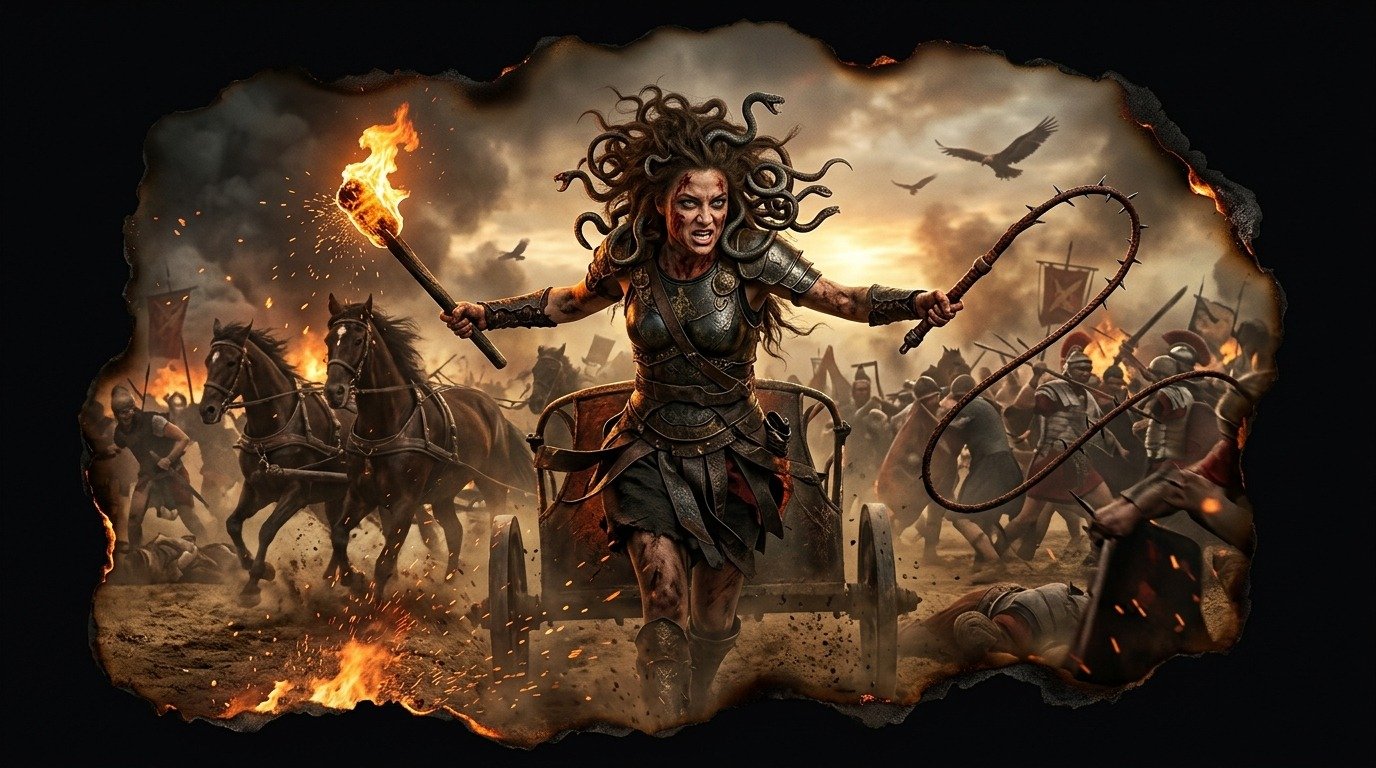
Bellona: the clamor of naked swords
The dance of the chariot of fire
Long before the sun warms the earth on mornings of battle, one hears the creaking of iron axles and the gallop of horses that need no rest. It is the chariot of Bellona, the goddess of war in her purest, most visceral, and destructive state. While Mars represents the noble aspect of the campaign, strategy, and the honor of arms, Bellona is the personification of the madness of combat, the panic that clouds reason, and the bloodlust that transforms men into beasts of bronze. She is depicted running through the dust of cavalry charges, her hair disheveled and bristling with snakes, wielding a burning torch that casts sparks of pitch and a leather whip bristling with iron spikes that she unleashes upon friend and foe alike.
The spear of external discord
Due to her violent nature and thirst for discord, the temple of Bellona could not be erected within the limits of the *pomerium*, the sacred boundary of the city where weapons were forbidden. Her abode was raised in the Campus Martius, outside the walls, serving as the space where the Senate received foreign ambassadors from hostile nations and victorious returning generals awaiting their triumph. In front of this temple stood the Columna Bellica, a stone pillar representing the outer border of Roman territory. When Rome decided to march against a distant enemy, a fetial priest would go to the temple, climb the column, and cast an iron-tipped spear drenched in blood toward a strip of land that symbolically represented foreign territory. This gesture unleashed the fury of the goddess, allowing her to fly to the ends of the earth to prepare the feast of the vultures.
The day of sacred blood
The cult of Bellona was one of the most intense and awe-inspiring in the Roman city, especially after her assimilation with the mystical deity Ma of Cappadocia. Her priests, known as the *bellonarii*, celebrated the *Dies Sanguinis* (the Day of Blood) with a devotion bordering on delirium. Dressed in black robes that absorbed the light, they marched through the streets to the beat of oxhide drums and shrill-sounding trumpets. At the climax of the procession, the priests inflicted cuts upon their arms and thighs with double-edged swords, collecting their own blood in the palms of their hands to sprinkle the statue of the goddess or drink it in a rapture of ecstatic communion. In this state of trance, possessed by the spirit of Bellona, they prophesied military victories, the fall of foreign kings, and the slaughters that would expand the empire.
The roar that widens the frontier
Bellona knew neither mercy nor rest. Her footprint was found in the ashes of besieged cities, in the smell of wet iron from open wounds, and in the shouts of victory that drowned out the laments of widows. For the Roman soldier, invoking her was not an act of love, but a pact of survival: they surrendered their sanity on the battlefield in exchange for her guiding their arm to strike the definitive blow before falling. She was the reminder that Rome had been cemented on the edge of iron and that, as long as the fire of her torch continued to burn in the Campus Martius, no wall in the known world would be safe from the voracity of its legions.
Comments
Share information, an experience, or a source to help enrich this entry. They are automatically reviewed before being published.
Loading comments...