Ceres
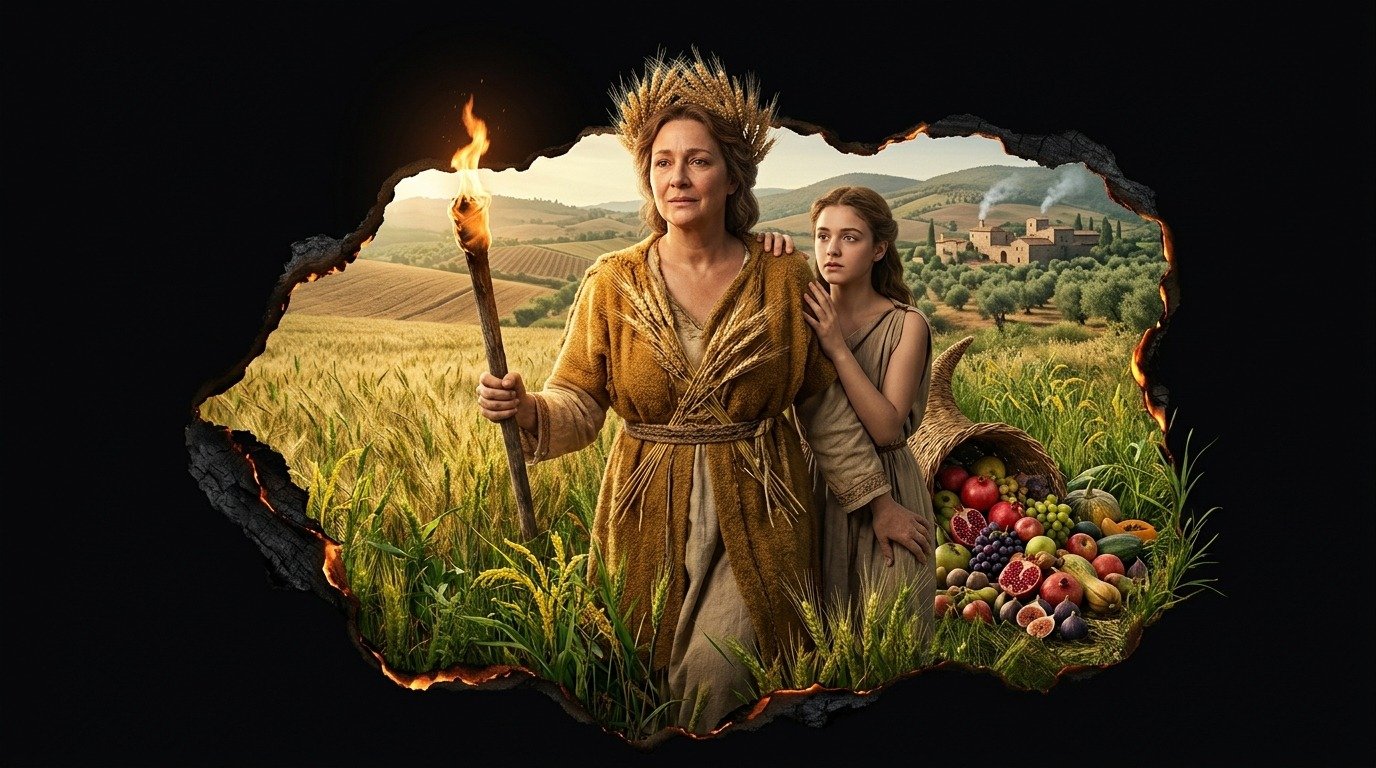
Ceres: The Heartbeat of the Nurturing Earth
The Nurturer of the World
Ceres is the golden color of ripe wheat fields under the summer sun, the scent of damp earth after sowing, and the miracle of bread that feeds families. She is the deity of agriculture and growth, the life force that teaches human beings to abandon the wild life of the forest to settle, till the soil, and found cities under the protection of law and community.
Her presence is warm and maternal. She is depicted crowned with ears of wheat and holding a lit torch or a cornucopia overflowing with fruits and vegetables. Wherever Ceres walks, the grass grows green, fruit trees bend under the weight of their harvest, and granaries are filled, ensuring the survival of the people. Her cult did not belong solely to the patricians, but was the soul of the plebeians, the working class who depended directly on the goddess's favor to bring sustenance to their tables.
A Mother's Winter
The myth of Ceres is a story of pain and unwavering love. When her beloved daughter Proserpina was abducted and taken to the underworld, Ceres abandoned her divine duties. Consumed by grief, she wore mourning clothes and wandered the earth with two lit torches, searching for her day and night. During her absence, the earth became barren: seeds rotted in the furrows, leaves fell from the trees, and a gray cold spread across the world, threatening humanity with eternal famine.
Faced with the prospect of a deserted world, the gods had to intervene. The pact that returned Proserpina to her arms for half of the year restored Ceres's joy and, with it, the fertility of the earth. Since then, her daughter's return marks the beginning of sowing and harvest, an annual reminder that a mother's love is the force that keeps the world alive.
The Law of the Ear of Grain
Ceres not only feeds bodies, but also civilizes souls. Under the name Ceres Legifera, she was revered as the lawgiver, the goddess who brought the first laws regarding land ownership and field boundaries. By teaching men to cultivate, she also taught them to respect the work of others and to live in society under common rules of justice.
During her festivals, the Cerealia, the Romans dressed in white and offered the first fruits of the harvest, abstaining from any act of violence or mourning. Ceres represents the abundance born of constant effort, the sacredness of agricultural labor, and the certainty that, even after the harshest and darkest winter, the earth will always keep its promise to bloom again.
Comments
Share information, an experience, or a source to help enrich this entry. They are automatically reviewed before being published.
Loading comments...