Haitian Zombie
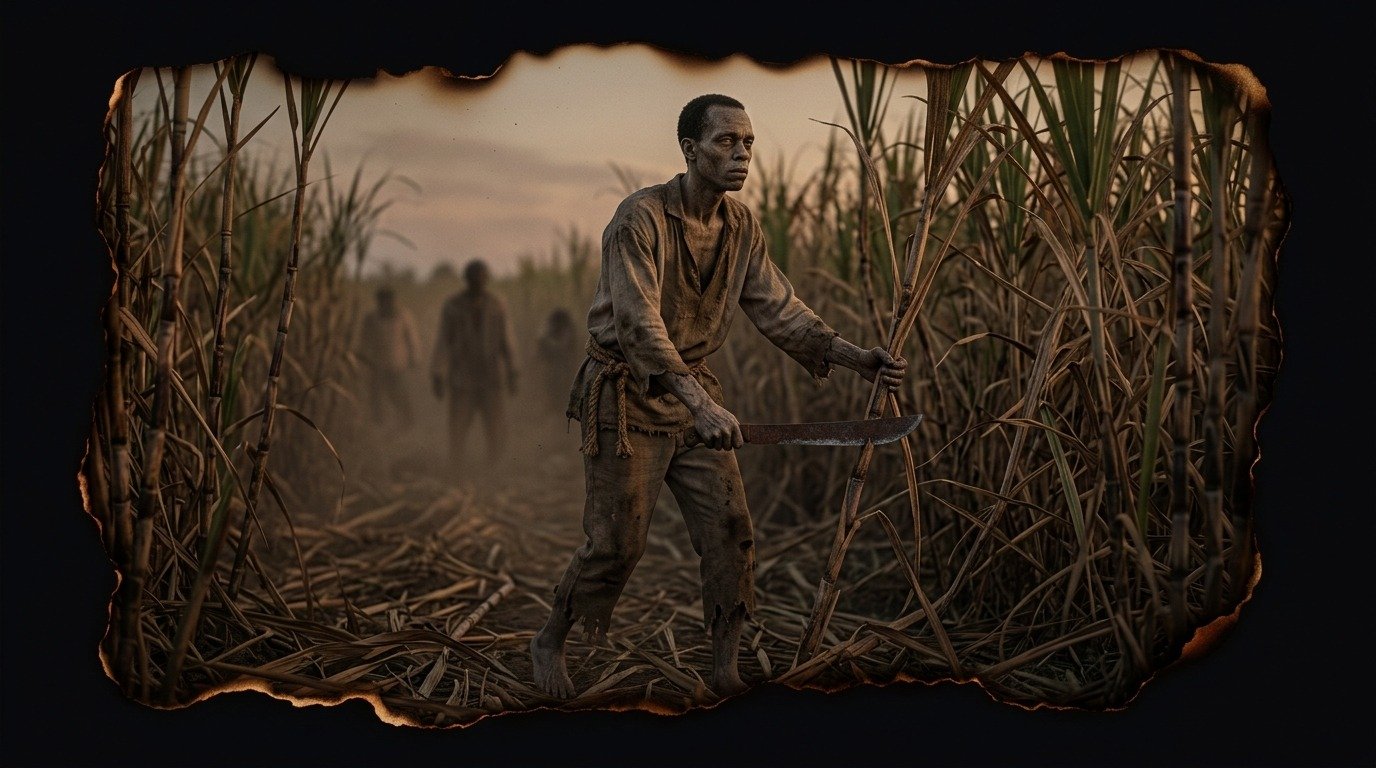
The Haitian Zombie: The Body Without a Soul and the Soul Without a Body
Origin and Theological Foundation
In the cosmology of Haitian Voodoo (*vodou*), the concept of death and identity differs radically from Judeo-Christian eschatology. The human soul is not an indivisible entity, but rather a binary composite of subtle spiritual architecture: the *Gros Bon Ange* (Big Good Angel) and the *Ti Bon Ange* (Little Good Angel). The *Gros Bon Ange* represents the vital breath, the shared cosmic energy that animates biological matter and returns to the great spiritual ocean after death. Conversely, the *Ti Bon Ange* is the receptacle of individuality, intellect, memory, will, and the moral consciousness of the subject. El zombi is not a biological aberration arising by chance, but the result of a deliberate and ritual fracture of this duality, operated by a *bokor* (a Voodoo priest who works with the left hand, oriented toward transgressive and mercenary magic). The process of zombification is based on the abduction and imprisonment of the *Ti Bon Ange*. By stripping the physical body of its individual consciousness while keeping it animated by a residual fraction of the *Gros Bon Ange*, the individual is reduced to an empty vessel: a *zombi cadavre*, devoid of free will, memory, or pain, condemned to perpetual servitude.
The Process of Subjugation and the Arcane Pharmacopoeia
The transmutation of a free man into a zombie requires a sophisticated combination of ritual necromancy and empirical toxicology. The indispensable material agent is the *coup de poudre* (the zombie powder), a substance whose formula varies according to the *bokor*, but which maintains an active core documented by ethnobotany and medical anthropology (notably through the field research of Wade Davis). This powder contains tetrodotoxin, an extremely potent neurotoxin extracted from pufferfish (especially of the genus *Diodon* or *Sphoeroides*), combined with bufotoxins obtained from the toad *Rhinella marina*, spines of the *Albizia latifolia* plant, and, frequently, pulverized human remains. When applied to lacerated skin or ingested, tetrodotoxin induces a state of deep catalepsy and near-total paralysis. The metabolism is reduced to imperceptible levels: temperature drops, the heart rate becomes undetectable to rustic medicine, and respiration is minimal. To the family and authorities, the subject is dead. Following the ritual burial, and before anoxia causes irreversible brain damage (usually within the first twenty-four to forty-eight hours), the *bokor* and his acolytes go to the cemetery. They exhume the body and utter the calling formulas to subdue the spirit of the deceased. At this point, the revived individual is administered a paste made from *concombre zombi* (*Datura stramonium*), rich in atropine and scopolamine. This compound keeps the subject in a permanent state of hallucinatory delirium, severe disorientation, and anterograde amnesia, destroying any shred of cognitive resistance and consolidating their status as a submissive automaton destined for plantations or forced domestic labor.
The Socio-Historical and Esoteric Dimension
For the Haitian people, the true terror of the zombie does not lie in the fear of being attacked by one, but in the dreadful possibility of *becoming* one. This fear has deep historical roots dating back to the period of French colonization in Saint-Domingue, one of the most brutal sugar colonies in the world. Under the yoke of slavery, suicide was often conceived as the only way back to *Lanmè Guinin* (Guinea, the African spiritual home). However, popular mythology warned that those who took their own lives out of despair would not rest, but would instead wander the plantations as enslaved souls for eternity. Following the Haitian Revolution, the figure of the zombie became integrated into the social control fabric of rural communities through secret societies such as the *Société Bizango*. The threat of zombification became a form of extrajudicial punishment reserved for those who violated community codes, those who displayed excessive ambition that disrupted social balance, or those who betrayed the law of the land. On the esoteric plane, there is also the *zombi astral*. Unlike the physical zombie, this is a purely incorporeal act in which the *bokor* captures only the *Ti Bon Ange* of a living or recently deceased person, enclosing it in a glass jar or clay bottle. This imprisoned spirit is fed and employed as an invisible servant to attract fortune, guard property, or inflict misfortune upon the magician's enemies. ---
Comments
Share information, an experience, or a source to help enrich this entry. They are automatically reviewed before being published.
Loading comments...