European Medieval Revenant
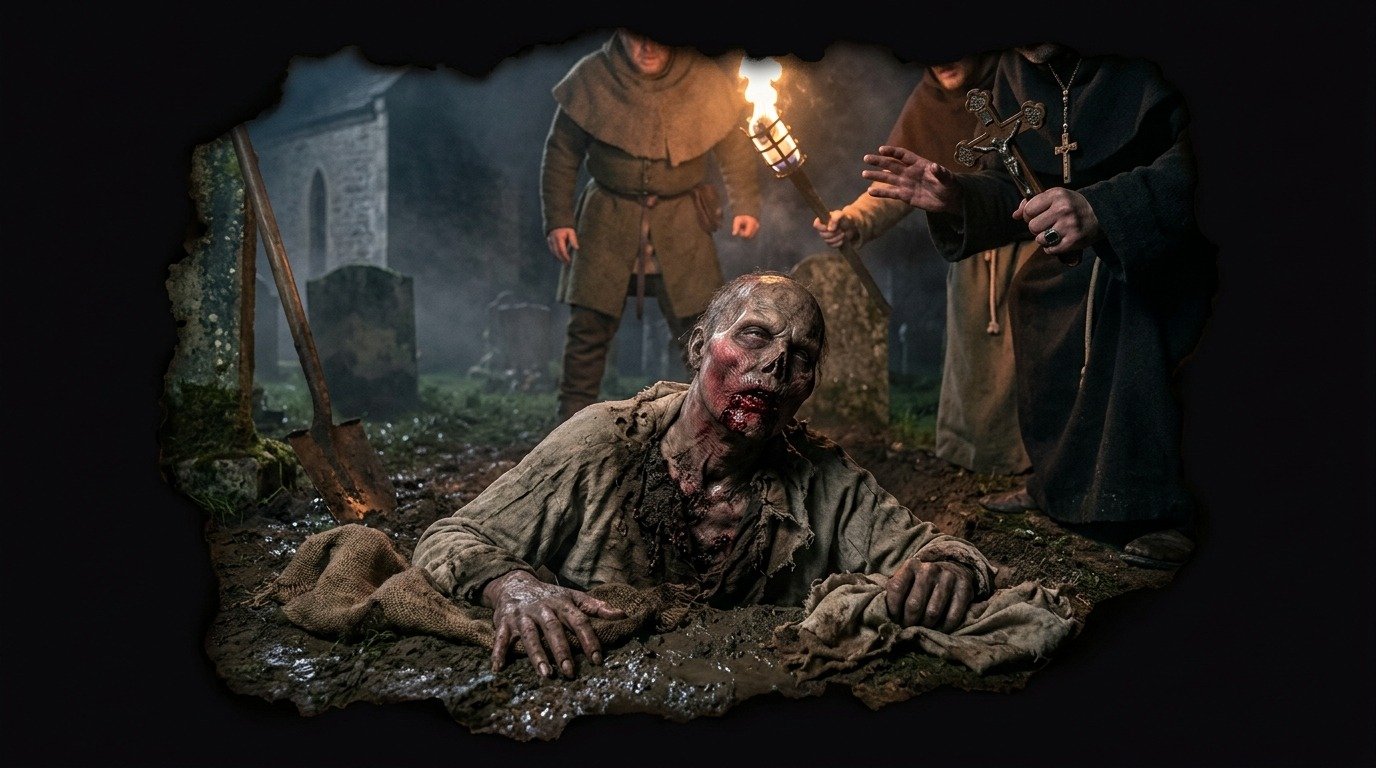
The Revenant: the obstinate walker of the Christian Middle Ages
The Historical and Historiographical Context
The *revenant* (from the Latin *reveniens*, "the one who returns") is a central figure of European medieval terror, documented with astonishingly rigorous records by chroniclers and ecclesiastical historians of the twelfth and thirteenth centuries. Unlike vague peasant superstitions, cases of *revenants* were recorded by enlightened minds of the era, such as the Benedictine monk William of Newburgh in his *Historia rerum Anglicarum*, the Anglo-Norman cleric Walter Map in his work *De nugis curialium* ("Courtiers' Trifles"), and the German abbot Caesarius of Heisterbach. These writings describe real incidents of communities terrorized by corpses that left their graves at night. These were not incorporeal spirits appearing in dreams or visions to request masses, but dense physical bodies, in an advanced state of decomposition or strangely preserved, that walked through villages, knocked on the doors of houses, and caused the death of those who crossed their path.
Theology of the Earthly Return
For the medieval Church, the body of a baptized person had to rest inert in sacred ground, awaiting the resurrection of the flesh at the end of time. The physical return of a dead person before the Last Judgment was a theological aberration that required explanation. Medieval chroniclers developed a theory based on possession and moral corruption: * **The Void of the Soul and Demonic Animation:** After death, if the individual had died in mortal sin, excommunicated, or practicing witchcraft, their soul fell to Hell. However, the empty body was left at the mercy of demons. The *revenant* was not the soul of the deceased returning, but their physical corpse reanimated by an evil spirit that used the corrupt flesh as a puppet to torment the living and sow despair. * **The Gravity of Sin:** In other cases, it was believed that the very accumulation of malice and unconfessed sins in life gave the body such a low spiritual density that the sacred ground of the cemetery rejected it, spitting it back to the surface.
Manifestations and Geography of Terror
The presence of the *revenant* in a medieval village manifested through a progression of physical and pathological phenomena: 1. **The Knocking and the Pestilence:** The creature would go at night to its former home or those of its neighbors. It knocked on walls and windows, calling the residents by their first names. Those who answered or opened the door fell ill the next day and died within a few days. 2. **The Epidemic of Death:** The *revenant* dragged the stale air of the grave along with it. Its mere presence spread infectious diseases and pestilence throughout the community. Panic spread as neighbors began to die one after another after claiming to have seen the deceased lingering around their beds. 3. **Physical Aggression:** Unlike the later vampires of Eastern Europe, who preferred to feed silently on blood, the *revenant* attacked with brute violence. It suffocated sleepers by lying on their chests (a phenomenon linked to sleep paralysis) or beat them until they were near death.
Methods of Destruction and Purification
Faced with the ineffectiveness of common prayers, medieval communities—often led clandestinely by local clergy or with the acquiescence of bishops—resorted to direct physical intervention in the cemetery: * **Exhumation:** The suspect's grave was opened. The unmistakable sign that it was a *revenant* was finding the body with no signs of rigor mortis, with cheeks rosy or swollen with fresh blood, and the shroud torn or devoured (indicating that the corpse had been feeding on its own shroud in the grave). * **Decapitation and Heart Extraction:** The most common remedy consisted of cutting off the corpse's head with a gravedigger's shovel or a sword and placing it between the deceased's legs. Subsequently, the heart, considered the engine of demonic animation, was extracted. * **Purification by Fire:** To ensure that the entity would not return under any circumstances, the mutilated remains had to be taken outside the boundaries of the parish or cultivated land and burned completely on a bonfire fueled by wood from thorny trees (such as hawthorn). The resulting ashes were thrown into running water or scattered to the wind to destroy the physical vehicle that the demon inhabited. ---
Comments
Share information, an experience, or a source to help enrich this entry. They are automatically reviewed before being published.
Loading comments...