Wiedergänger
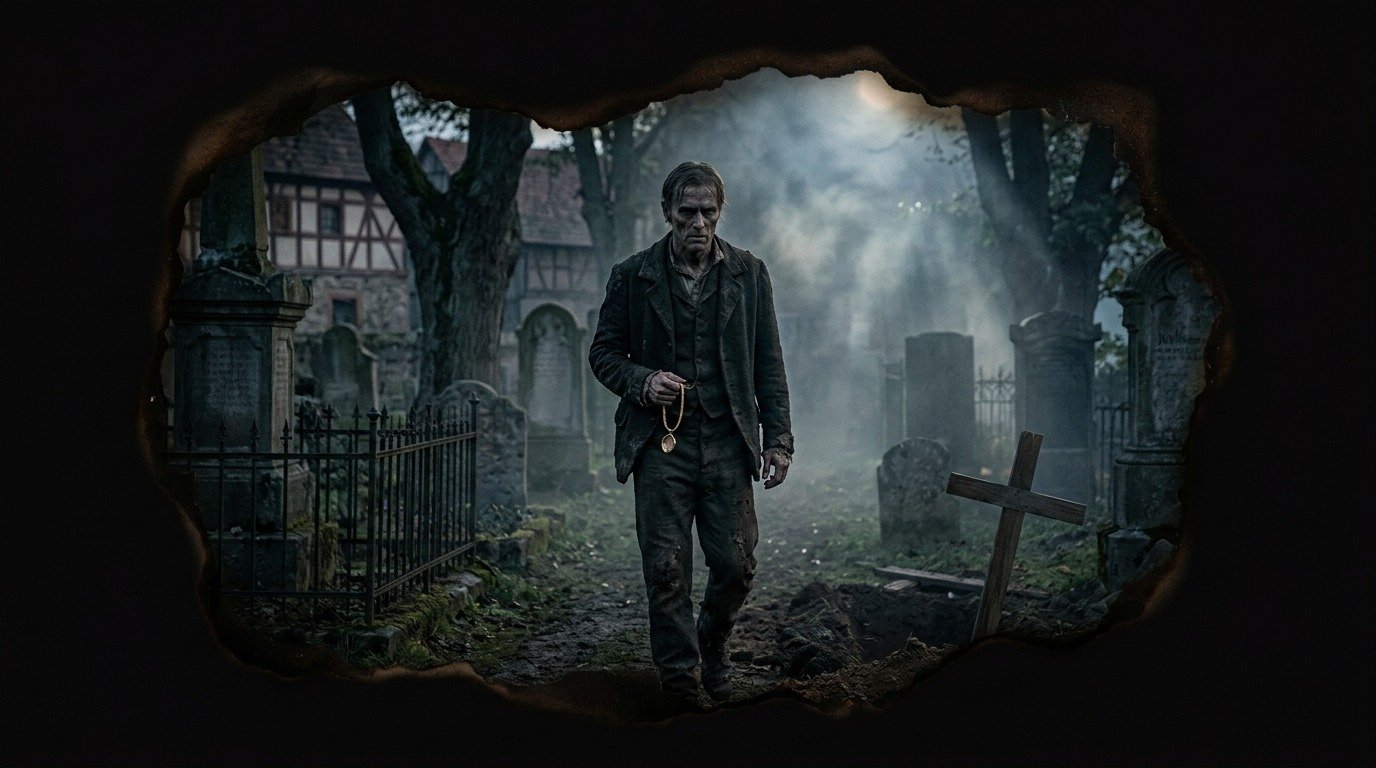
The Wiedergänger: The One Who Returns to Settle the Debt of Destiny
Origin and Conceptual Distinction
The *Wiedergänger* (from Middle German *widergenger*, "the one who walks again") is an archetypal figure of Germanic, Baltic, and Alpine mythology in Central Europe. Although it shares superficial similarities with the French-speaking *revenant* or the Scandinavian *draugr*, the *Wiedergänger* possesses esoteric characteristics and psychological motivations that clearly distinguish it within the landscape of the undead returnees. Within Germanic folklore, it is crucial to differentiate the *Wiedergänger* from the *Nachzehrer* (the "night-devourer" or shroud-eater). While the *Nachzehrer* is a passive creature that remains in its coffin, destroying its family from afar through sympathetic magic and the draining of vital energy while devouring its own shroud, the *Wiedergänger* is an active agent. It is an entity that physically rises from the grave and walks among the living, driven not by demonic possession or the mere instinct to feed, but by a force linked to destiny (*Schicksal*), unresolved guilt, or the broken cords of human will.
Types of Wiedergänger and Their Motivations
In the tales collected by the Brothers Grimm and other 19th-century folklorists in the regions of Pomerania, Silesia, and Bavaria, the motives for a *Wiedergänger*'s return are classified into three main categories: 1. **The Broken Vow or Unfulfilled Promise:** The most common case involves lovers who swore eternal fidelity beyond death. If one of them dies and the survivor marries someone else or breaks their mourning prematurely, the deceased returns as a *Wiedergänger* to demand the fulfillment of the oath, often dragging the unfaithful partner to the grave. 2. **Secret Guilt and Unconfessed Crime:** Those who committed murder, family fraud (such as altering farmland boundaries to steal property from their neighbors), or grave perjury in life find no rest in the earth. Their bodies rise at night to undo the wrong or to force the living to confess the crime on their behalf. 3. **Material Attachment and Pathological Grief:** Mothers who die leaving helpless children behind return to care for them in secret at night. Conversely, excessive grief from surviving relatives (constant tears shed over the grave) can wet the deceased's shroud in such a way that its weight prevents them from resting, forcing them to rise to beg for the weeping to cease.
The Esoteric and Psychological Dimension: The Return of the Shadow
From an esoteric and depth analytical psychology perspective, the *Wiedergänger* represents the personification of collective family or community guilt. It is not an external agent of evil, but rather the projected "shadow" of a trauma that has remained unresolved on the physical plane. The creature is an energetic knot in the fabric of destiny: until the injustice is rectified or the secret revealed, the physical entity will refuse to submit to the laws of natural decomposition. The *Wiedergänger* confronts the living with their own faults. Its appearance does not seek the indiscriminate destruction of the community, but rather the restoration of the cosmic and moral order that was altered by its actions or by the actions of those who survived it.
Remedies and Folk Prevention Practices
To prevent a deceased person from becoming a *Wiedergänger* or to force them to remain in their grave if they have already begun to walk, Germanic folklore prescribes highly specific methods that combine sympathetic magic and geomancy: * **The Turning of the Face (Face-down burial):** If it was suspected that the deceased had reasons to return, they were buried face down (*Bauchlage*). The magical logic dictated that if the spirit attempted to dig its way out of the grave, its hands would dig toward the center of the Earth instead of toward the surface, losing itself in the abyss. * **The Payment of the Toll:** A silver or gold coin (the *Totengroschen*) was placed in the mouth of the deceased or put in their hand so they could pay their entry into the Realm of the Dead and not be tempted to return to claim their earthly riches. * **The Infinite Task (Mohnsamen):** Handfuls of poppy or millet seeds were thrown inside the coffin. The mind of the *Wiedergänger* is subject to an obsessive arithmetic compulsion disorder; before being able to leave the coffin, the creature is forced to count each of the seeds only once a year. If the seeds fall outside the coffin, it must count them all before dawn. Since the task is astronomical, the sun always surprises it before it can complete it, keeping it confined to the earth for all eternity.
Comments
Share information, an experience, or a source to help enrich this entry. They are automatically reviewed before being published.
Loading comments...