Shtriga
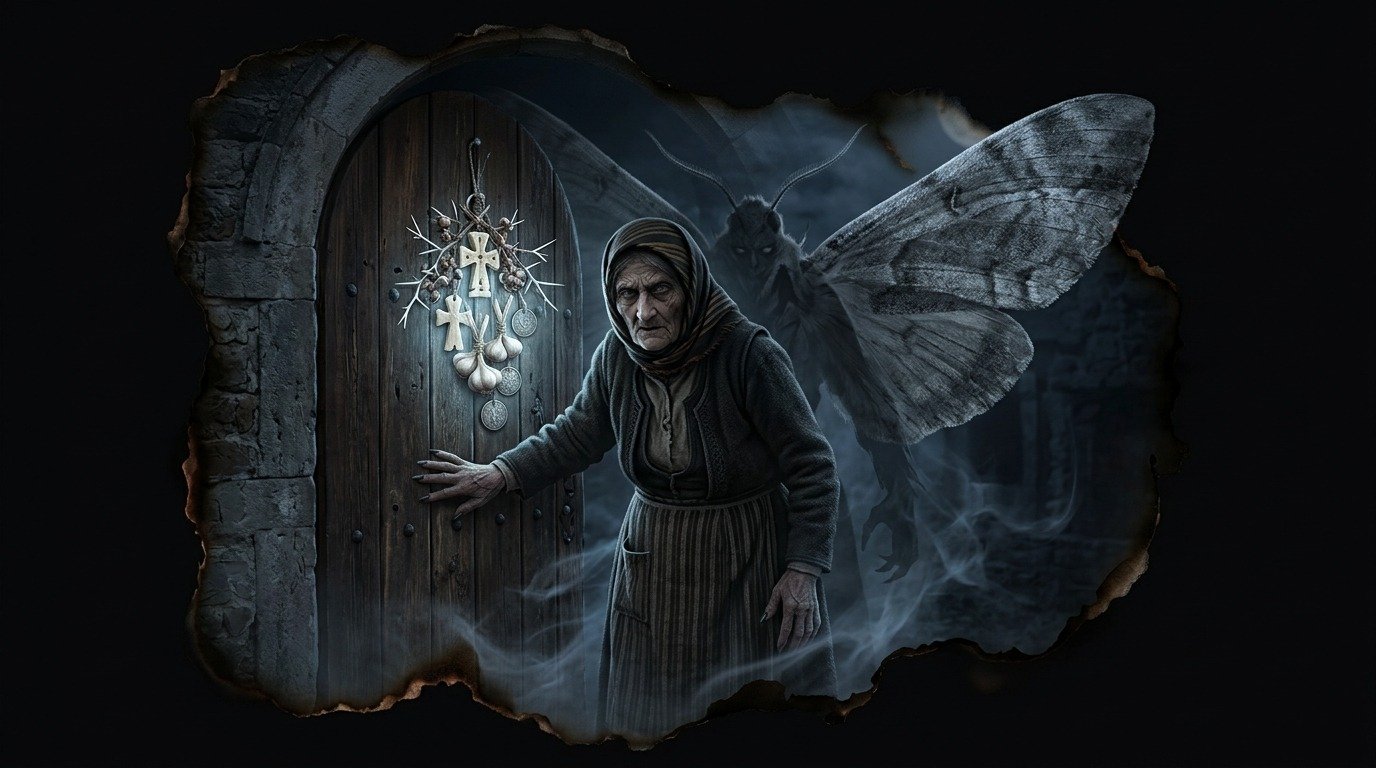
Shtriga: The Blood Moth of the Balkan Lands
Origin and Legend
In the rugged mountains of Albania and the surrounding regions of the Balkans, the legend of the *Shtriga* is woven, one of the darkest and most feared figures in European folklore. Unlike the classic Slavic vampire, which is a reanimated corpse, the Shtriga is a living woman who dwells among her victims by day and transforms into a nocturnal parasite by night. Her linguistic and conceptual roots sink directly into Ancient Rome, deriving from the *Strix* or *Striga*, the mythological bird of prey that entered bedrooms at night to suck the blood and life force of infants. In Albanian cosmogony, the Shtriga does not seek blood solely for physical sustenance, but to feed on the *shpirt*, the breath or vital spirit of the young, plunging her victims into a slow and deadly wasting away known as *shterim*.
Historical and Regional Evolution
Over the centuries, the Shtriga resisted Christianization and Ottoman influence in the Balkans, integrating deeply into the customary law of northern Albania (the *Kanun*). During the Middle Ages and the modern period, accusations of being a Shtriga often resulted in lynchings or communal banishment. In the neighboring regions of Greece and Romania, the Shtriga shares traits with the *Strigla* and the living *Strigoi* (*strigoi viu*), but retains her unique identity: an elderly woman of the community, seemingly harmless or devout, who hides beneath her skin an insatiable thirst for the vitality of others. Local folklore insists that shtrigas form secret covens in the deep forests during new moon nights, where they account for the souls they have withered.
Esoteric or Symbolic Meaning
Symbolically, the Shtriga represents the archetype of the "devouring mother" in its most destructive aspect. She is the inversion of the female generative principle: instead of nurturing and giving life, she consumes the offspring of the community to prolong her own mundane existence. In depth psychology, the Shtriga embodies psychic vampirism and the pathological envy of old age toward youth and fertility. She is the communal shadow, the reminder that the most devastating danger does not come from outside the walls, but from those who share our bread and sit at our table during the day, hiding their parasitism behind a mask of neighborliness and affection.
Manifestation, Testimonials, or Practice
The Shtriga operates under the cover of darkness. To enter the homes of her victims, she uses her shape-shifting ability, transforming into a nocturnal insect, commonly a large gray moth, a bee, or a flesh fly. She slips through the cracks of doors and windows, assumes her semi-human form in the shadows of the room, and draws in the air from the mouths and noses of sleeping children, or opens a tiny, almost invisible wound to drink their blood. The victim awakens tired, pale, and, as the weeks pass, begins to medically waste away without any apparent cause.
Specific and rigorous protocols exist to detect and neutralize a Shtriga: * **The church test:** If a Shtriga's identity is suspected within a village, a cross made of pig bones or a specific amulet must be placed on the threshold of the church during an important feast day. The Shtriga attempting to enter will be trapped in the portal, unable to cross the sacred boundary, or will be forced to vomit the blood of her victims right then and there. * **The saliva trail:** Balkan folklore asserts that the only definitive cure for a victim of wasting away is to find the Shtriga who took their life and make her spit into the victim's mouth or onto their wounds. The sorceress's own saliva contains the concentrated essence of the stolen *shpirt* and is the only remedy capable of reversing the withering. * **The silver amulet:** To prevent the Shtriga from entering a bedroom, it is customary to hang branches of hawthorn, garlic, and pure silver coins over the cribs of newborns—metals and plants whose active and vibrational principles repel the dense energy of this nocturnal predator.
Comments
Share information, an experience, or a source to help enrich this entry. They are automatically reviewed before being published.
Loading comments...