Terrors of the Year 1000
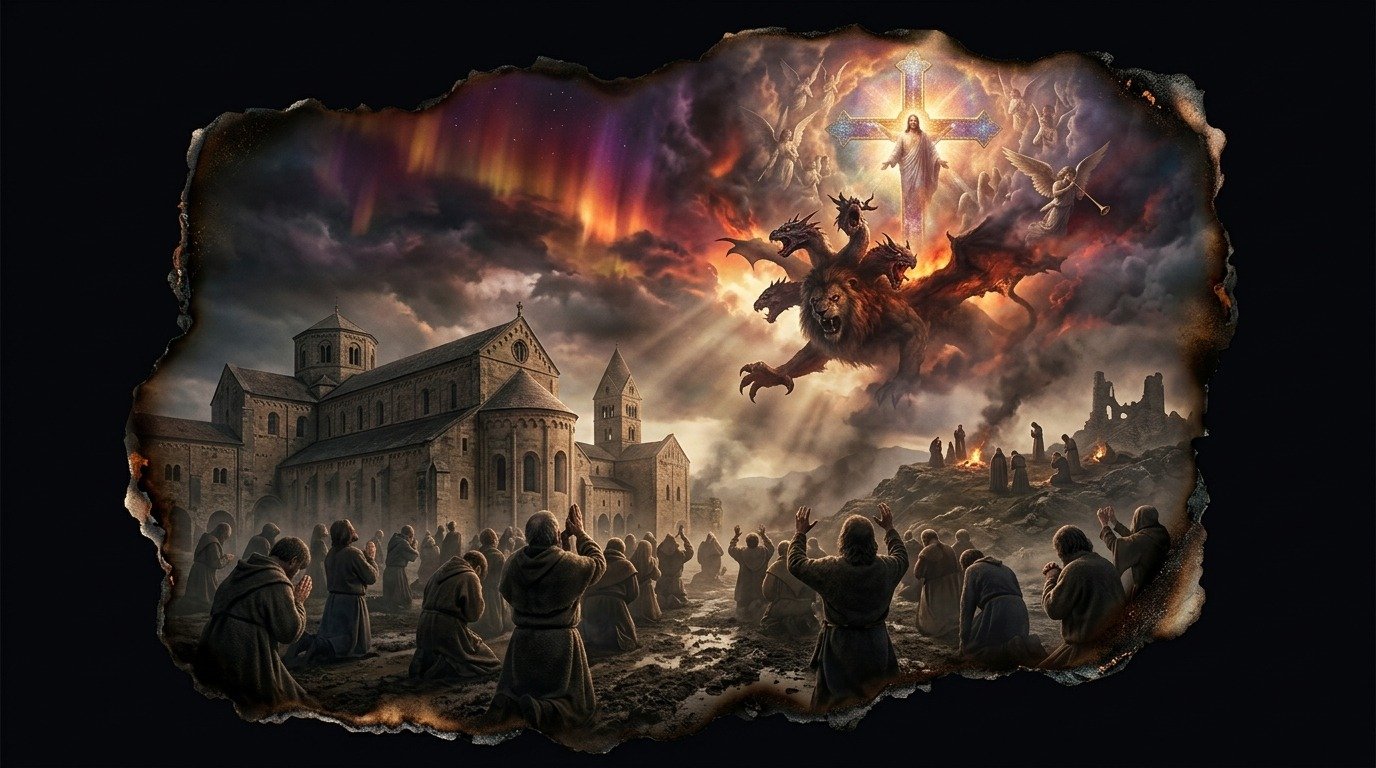
Terrors of the Year 1000: Medieval Panic in the Face of Christ's First Millennium
On December 31 of the year 999, thousands of Christians in Western Europe gathered in churches and monasteries, convinced that at the stroke of midnight, the world would come to an end. This belief was based on a literal reading of sacred texts that foretold the return of Jesus Christ to judge humanity and the release of Satan after a millennium had passed since the birth of Christ. The proximity of the deadline plunged vast regions into a state of profound spiritual and social turmoil.
The morning of January 1 in the year 1000 arrived without celestial cataclysms or destructive earthquakes, bringing a dawn identical to any other. Although modern historical records indicate that the panic did not affect every corner of the continent equally, chronicles of the time detail how collective anguish led nobles, peasants, and clergy to make extreme decisions, altering their lives in the face of the imminence of the Last Judgment.
The Vision of the Chained Millennium
The origin of the fear lay in the Christian scriptures, specifically in the twentieth chapter of the Book of Revelation of Saint John. The prophetic text announced that an angel would descend from heaven to chain the ancient serpent, the Devil, for a thousand years. Once that period was over, the enemy of humanity would be released from his prison for a short time to sow chaos before the final battle and the establishment of the heavenly kingdom.
For the medieval mind, the reckoning of time was a direct manifestation of the divine will. As the end of the first millennium of the Christian era approached, the literal interpretation of this number triggered silent but persistent alarms in the monasteries, which were the centers of knowledge of the era. Writers and monks began to search the physical environment for signs that would confirm the biblical prophecy. The physical world seemed to prove them right: devastating famines, recurring epidemics, and the appearance of auroras and solar eclipses were seen as the warning signs preceding the unleashing of the Beast.
Panic in the Heart of Europe
The belief in the end of the world was not limited to theological discussions among scholars. As the final decades of the 10th century passed, tension moved to the streets and fields of France, Germany, and Italy. The chronicle of the monk Rodulfus Glaber describes an era marked by natural scourges and a growing despair among the population, who saw the shadow of the Apocalypse in every natural disaster.
Fear transformed the social structure of the period. Numerous notarial documents from the late 10th century begin with the Latin phrase *"appropinquante fine mundi"* (approaching the end of the world). Motivated by remorse and the desire to secure the salvation of their souls, many nobles donated their lands and wealth to monasteries and abbeys. Peasants abandoned the care of their plots, debtors had their obligations forgiven, and massive manumissions of serfs took place in a desperate attempt to appear clean before the divine tribunal. Churches remained open day and night, filled with the faithful performing vigils of penance by candlelight.
The Day After the Nonexistent Judgment
When the sun of the new century illuminated the horizon on January 1 of the year 1000, relief quickly mingled with bewilderment. The natural order had not been altered, pending harvests were still there, and the daily problems of feudal life required immediate attention. The Church and rulers had to manage the transition back to normalcy for a society that had prepared itself exclusively to die.
Official theology reacted by readjusting the dates of the prophetic calendar. Exegetes explained that the thousand-year period should actually be counted from the Passion and Resurrection of Christ, and not from his birth. This shifted the expectation of the end of the world to the year 1033. When that second date also passed in calm, the Church reinforced the doctrine that God's timing is inscrutable to men. However, the year 1000 remained recorded in the collective memory as the first great warning that humanity's time has a predetermined limit.
Comments
Share information, an experience, or a source to help enrich this entry. They are automatically reviewed before being published.
Loading comments...