Atlantis
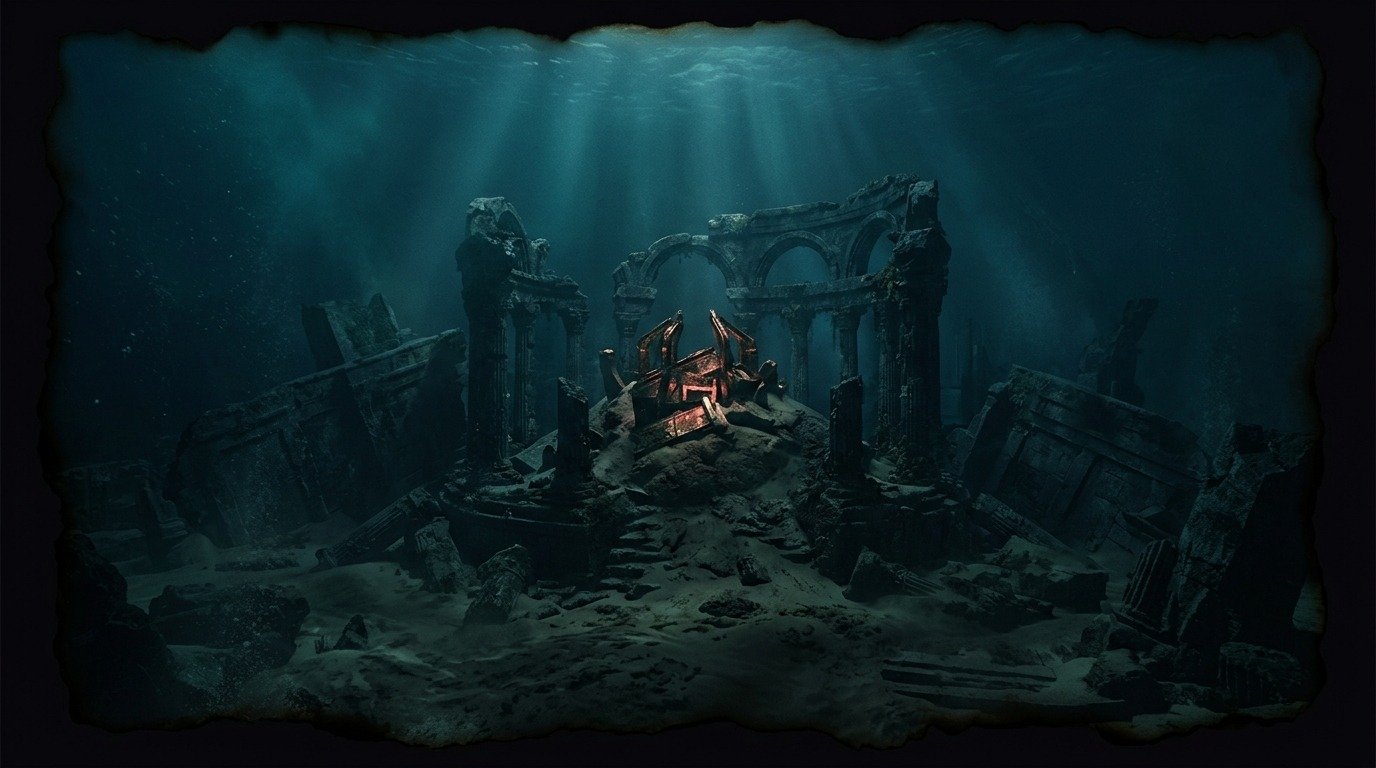
Atlantis: The Bronze Empire Swallowed by the Ocean
The Heritage of the Sea-Born Kings
In the year 590 BC, the Greek sage Solon entered the temple of the goddess Neith in the Egyptian city of Sais. The temple priests, guardians of memories that the Greeks had already forgotten, looked at him with disdain. One of them, of advanced age, stretched his hands over a stone pillar engraved with ancient hieroglyphs and revealed to him that Athens was barely a child compared to the true history of the world. There, carved into the temple rock, was the record of a titanic empire that ruled beyond the Pillars of Hercules and that, in the course of a single night of fire and water, vanished forever from the face of the earth.
The story that Solon brought back to Athens, and which his descendant Plato recorded in his dialogues nearly two centuries later, describes a colossal island, larger than Libya and Asia combined, situated in the Atlantic Ocean. The god of the sea, Poseidon, carved the earth to protect his mortal beloved, Cleito, surrounding a central hill with three concentric rings of water and two of land, perfectly symmetrical. At the summit of that hill, the sovereigns built a palace covered in gold, silver, and mysterious orichalcum, a metal that gleamed with the color of fire.
The ten kings born of Poseidon's lineage ruled with impeccable justice for generations. Atlantis was not just a city; it was a maritime empire with a navy of one thousand two hundred ships and a formidable army. Its central plain was highly fertile, irrigated by canals that carried water from the mountains, and its forests harbored elephants and exotic beasts. For centuries, the Atlanteans lived in harmony with divine laws, despising wealth and valuing only virtue.
The Fall and the Fury of the Gods
The decline began when the divine heritage in the blood of the Atlanteans started to dilute through constant intermingling with mortals. Pride and greed replaced virtue. The sovereigns of Atlantis, blinded by their military and technological power, launched a campaign of conquest to enslave the peoples of the Mediterranean, subjugating everything in their path until they clashed with the resistance of Athens.
The god Zeus, seeing that such a noble civilization had become hopelessly corrupt, decided to punish them. He summoned all the gods to his most sacred abode to pronounce the sentence. The end was swift and absolute. Legend has it that the earth shook in a way never seen before and the sky turned black. In the span of a single day and night of torrential rains and devastating earthquakes, the ground split open and the colossal waves of the ocean devoured the entire island. The empire of bronze and gold sank into the abyss, leaving behind an impassable sea of mud that blocked the passage of sailors for centuries.
The Relentless Search Beneath the Waves and the Sand
Today, Atlantis is not just a philosophical myth, but an obsession that has driven explorers, archaeologists, and adventurers to scour the deepest corners of the globe. Those who sail the waters of the Bahamas, near the island of Bimini, look down at the seabed with a mixture of reverence and suspicion. In 1968, an alignment of massive submerged limestone blocks was discovered there, dubbed "The Bimini Road," which many swear is the pavement of a buried Atlantean harbor.
Others turn their gaze from the sea to the desert. In western Mauritania, the imposing Richat Structure—known as the Eye of the Sahara—corresponds almost mathematically to the dimensions and concentric rings described by Plato. Researchers who walk upon its saline sediments and collect stones of volcanic origin claim to feel the weight of an ancient catastrophe, a place where water once flowed with force before the desert claimed absolute dominance.
The Shadow of Real History
Behind Plato's account, many search for a real catastrophe, and the strongest candidate exists. Around the year 1600 BC, the volcanic island of Thera (modern-day Santorini), in the Aegean Sea, suffered one of the most violent eruptions in human history. The explosion buried the flourishing Minoan city of Akrotiri and unleashed tsunamis that battered the coasts of Crete; the wounded Minoan civilization fell into decline in the generations that followed.
Many historians believe that the memory of this cataclysm survived in the traditions of Egypt, where Solon could have heard it centuries later. According to this reading, Plato took this real tragedy and transformed it into a political parable to warn the Athens of his time about the dangers of excessive ambition and military imperialism, using the disappearance of a great maritime power as the ultimate example of divine justice.
Even if science seeks answers in the volcanic ash of Santorini, the mystery still beats in the ocean that bears its name. On stormy nights in the Atlantic, when the waves crash against the cliffs beyond the Strait of Gibraltar, it is impossible not to think of the towers of orichalcum sleeping in the absolute silence of the depths, waiting for the sea to decide, someday, to return what it swallowed.
Comments
Share information, an experience, or a source to help enrich this entry. They are automatically reviewed before being published.
Loading comments...