Parvati
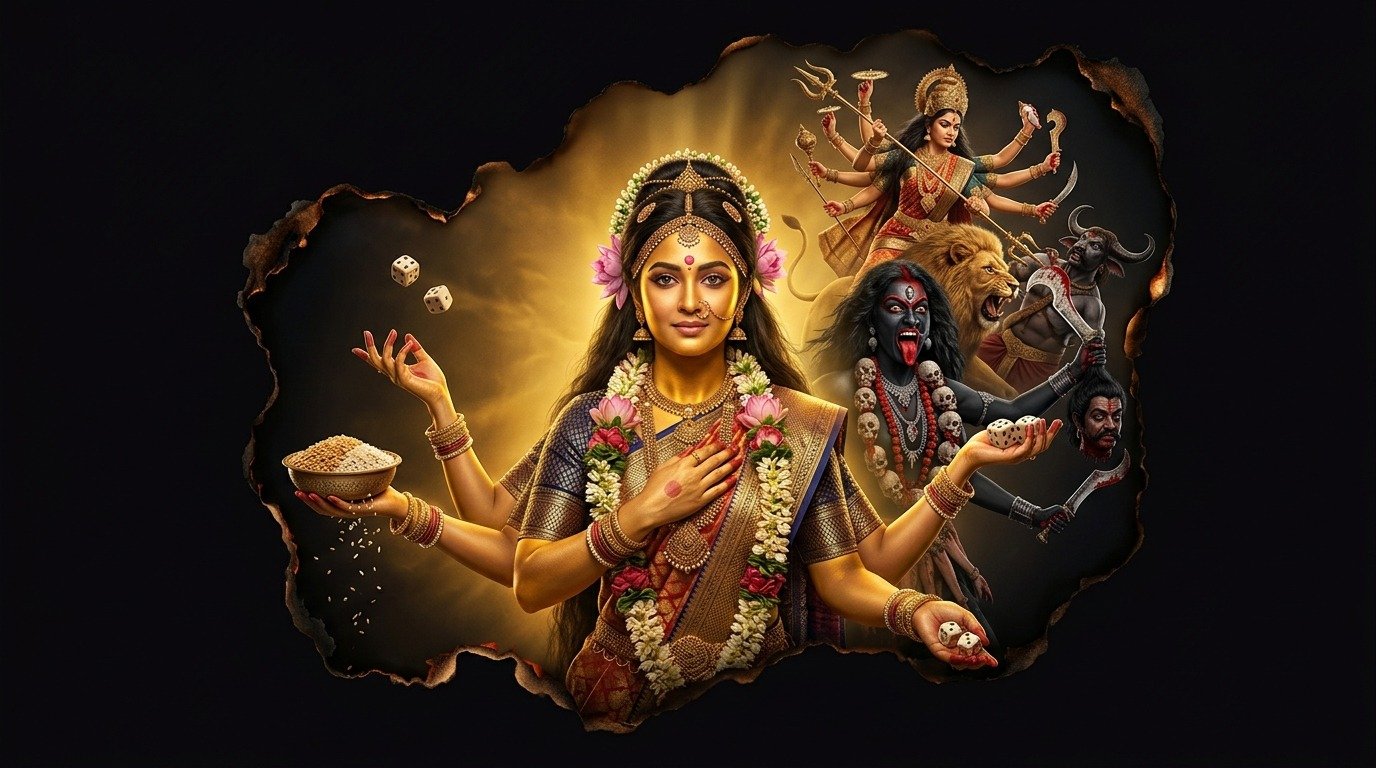
Parvati: The Golden Heartbeat of the Great Mother
The Patience of Rock and Snow
In the heart of the Himalayas, where the mountains touch the sky with fingers of ice, Parvati was born. Her name means "she of the mountain," for she is the daughter of Himavan, the spirit and king of the snowy ranges. Parvati is not a deity who received her power as a passive gift; she won it through one of the most astonishing demonstrations of will that the heavens can remember. She loved Shiva, the wild ascetic who covered himself in ashes and despised the comforts of the world. Shiva, plunged into grief after losing his first wife, completely ignored the young woman with golden skin and eyes like lotus petals. To prove to him that her love was not a superficial whim, Parvati retreated to the deepest and coldest forests of the Himalayas to perform tapas, a penance of unprecedented intensity. For years she remained motionless under snowstorms, feeding only on dry leaves, and then on nothing, not even air. The spiritual heat generated by her meditation was so immense that the mountains began to smoke and the throne of the gods in heaven began to melt. Shiva, moved and astonished by the strength of this woman who possessed the firmness of rock and the purity of snow, descended from his sacred mountain to accept her as his eternal companion. She is Shakti, the active energy without whom Shiva himself is an inert body, incapable of action.
The Sweetness of the Home and the Wrath of the Abyss
Parvati is the face of perfect duality. In the home of Kailash, she is the loving mother, the one who prepares food for her children Ganesha and Kartikeya, the one who softens Shiva's harshness with her laughter and decorates the cold stone with garlands of fresh flowers. Her presence transforms the frozen wasteland into a sanctuary of warmth and compassion. But let no one be mistaken: the great mother is not weak. When evil threatens creation and the male gods find themselves outmatched by monsters that escape their laws, Parvati unleashes the forces that dwell in the deepest depths of her being. From her forehead, when furrowed in indignation, springs not a complaint, but Durga, the ten-armed warrior armed with the attributes of all the gods, who rides a golden lion to decapitate the buffalo demon Mahishasura. And if the battle demands an even more primal violence, Parvati sheds her golden skin to become Kali, she of the soot-black skin, bloodthirsty tongue, and necklace of skulls, whose war dance makes the very foundations of the earth tremble. Parvati is, at once, the embrace that comforts the child and the claw that tears the oppressor apart.
The Game of Dice That Defines Destiny
One afternoon, in the stillness of their abode in Kailash, Parvati challenged Shiva to a game of dice. The ascetic god, confident in his control over the laws of chance, accepted the wager. However, Parvati, who rules over the forces of nature and the invisible threads of causality, won every round. Shiva lost his trident, his serpent necklace, his begging bowl, and, finally, his own pride. Upset by the defeat, Shiva retreated to the forest in a self-imposed exile of silence. The world, deprived of the union of the divine couple, began to pale. Crops withered, the hearts of men grew cold, and the earth lost its greenness. Realizing that creation was dying without the reconciliation of its lords, Parvati transformed herself into Annapurna, the goddess of food and abundance. She presented herself before Shiva, offering him a bowl of hot rice, reminding him that even the most austere ascetic depends on the generosity of the great mother to subsist. Shiva, moved by the lesson and the food, recognized that there is no possible separation between spirit and matter, and returned to her side to keep the world alive.
The Heartbeat That Is Never Extinguished
Parvati survives in every corner where life insists on blooming. She is revered in births, in kitchens where bread is shared, in temples where women pray for the strength to sustain their families, and on battlefields where justice is demanded with a raised fist. She is the strength that animates the muscles of heroes and the softness that heals the wounds of the fallen; the golden heartbeat that proves that love and absolute power are born from the same source.
Comments
Share information, an experience, or a source to help enrich this entry. They are automatically reviewed before being published.
Loading comments...