Nuada
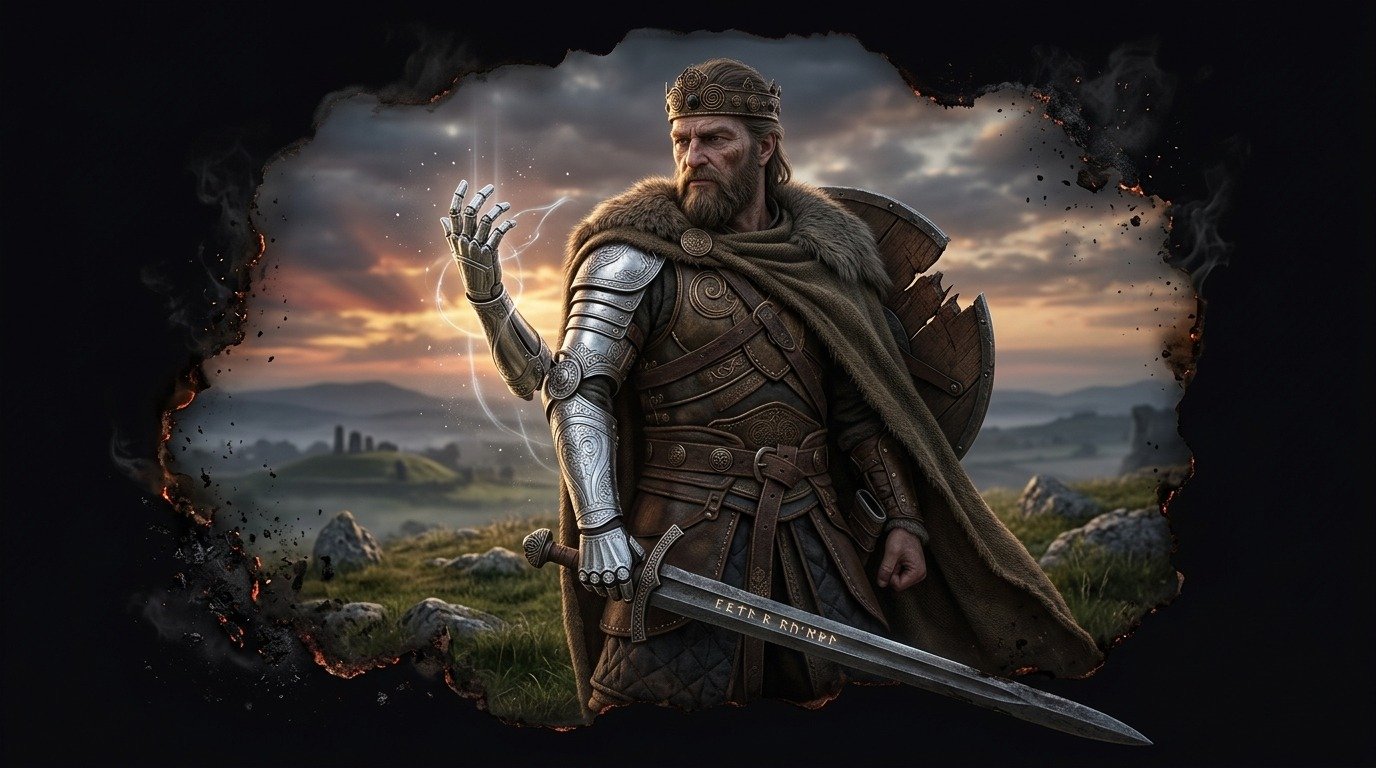
Nuada: The King of the Silver Hand
The Weight of the Perfect Crown
When the Tuatha Dé Danann arrived on the shores of Ireland shrouded in a magical mist that hid the sun for three days, Nuada marched at the head of their hosts. He was the undisputed leader, a king whose wisdom was matched only by his prowess with the sword. His mere presence instilled a sacred respect, for he carried with him the sword of light, one of the four sacred relics of his people, from which no one could escape once it was unsheathed. However, the destiny of a king among the Celtic gods is chained to an implacable law: sovereignty demands physical perfection. A mutilated or deformed ruler loses the right to the throne, as it is believed that his wound reflects a crack in the prosperity of his kingdom. This law fell like a mallet upon Nuada during the first great Battle of Moytura against the Fir Bolg. In the heat of combat, the enemy champion Sreng delivered a blow so formidable that it severed Nuada's right arm, along with half of his shield. Although the Danann won the battle, the price for their king was devastating: he had to surrender the crown and go into exile in the shadows of his own court, while the tyrannical Bres assumed the throne and plunged the people into misery.
The Forging of the Silver and the Return of the King
Nuada's greatness did not end with his mutilation; it began with his redemption. His brother, the god of medicine Dian Cécht, and the skilled craftsman Creidhne joined their talents to work a miracle of metalwork and magic. They forged a fine silver arm for the king, with movable joints that responded to the will of his nerves as if it were flesh and bone. Later, Dian Cécht's son, Miach, took the healing a step further by weaving flesh, skin, and sinew over the metal structure, restoring his absolute integrity. With his silver hand gleaming under the sun, Nuada Airgetlám—he of the Silver Hand—reclaimed the throne that was rightfully his. His return expelled the dynasty of oppressors and restored joy and fertility to the highlands of Ireland. Nuada was no longer just the warrior; he was the living symbol that order and justice could be rebuilt even after being torn apart by violence.
The Twilight of the Monarch
Nuada's last great feat consisted of knowing when to yield the way. When the terrible shadow of the Fomorians, gigantic beings of chaos led by Balor of the Evil Eye, threatened to devour the world of the living, Nuada recognized that his strength, though immense, would not suffice for the coming war. At a banquet on the Hill of Tara, a young and radiant god named Lugh presented himself, demanding entry thanks to his mastery of all known arts. Nuada, demonstrating the true wisdom of a ruler, ceded his own throne to Lugh so that he could lead the divine armies in the Second Battle of Moytura. Nuada marched at the head of his warriors and fell with honor on the battlefield, beheaded by Balor's searing breath. His death was not a defeat, but the final sacrifice that allowed the triumph of light over shadow, cementing his name forever as that of the king who gave his flesh and his crown for the survival of his people.
Comments
Share information, an experience, or a source to help enrich this entry. They are automatically reviewed before being published.
Loading comments...