Morrígan
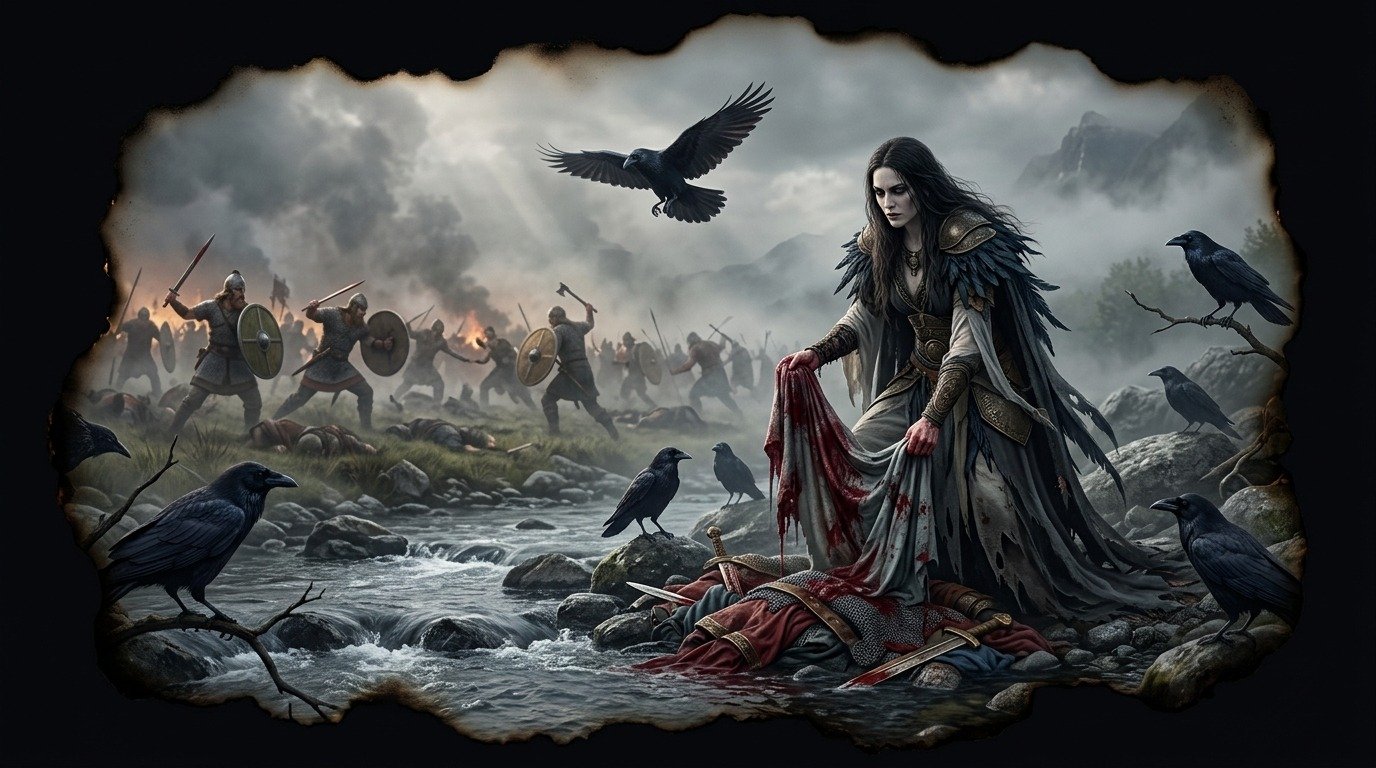
Morrígan: The Queen of Shadows and Destiny
The flutter of the crow over the shield
At the edge where the mist merges with the smoke of war fires, a slender and terrible silhouette emerges. It is the Morrígan, the Phantom Queen, the deity who does not need to wield a sword to decide the outcome of a battle. Her mere presence makes the blood run cold in the veins of the most seasoned warriors, for she is the very embodiment of carnage, territorial sovereignty, and the inevitable destiny that awaits every mortal beneath the edge of bronze.
She is often seen flying over the killing fields in the form of a crow with plumage as black as coal, emitting caws that sound like mocking laughter at human weakness. The Morrígan is not a goddess of military justice or clean strategy; she is the psychological storm that strips the coward of his sanity and fills the hero with a blind, suicidal fury. When her eyes rest upon an army, the air grows thick, the smell of iron floods their throats, and the warriors know their hour has come.
The Washer of the Fords
One of the goddess's most terrifying faces manifests far from the clash of swords, in the spectral silence of the rivers that mark the borders of kingdoms. Those who travel at night before a great battle often come across a solitary woman, crouching by the running water, frantically washing tunics, chainmail, and weapons covered in blood clots.
If the traveler approaches closely enough to look at the garments, they will discover with horror that they are exact copies of their own clothes. This encounter with the "Washer at the Ford" is the ultimate death sentence handed down by the goddess. Whoever beholds her knows that their blood will stain the waters at dawn, and that their skull will become part of the macabre harvest that the sovereign of the dead claims after every clash.
The Hero's Scorn and the Prophecy of the End
The story of the Morrígan is inextricably linked to that of the great champions of the land, whom she tempts, challenges, and destroys with equal intensity. The most famous of them rejected her love when she appeared to him in silk garments and promises of eternal glory. Offended in her divine pride, the queen of shadows swore revenge and adopted multiple forms to hinder his deeds: she became a gray eel that coiled around his legs as he crossed a river, a she-wolf that stampeded the cattle, and a hornless heifer that led a stampede against him.
However, after the hero's final fall, the Morrígan did not celebrate with malice. She perched gently on his shoulder in the form of a crow, silent and majestic, announcing to the world that even the greatest spirits must submit to the laws of destiny that she herself weaves. Once the great war of the gods concluded, the Morrígan ascended to the highest peaks to utter a prophecy that still echoes in the valleys: a somber song about the end of times, where summers will lack sun, women will lose their modesty, men will lack honor, and the earth itself will sink into the chaos of the original void.
Comments
Share information, an experience, or a source to help enrich this entry. They are automatically reviewed before being published.
Loading comments...