Epona
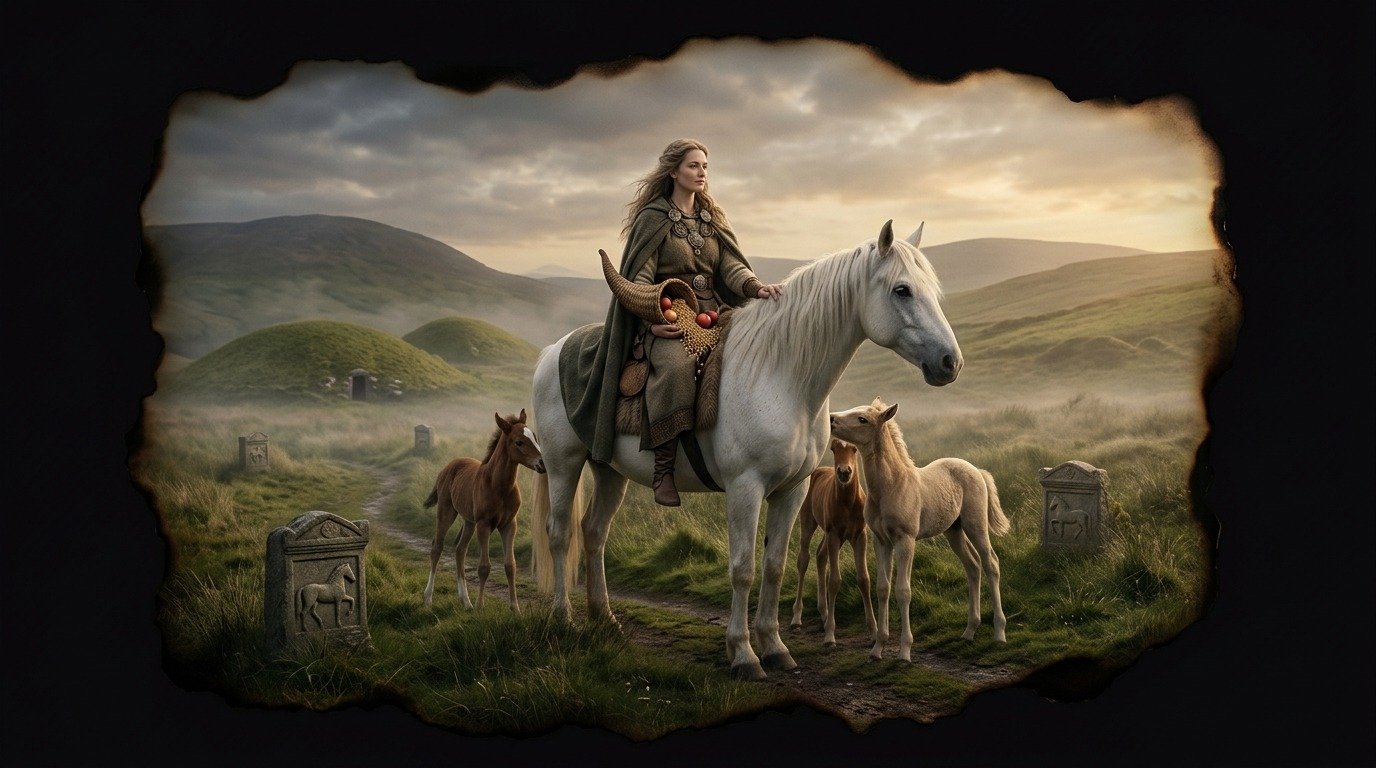
Epona: the protector of roads and gallant manes
The goddess who rides without bridles
On the open plains of Gaul and the hills of the British Isles, the gallop of horses was the pulse of daily life, war, and commerce. In the midst of that whirlwind of dust and speed rises Epona, the great mother of equines, the deity who embodies the ancestral alliance between human beings and horses. She is not depicted with the warlike gesture of conquerors, but riding sidesaddle, with a majestic serenity, upon a beautiful white mare that moves forward without the need for bridles or spurs. Epona is the strength of the fertile earth combined with the speed and grace of the animal that transformed the destiny of Europe. She is often seen accompanied by foals seeking her lap, or holding a cornucopia overflowing with grain and apples, showing that her domain encompasses both the prosperous breeding of animals and the abundance of the crops they help to plow and transport.
The conquest of the conqueror
The power of Epona possesses a unique quality within comparative mythology: she is the only purely Celtic deity whose cult was officially adopted by the Roman Empire, even having her own festival in the city's calendar on December 18. Roman cavalry soldiers, recruited from the Gallic and Germanic provinces, brought with them their devotion to the goddess of the manes. Soon, stables throughout the empire, from the borders of Scotland to the deserts of Syria, featured small altars carved in stone where the image of Epona, flanked by horses, watched over the well-being of the animals. For the riders, she was not a theological abstraction, but a close protector who prevented the beasts from going lame, cured their fevers, and granted them the speed necessary to survive cavalry charges in the heat of battle.
The journey to the furthest reaches
But limiting Epona's role to livestock and war would be to ignore her deepest and most mysterious facet. For the Celts, the horse was also the vehicle of the soul, the only being capable of crossing the invisible border that separates the world of the living from that of the dead. In this role as a guide of souls, Epona becomes a benevolent and comforting figure. When a warrior fell in battle or an elder closed their eyes for the last time, the echo of light hooves announced her arrival. Epona's white mare carried the deceased on her rump, bearing them across the plains of twilight toward eternal rest. Her presence guaranteed that the final journey of mortals would not be a wandering in the dark, but a swift and triumphant ride toward the golden meadows of the afterlife.
Comments
Share information, an experience, or a source to help enrich this entry. They are automatically reviewed before being published.
Loading comments...