Dead Sea Scrolls
Dead Sea Scrolls: The Forbidden Treasure of the Qumran Caves
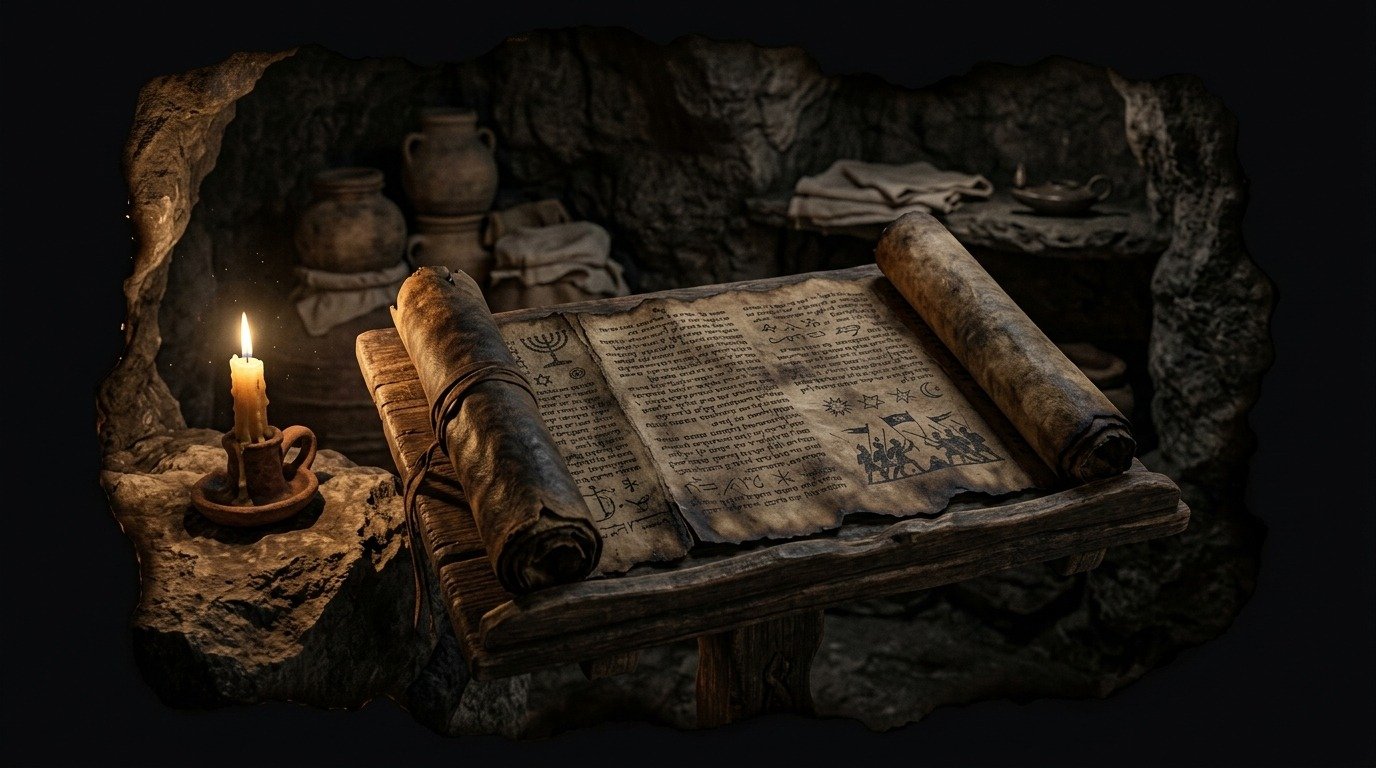
The Dead Sea Scrolls are a collection of nearly one thousand parchment and papyrus fragments written between the third century BC and the first century AD, discovered in the Qumran caves starting in 1947. They contain the oldest known biblical texts, apocryphal prophecies, and the strict rules of a sect preparing for the end of the world. They are feared and coveted because they challenged historical certainty regarding the evolution of the Bible and revealed the roots of a radical apocalyptic messianism that orthodoxy tried to erase.
Secrets of Light and Darkness
The pages of these scrolls, mostly made of sheepskin and goatskin, harbor a universe of destructive visions and unyielding laws. The most disturbing document is the *War Scroll*, a military and spiritual manual detailing the final forty-year battle between the "Sons of Light" and the "Sons of Darkness." It is not a metaphor: the text describes combat divisions, exact weaponry, infantry tactics, and the trumpets that will summon angels to physically fight alongside the chosen ones at the end of days. Another fundamental text is the *Community Rule*, which imposes an iron discipline on those who chose to withdraw into the desert. It demands the total surrender of personal assets, prohibits private property, and establishes severe punishments for offenses as mundane as interrupting another speaker or laughing out loud during sacred assemblies. Additionally, the *Temple Scroll* describes a monumental, utopian sanctuary designed under direct divine instructions, which was never built but served as a fierce critique of the corruption of the Jerusalem priests.
The Refuge of the Chosen
The authorship of these documents is attributed to the Essene sect, a dissident Jewish faction that abandoned the cities to settle in the Qumran settlement by the Dead Sea. Led by an enigmatic figure known as the Teacher of Righteousness, the Essenes believed that the official priesthood of Jerusalem was cursed and that the solar calendar they followed was the only true celestial order. During nearly three centuries, dedicated scribes painstakingly copied these texts in their *Scriptorium*. However, in the year 68 AD, the Tenth Roman Legion advanced into the desert to crush the Jewish revolt. Faced with imminent destruction, the members of the community wrapped their most precious books in linen, placed them inside cylindrical clay jars, and hid them deep within the rugged limestone caves surrounding their monastery. Qumran was razed, its inhabitants killed or scattered, and the scrolls were forgotten for nearly two millennia.
From the Cave to the Black Market
The resurrection of the scrolls began in the spring of 1947, when a Bedouin shepherd from the Ta'amireh tribe, named Muhammed edh-Dhib, was looking for a stray goat. Upon throwing a stone into a crevice, he heard the sound of breaking pottery. Climbing down, he discovered the jars guarding the first seven scrolls. Failing to understand the true value of their find, the Bedouins took the manuscripts to a Bethlehem shoemaker and antiquities dealer nicknamed Kando. From that moment on, an international intrigue of smuggling, greed, and espionage began. Four of the main scrolls ended up in the hands of Metropolitan Samuel, leader of the Syrian Orthodox Church, who smuggled them out of a war-torn Palestine to bring them to the United States. In 1954, unable to sell them through traditional channels due to legal disputes, the clergyman placed a classified ad in *The Wall Street Journal*. Israeli archaeologist Yigael Yadin immediately recognized the value of the offer and, through an intermediary and funds from his country's government, purchased the lot for 250,000 dollars of the time.
The Fate of the Scrolls
Today, the vast majority of the manuscripts and thousands of their recovered fragments are in the custody of the Israel Museum, housed in the Shrine of the Book in Jerusalem, a building whose white dome mimics the shape of the lids of the jars in which they were found. The most damaged remains undergo constant analysis using infrared light technology and DNA analysis of the animal skins to reconstruct the thousands of pieces of this historical puzzle. The desert preserved what empires wanted to destroy. The scrolls proved that, before the biblical canon was finalized, Judaism was a territory of living, conflicting, and burning ideas, where prophecies of the end of the world were written in carbon ink on the skins of animals that grazed beside the abyss.
Comments
Share information, an experience, or a source to help enrich this entry. They are automatically reviewed before being published.
Loading comments...