Gospel of Mary Magdalene
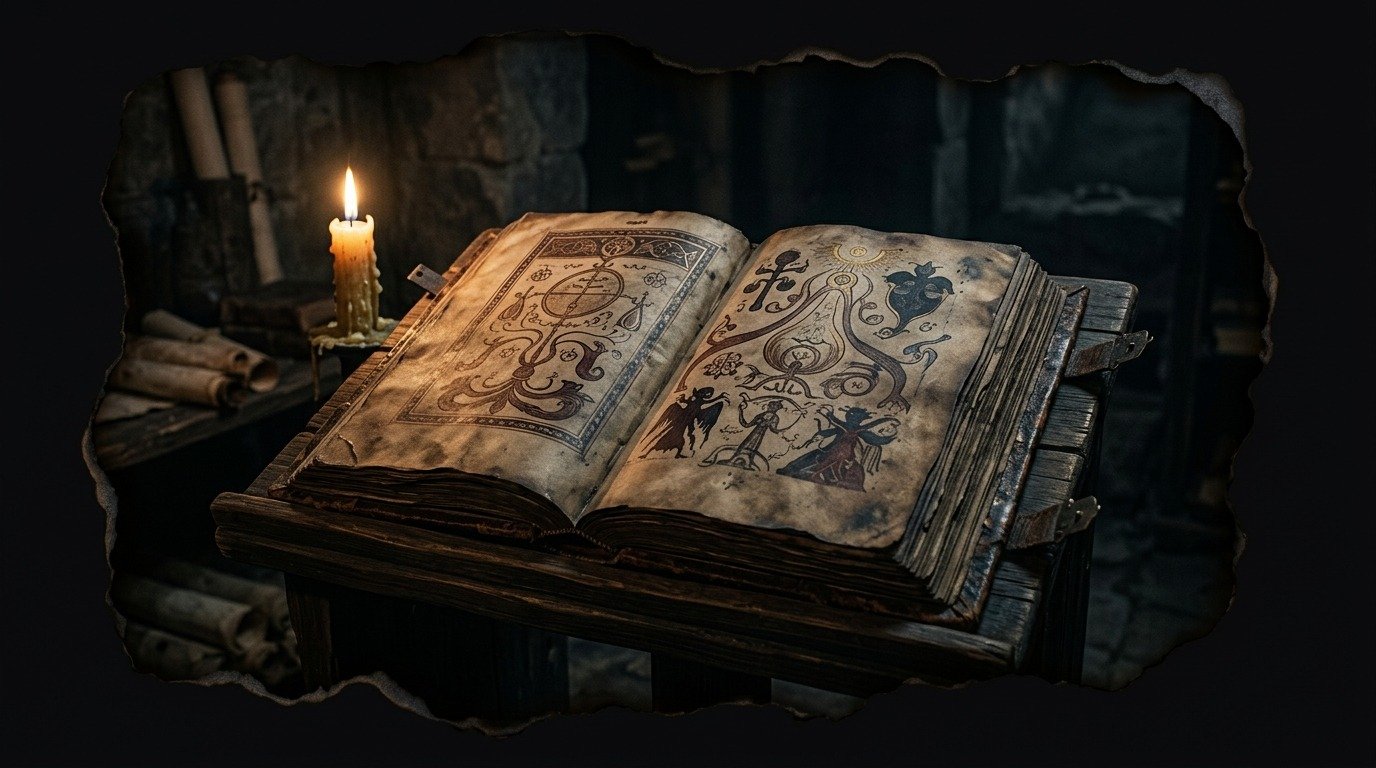
Gospel of Mary Magdalene: The Secret Revelation of the Favorite Disciple
In January 1896, the German scholar and diplomat Carl Reinhardt purchased a leather-bound papyrus book in Cairo, Egypt. It was a fifth-century manuscript written in Coptic that had remained hidden for centuries in the sands of Akhmim. This volume, known today as the Berlin Codex 8502, contained the *Gospel of Mary Magdalene*, a sacred text that challenges the foundations of the official Church by presenting a woman as the primary repository of the secret revelations of Jesus Christ. The book is famous and feared because it portrays a stark power struggle between the male apostles and the Savior's preferred female disciple, revealing a version of early Christianity where spiritual authority did not depend on gender, but on inner enlightenment.
The Teachings of the Companion
What survives of the text shows an account radically different from that of the biblical gospels. In its pages, Jesus appears to his disciples after resurrecting to give them his final instructions. He teaches them that sin is not a reality of creation, but an illusion that occurs when human beings act against their spiritual nature and mix with matter. After giving them peace, the Savior departs, leaving the apostles fearful and weeping at the prospect of preaching such a dangerous message.
It is in this moment of despair that Mary Magdalene stands up, comforts them, and takes control of the situation. At the request of Peter, who asks her to share the words the Savior addressed to her that they could not hear, Mary describes a mystical vision of the soul's ascent. In this passage, the soul travels toward its divine origin and must navigate the harassment of the "Seven Powers of Wrath," dark cosmic forces that personify ignorance, desire, and death, and that attempt to chain the spirit to the material world.
The tension erupts at the end of the narrative. Peter, indignant, rejects Mary's words and asks the others if it is possible that the Savior spoke with a woman in secret before speaking with them. Levi intervenes to defend her, rebukes Peter for his hot-tempered character, and reminds him that the Savior knew her perfectly and loved her more than all of them.
The Origin of the Lost Text
Although the papyrus manuscript found in Egypt dates to the fifth century, the original work was composed much earlier, in the mid-second century, and originally written in Greek. The text was not physically written by the historical figure of Mary of Magdala, but by a community of Gnostic Christians. These believers used the names of disciples close to Jesus to transmit their esoteric teachings, and they chose Mary Magdalene because Gnostic tradition considered her the perfect channel for *gnosis* or direct divine knowledge, due to her spiritual closeness to the master.
Persecuted, Mutilated, and Hidden
The history of this gospel is a chronicle of censorship and survival. In the fourth century, when the Roman Empire adopted orthodox Christianity as its official religion, bishops ordered the systematic destruction of any writing that did not conform to the official canon. Gnostic texts were cataloged as dangerous heresies and burned. Monks and devotees who wanted to save these forbidden teachings had to bury their books in the Egyptian desert.
The manuscript purchased by Reinhardt survived that purge, but its turbulent journey continued into the modern era. After arriving in Berlin, the process of translation and publication was delayed for nearly sixty years. A flood at the printing press, the outbreak of World War I, and the devastation of World War II kept the text in obscurity until its definitive publication in 1955.
Furthermore, the gospel reached the present incomplete. The Berlin Codex is missing ten of its nineteen pages: pages 1 to 6 and 11 to 14 were torn out and destroyed in antiquity, before Reinhardt acquired the volume. Those lost pages contained the beginning of Jesus's conversation and the deepest details of the revelation Mary received.
The Codex Today
Today, the primary manuscript of the *Gospel of Mary Magdalene* is preserved in the Egyptian Museum of Berlin, under the classification Papyrus Berolinensis 8502. Decades after its discovery, two other small fragments of the same gospel written in Greek, dating to the third century, were discovered at the archaeological site of Oxyrhynchus in Egypt. One of them is located in the Sackler Library in Oxford and the other in the British Library in London. These findings confirmed to researchers that the text circulated widely throughout the Mediterranean world before being outlawed by ecclesiastical authorities.
A Silence of Centuries
The frayed edges and torn pages of the Berlin papyrus are the physical testimony of a battle for the control of faith. Those ten missing pages still guard the core of Mary's vision, waiting in some unexplored corner of the desert or reduced to ashes, keeping the complete revelation of the disciple the Church tried to erase shrouded in mystery.
Comments
Share information, an experience, or a source to help enrich this entry. They are automatically reviewed before being published.
Loading comments...