Nag Hammadi Gospels
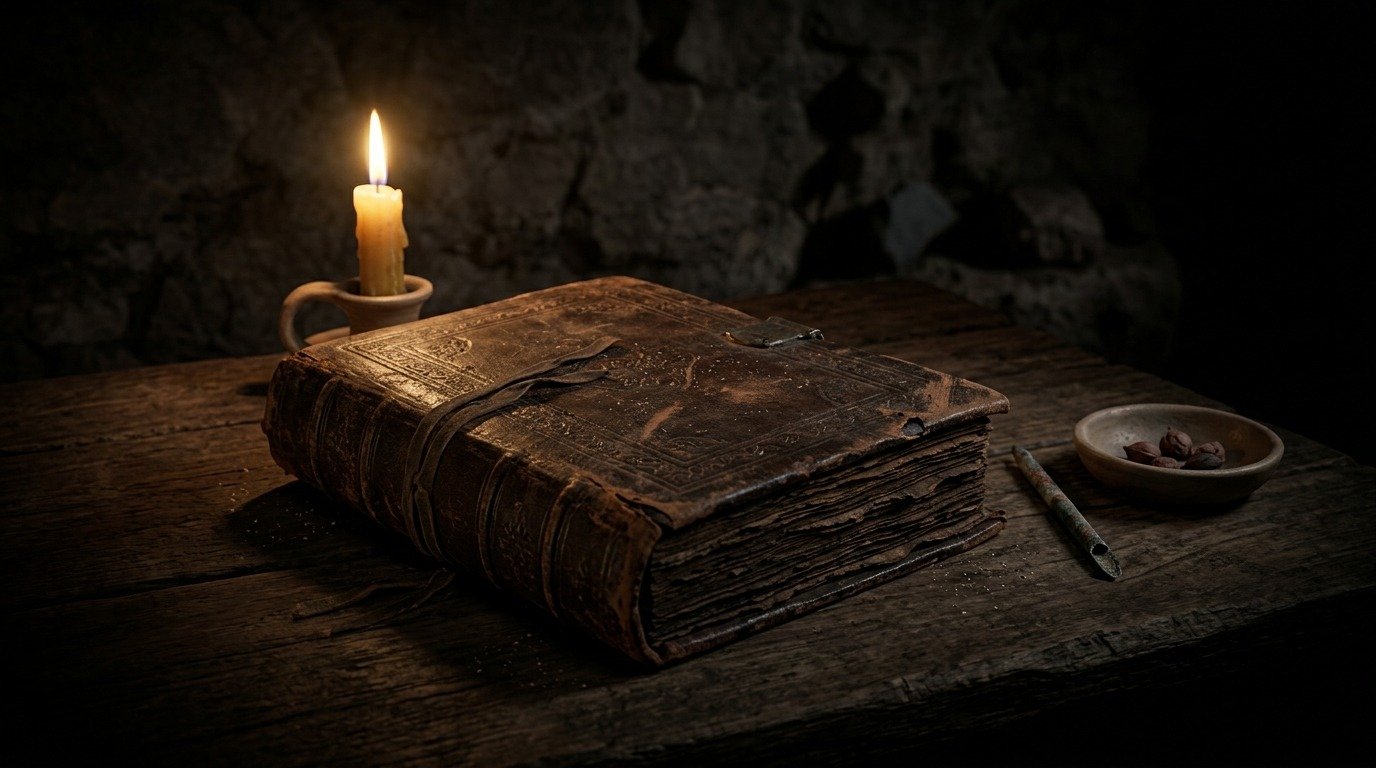
Nag Hammadi Gospels: The Secret Library of the Heretics
The Nag Hammadi Gospels are a collection of thirteen leather-bound papyrus codices discovered in Upper Egypt in December 1945. They contain fifty-two Gnostic texts that were systematically persecuted, declared heretical, and condemned to the flames by the early Church in the fourth century. Their importance lies in the fact that they offer an alternative and radically different version of early Christianity, where salvation is not obtained through faith in a savior or obedience to a hierarchy, but through direct and inner knowledge of the divine.
The Creation of the False God
The Nag Hammadi writings, among which the *Gospel of Thomas*, the *Gospel of Philip*, and the *Secret Book of John* stand out, reveal a cosmology that orthodoxy considered the worst of blasphemies. According to these texts, the creator of the material world, the God of the Old Testament whom they call Yaldabaoth or the Demiurge, is not the true God, but a blind, ignorant, and evil entity that trapped the divine sparks of light of human souls in bodies of flesh to enslave them.
The *Gospel of Thomas*, unlike the canonical gospels of the Bible, contains no accounts of miracles, passion, or resurrection; it is a compendium of one hundred and fourteen secret sayings attributed to Jesus. In them, Christ is not presented as the expiatory son of God, but as a spiritual guide who urges his listeners to seek the light within themselves. The *Gospel of Philip*, for its part, scandalized orthodox theologians by suggesting a relationship of deep physical and spiritual intimacy between Jesus and Mary Magdalene, whom it defines as the companion of the master and the receptacle of divine wisdom.
The Words of the Proscribed
The composition of these manuscripts is placed in the fourth century of our era, written in the Coptic language as translations of much older Greek original texts. Their burial coincides with a crucial moment in the history of the Church. In the year 367, Bishop Athanasius of Alexandria issued a festal letter in which he decreed a strict list of the twenty-seven books that were to make up the New Testament, ordering the immediate destruction of any other text that did not conform to that canon.
It is believed that the monks of a nearby Pachomian monastery, disobeying the order to destroy their spiritual treasures, decided to transcribe and save the Gnostic library. They placed the valuable volumes inside a wide-shouldered clay jar, sealed it with bitumen, and buried it at the foot of a cliff known as Jabal al-Tarif, waiting for the right moment to unearth the truth.
The Contraband Market
The jar remained intact for nearly sixteen hundred years until, in December 1945, a local peasant named Muhammad Ali al-Samman and his brothers were digging for *sabakh*, a natural fertilizer, near the town of Nag Hammadi. Upon unearthing the vessel, Muhammad Ali feared it contained an evil spirit, but greed won out: he broke the clay with his mattock and discovered the brown leather-bound papyrus codices.
The journey of the books almost ended in tragedy. Muhammad Ali's mother burned several papyrus leaves in her home oven to light the fire. The rest of the manuscripts quickly dispersed into the Cairo black market through antiquities dealers, Coptic priests, and smugglers. One of the most important manuscripts, the *Jung Codex*, was smuggled out of Egypt and purchased by the Carl Gustav Jung Institute in Zurich in 1952, before being returned to its country of origin.
The Gnostic Legacy
Today, the complete collection of the Nag Hammadi Gospels is permanently preserved in the Coptic Museum in Cairo, where an international team of specialists managed to stabilize the surviving fragments and translate them into the world's major languages. Their physical preservation is miraculous, considering the fragility of Egyptian papyrus exposed to the air after centuries of confinement.
The Nag Hammadi library shattered the idea that early Christianity was a homogeneous and seamless movement. These codices prove that, before the dogma of Rome was imposed through imperial decrees, there were believers who sought God without intermediaries, convinced that the human soul is a divine spark of light trapped in a material prison waiting to be awakened by the secret word.
Comments
Share information, an experience, or a source to help enrich this entry. They are automatically reviewed before being published.
Loading comments...