Gospel of Judas
Gospel of Judas: The Redemption of the Traitor
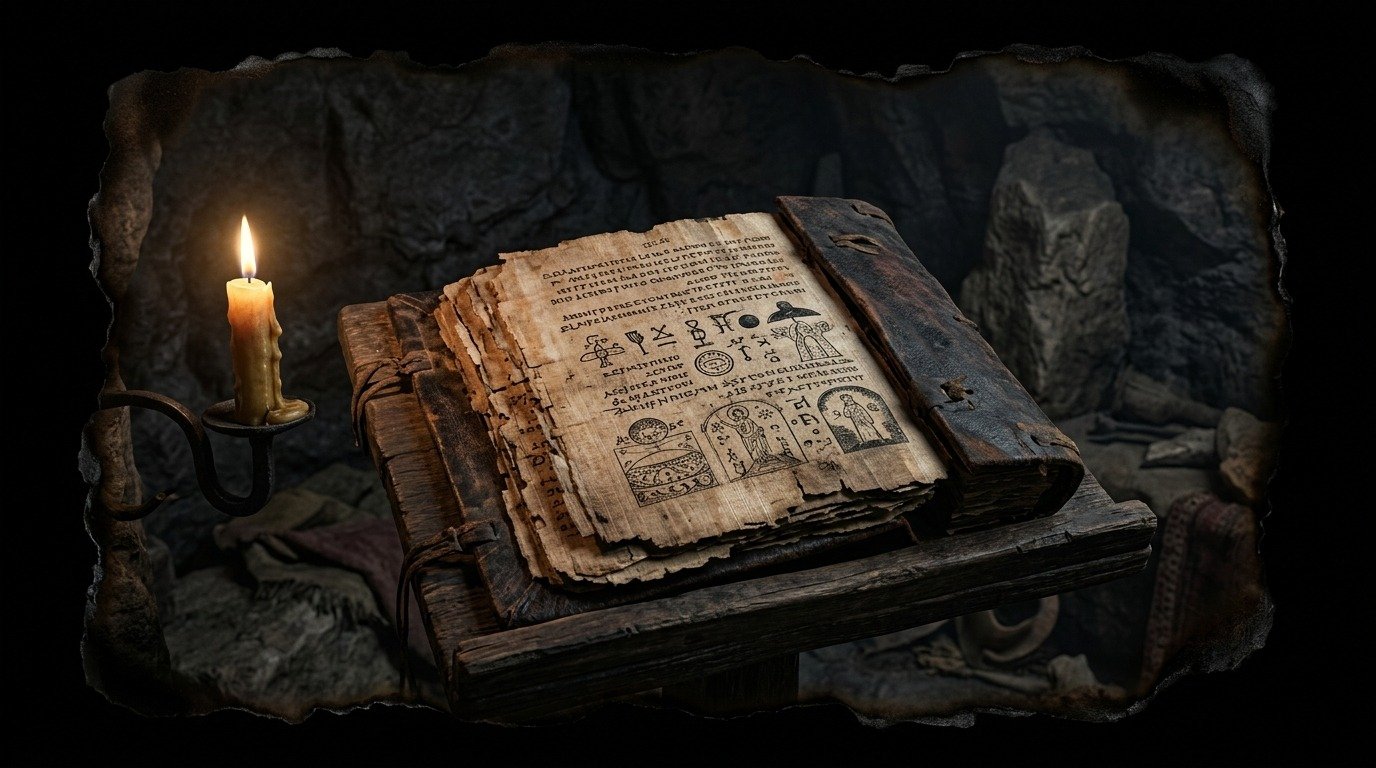
The Gospel of Judas is a Gnostic papyrus manuscript written in the Coptic language dating back to the 3rd century, recovered from a cave in El Minya, Egypt, in the late 1970s. This document offers a perspective completely contrary to traditional Christian theology regarding the events of the Passion. In its pages, Judas Iscariot is not the abominable traitor who sells his master for thirty pieces of silver, but rather the only disciple initiated into the mysteries of the cosmos who fulfills a direct and painful command from Jesus to release his spirit from the prison of the flesh.
The Secret Cosmos of Jesus
The text is structured as a series of private dialogues between Jesus and Judas Iscariot during the week before Passover. The tone of the narrative is defiant from the very first lines. Jesus openly laughs at the other apostles when they perform liturgical rituals directed toward a lesser and ignorant god, the creator of the material world, believing they are worshiping the supreme God.
Jesus takes Judas aside and reveals to him the true Gnostic cosmology: the existence of a realm of infinite light ruled by the Invisible Spirit and populated by celestial beings such as Barbelo. In the most controversial passage of the manuscript, Jesus tells Judas: "You will exceed all of them, for you will sacrifice the man who clothes me." With these words, Jesus explicitly asks Judas to hand him over to the Roman authorities. Judas's act is not a betrayal, but a rite of Gnostic liberation: destroying Jesus's physical body so that his true divine essence can ascend back to the realm of light.
The Author in the Shadows
Although the text bears the name of Judas, historical research determines that it was not written by him. It is a work originally written in Greek in the mid-2nd century by a Gnostic sect known as the Cainites, who vindicated the cursed figures of the Old and New Testaments, considering them rebels against the laws of the material creator.
Bishop Irenaeus of Lyons already knew of the existence of this writing in the year 180 of our era. In his famous work against heresies, *Adversus Haereses*, Irenaeus strongly condemned the text, accusing its authors of inventing a fictitious story they called "the Gospel of Judas" to justify the betrayal of Iscariot and promote false doctrines that destroyed the faith of the Church. Following Irenaeus's condemnation, copies of the gospel were hunted down and destroyed, with only the winding copy surviving, which ended up buried in the sands of Egypt.
The Agony of a Manuscript
The modern discovery of the volume, known as the *Codex Tchacos*, occurred in the 1970s under obscure circumstances. Local grave robbers found the manuscript in a cave in Jabal Qarara, near the Egyptian city of El Minya. From there, the papyrus entered a spiral of greed that nearly reduced it to dust. An Egyptian antiquities dealer named Hanna acquired it, but it was stolen from him and later recovered. In 1980, Hanna traveled to Geneva to sell it, but the exorbitant prices he demanded scared off buyers.
The manuscript was finally deposited in a safe deposit box in Hicksville, New York, where it remained for sixteen years, exposed to extreme humidity and neglect. When Swiss antiquities dealer Frieda Nussberger-Tchacos acquired the manuscript in the year 2000, the papyrus was in such an advanced state of deterioration that the pages disintegrated at the slightest physical contact.
Miraculous Reconstruction
The Maecenas Foundation for Ancient Art, based in Switzerland, took on the task of saving the document. Restorer Rodolphe Kasser led a team of experts who worked for years photographing and assembling more than a thousand papyrus fragments that had detached from the main body of the codex. The text is preserved today in the Coptic Museum of Cairo.
The publication of the reconstructed manuscript shook the foundations of theology and religious history. The Gospel of Judas rescued the most hated figure in Christianity from the mire of history, transforming him into a tragic hero who took on the eternal condemnation of men to fulfill his master's divine design.
Comments
Share information, an experience, or a source to help enrich this entry. They are automatically reviewed before being published.
Loading comments...