Eos
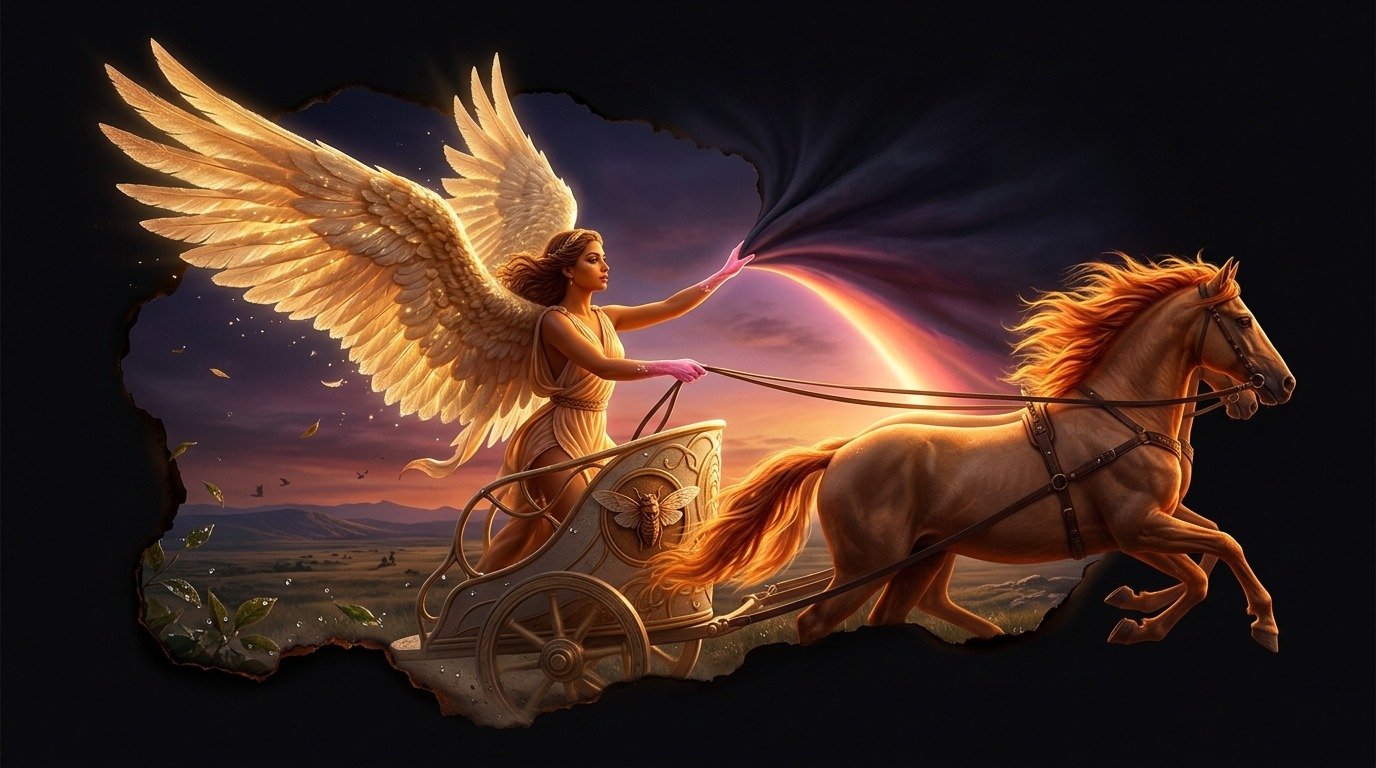
Eos: The Saffron Awakening That Tears the Shadow
The First Gleam of the World
Long before the sun claims the sky, a saffron-colored line cuts through the blackness of the east. It is the herald of life, the first sigh of the returning day. Eos, she of the rosy fingers and beautiful eyelashes, is the deity who dwells in that ephemeral threshold. Also a daughter of the titanic lineage of Hyperion, her task is to open the gates of heaven so that her brother Helios can unleash his horses of fire upon the world.
Unlike the melancholic Selene, Eos is pure vibration, urgency, and color. She is depicted with large wings of golden feathers or driving a light chariot pulled by the steeds Brightness and Radiance. Her appearance is not silent; it is accompanied by the singing of the first birds and by the subtle shivering of the dawn wind, which cleanses the heaviness of the night and pours the morning dew upon the leaves—which is nothing other than the tears the goddess sheds for her eternal tragedies.
The Race Against the Sun
Eos's destiny is to run without rest, always pursued by the scorching heat of her brother. Her domain is the exact instant of transition, the moment when the stars fade and the shapes of the world regain their sharpness. With her fingers stained with the pink of the dawns, she pulls back the dark veil of the sky and scatters the pollen of light over the plains, allowing life to awaken and men to resume their labors.
This role as mediator between shadow and light makes her a divinity of beginnings, of unfulfilled promises, and of the freshness of youth. However, behind the dazzling beauty of her colors hides a fiery temperament and an insatiable thirst for affection, a birthmark that would drag her to cross paths with the world of mortals in the most painful way.
The Curse of Eternal Passion
One day, Eos made the mistake of sharing a bed with Ares, the god of war. Upon finding out, Aphrodite, the queen of love and jealousy, cursed the goddess of dawn with an uncontrollable desire for young mortals. Since then, Eos's life became a succession of amorous abductions in the twilight. She took Cleitus, Cephalus, and, above all, the beautiful Tithonus, a prince of Troy for whom the goddess felt such an excessive love that she decided to defy the laws of mortality.
Eos begged the ruler of Olympus to grant Tithonus eternal life, but in her haste and desperation, she forgot to ask for eternal youth for him. The plea was granted to the letter. Over the centuries, Tithonus's body began to wither, his skin wrinkled like paper, and his bones became fragile, while Eos remained eternally radiant. Unable to die but too weak to move, Tithonus was reduced to a squeaky, dry voice. Moved by grief, the goddess transformed him into the cicada, whose shrill song greets the arrival of the day, an eternal reminder of a love trapped between immortality and decay.
The Dew of Memory
Tragedy pursued Eos even in her offspring. Her son Memnon, king of the Ethiopians, left for the Trojan War and fell under the spear of Achilles. The mother's grief stopped the dawn for hours, plunging the world into a twilight of mourning. It is said that every morning, when Eos ascends to the sky and her rosy fingers touch the warm earth, the drops of dew that shine on the grass are the goddess's incessant weeping for her fallen son, a tribute renewed with each cycle, proving that even the most beautiful light is born from a wound of infinite pain.
Comments
Share information, an experience, or a source to help enrich this entry. They are automatically reviewed before being published.
Loading comments...