Ares
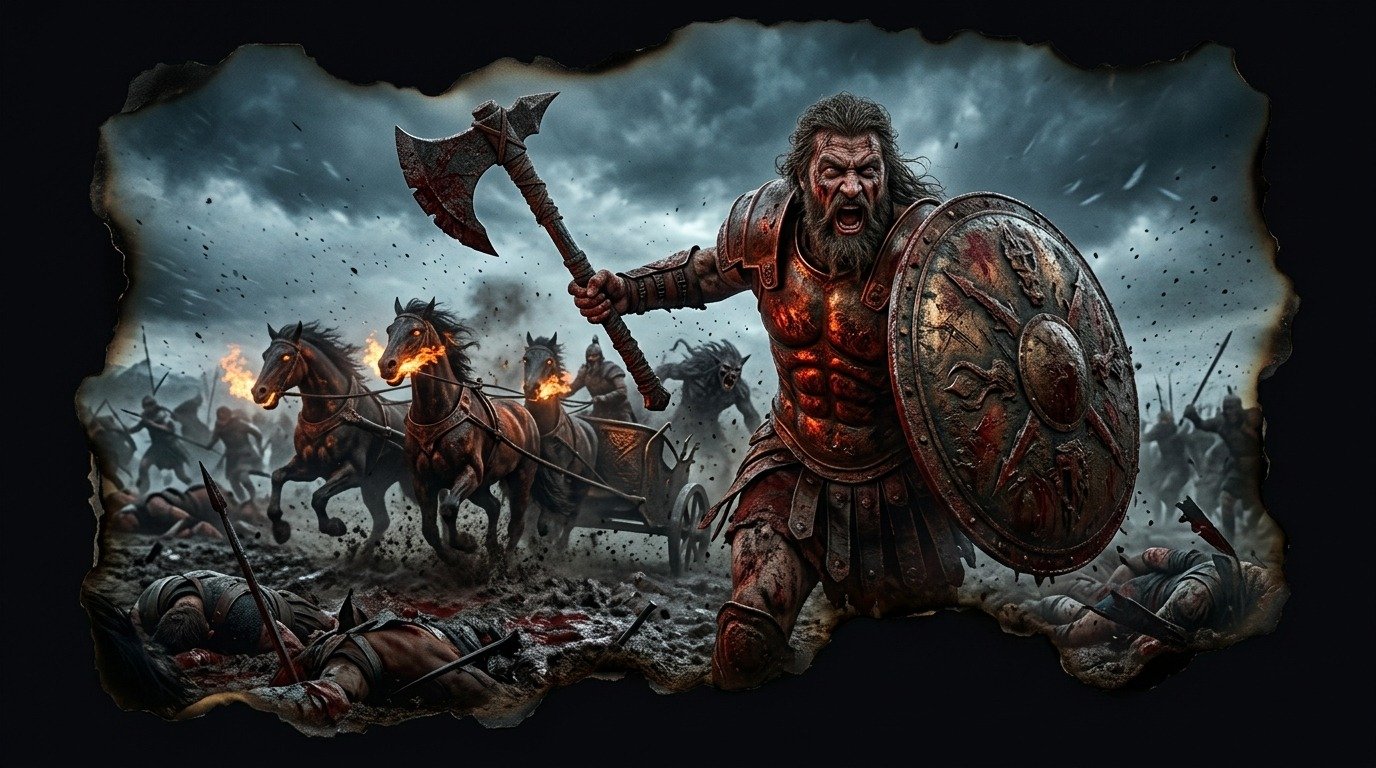
Ares: The Howl of Bronze and the Intoxication of Blood
The Son of Celestial Rancor
He is the bitterest fruit of the union between the king and queen of Olympus, a god born of wounded pride and the constant rivalry between his parents. From his very first breath, his chest was filled with a fury that sought neither justice nor order, but pure destruction. His father himself despised him, declaring that of all the inhabitants of heaven, he was the most hateful for his insatiable love of discord and the slaughters that stain the fields of men red.
His palace is not built upon luminous marble, but in the cold and wild lands of Thrace, a region battered by icy winds where men live by the sword and die under the open sky. There he dwells amidst the din of clashing weapons and the howls of his chariot companions: Deimos, the terror that paralyzes the knees; Phobos, the fear that makes the brave flee; and Enyo, the destroyer of cities who delights in smoking ruins. His presence is the sound of iron striking bone, the smell of sweat and carrion floating over the trenches, and the frenzy that seizes the warrior when he loses all sense of humanity.
The Whirlwind of Iron in the Mud
While other gods watch battles from the safe distance of the clouds, he descends directly into the mud of combat. His war chariot, drawn by four stallions born of the north wind that spit fire from their nostrils, charges forward, crushing the bodies of the fallen. The god wears armor of polished bronze that gleams with a reddish hue, like iron fresh from the forge, and his shield is so heavy that its shadow terrifies entire armies before the slaughter even begins.
He does not care who is right in a dispute, nor is he interested in the borders of kingdoms. He favors those who show the greatest savagery and those who surrender themselves entirely to the lust for killing. His laughter echoes in the death throes of the dying and in the cracking of shields shattering under the impact of axes. He is an indomitable and destructive force of nature, yet lacking the discipline that yields lasting victory; he is the fire that consumes everything in its path but burns out when there is nothing left to burn, leaving behind only ashes and orphans.
The God Chained by Desire and Cunning
Despite his immense strength and impenetrable armor, his impulsive nature often makes him the target of humiliation by those who possess a more refined intellect or superior prowess. His sister Athena has struck him down on the battlefield more than once, hurling colossal stones at him that his blind fury did not see coming, proving that strength without judgment is merely an easy target for strategy.
His most famous and ridiculous episode occurred in the chambers where he sought solace from his violence in the arms of Aphrodite, the goddess of beauty. Her lawful husband, the lame Hephaestus, having learned of the betrayal, forged a net of bronze threads so fine they were invisible to the eye, yet so strong that not even the god of war himself could break them. When the lovers joined in bed, the trap fell upon them, immobilizing them in a compromising position.
Hephaestus opened the palace doors and called upon all the gods of Olympus to witness their humiliation. The god of the howl of bronze, who made nations tremble, found himself reduced to a caged beast, exposed to the eternal laughter of heaven, proving that passion and violence always end up caught in the nets of cunning and ingenuity.
Comments
Share information, an experience, or a source to help enrich this entry. They are automatically reviewed before being published.
Loading comments...