Enlil
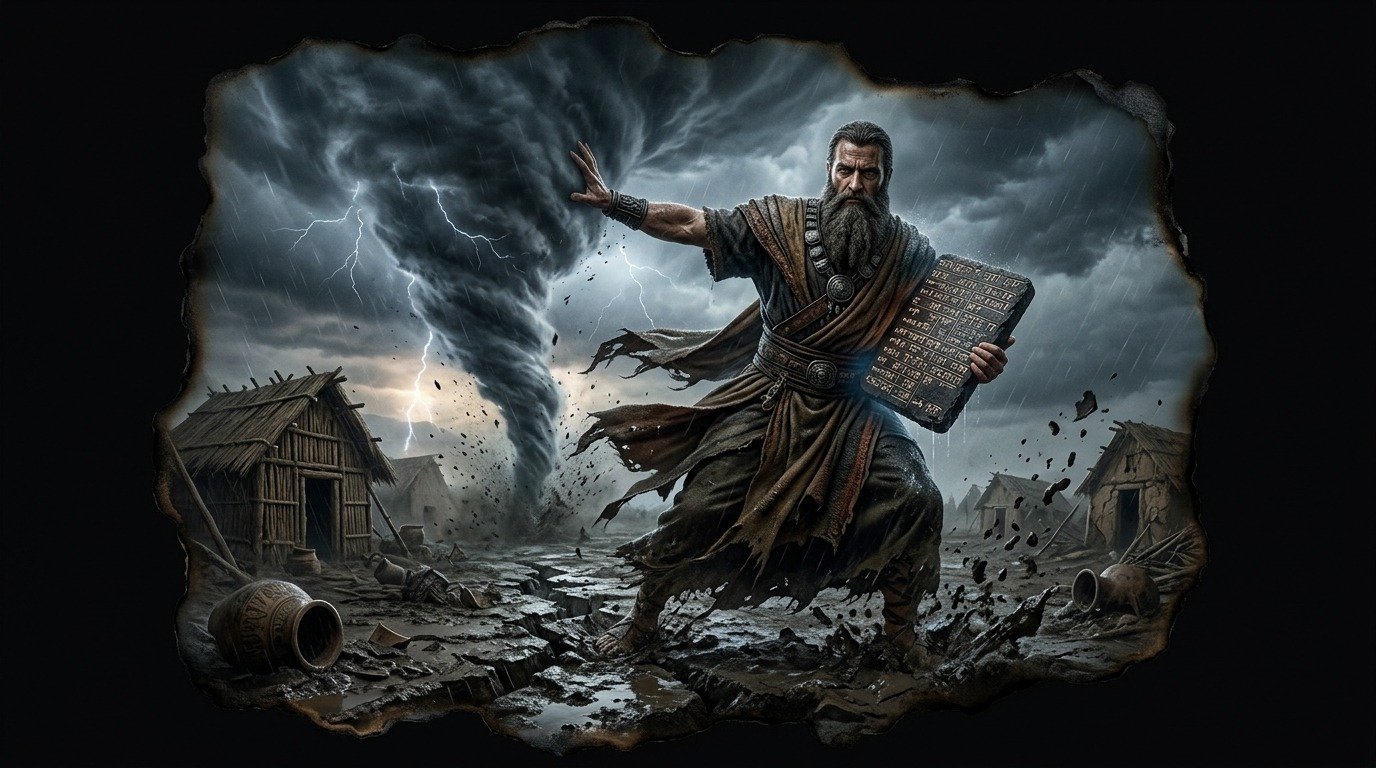
Enlil: The Breath and the Storm of the Earth
The Executor of Destiny
If Anu rules the inaccessible heaven, Enlil is the god who breathes upon the world, the executor of divine decrees and the true engine of earthly existence. Born from the union of heaven and earth, Enlil forced his way between his parents with an expansive force, pushing the celestial vault upward and flattening the ground to create the space where life could flourish. His name is the wind, but not the gentle breeze that soothes summer afternoons, but rather the gale that rips away reed roofs and the vital air that fills the lungs of newborns. From his temple in the sacred city of Nippur, the nerve center of creation, Enlil watches over the plains. He is the one who holds the Tablet of Destinies, the cosmic clay artifact where the names, reigns, and ends of all living things are engraved. Whoever possesses the Tablet possesses the course of time, and Enlil guards it with absolute zeal, for he knows that the order of the cosmos depends on his breath continuing to blow with a clear and firm direction.
The Roar That Demands Silence
Enlil's relationship with humanity has always been unstable, marked by a constant tension between creation and destruction. Unlike other gods who find delight in the company of mortals, Enlil values order and silence above all else. The murmur of growing cities, the bustle of markets, and the clamor of crowds are an unbearable affront to him, a noise that disturbs the sleep of the gods and challenges the harmony of the universe. When the population of the earth multiplied and the noise became deafening, Enlil did not hesitate to send droughts, plagues, and famines to silence the clamor. Seeing that humanity survived thanks to the cunning of other deities, his patience wore thin and he decreed the absolute end through the great flood. He summoned the storms, opened the floodgates of heaven, and swept across the plains until only an ocean of mud and silence remained. For Enlil, destruction is not an act of uncontrolled malice, but a necessary restoration of balance, the pruning of a tree that has grown too large and threatens to break its own branches.
The Scourge and the Blessing
The duality of Enlil is embodied in the scourge of his wind and the fertility it produces. It is he who fertilizes the earth by dragging rain clouds toward the headwaters of the great rivers, allowing the Tigris and the Euphrates to overflow and deposit black silt upon the fields. Without his will, the earth would be a barren desert; with his wrath, it becomes an uninhabitable swamp. His implacable character was demonstrated when a foreign king dared to desecrate his sanctuary in Nippur. Enlil did not send a lightning bolt from heaven, but instead summoned the barbarian tribes of the mountains, men whose language was not understood and whose advance was like a plague of locusts. Cities fell one after another beneath the dust of the desert. The god of the wind observed the ruin with the same coldness with which he observes the sprouting of a new ear of wheat. He gives and he takes away, and in his path, men can only prostrate themselves, cover their ears against the roar of the storm, and hope that his breath will once again be favorable.
Comments
Share information, an experience, or a source to help enrich this entry. They are automatically reviewed before being published.
Loading comments...